


![SoftPro™ Chlorine+ Carbon Whole House Water Filter to Remove PFAS, Chlorine, Chloramine & Pesticides [City Water Filters Series]](http://softprowatersystems.com/cdn/shop/files/SoftPro_Whole_House_Carbon_Filter_with_Spin_Down_Water_Filter.webp?v=1783547361&width=140)


 855-683-8488


AIO Air Injection vs Greensand Iron Filters: A Real Technology Comparison

AIO air injection and greensand iron filters solve the same problem through completely different methods. Greensand relies on chemical oxidation and needs potassium permanganate plus a pH above 6.8 to work. AIO systems use a Venturi nozzle to inject air, oxidizing iron before it ever touches the media — no chemicals required. AIO handles up to 30 ppm iron versus greensand's 15 ppm ceiling. Stick with us and we'll break down exactly which system wins for your well.
Key Takeaways
- AIO systems use a Venturi nozzle to pre-oxidize iron with air, while greensand relies on chemical oxidation using potassium permanganate.
- AIO with Katalox Light handles up to 30 ppm iron; greensand maxes out at 15 ppm.
- Greensand requires pH 6.8 or higher to function, while Katalox Light operates effectively down to pH 6.0.
- AIO systems have zero recurring chemical costs; greensand demands $300–$500 annually in chemicals and media replacement.
- Over 10 years, AIO systems cost $1,500–$2,500 total versus greensand's $4,000–$6,000, a potential $3,500 savings.
How AIO Air Injection and Greensand Actually Work

Before diving into which system is right for your water, it's worth understanding how each one actually works under the hood.
AIO air injection uses a Venturi nozzle to create an air pocket during backwash. That air oxidizes iron before it ever contacts the media, precipitating it out early in the process — it's elegant and mechanically efficient.
Air injection oxidizes iron before it ever touches the media — mechanically elegant, chemically clean.
Greensand takes a different approach. It relies on chemical oxidation, converting ferrous iron (dissolved) into ferric iron (particulate), which the media then captures. This works, but it introduces chemical dependency and tighter operating constraints — greensand typically demands a neutral to slightly alkaline pH to function correctly.
Two distinct mechanisms, two different failure points. Knowing the difference helps you make a smarter, longer-term filtration decision.
Where Greensand Falls Short for High-Iron Wells
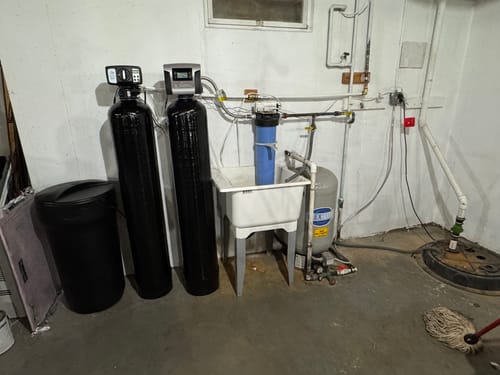
Greensand sounds solid on paper — but when you push it against a high-iron well, the cracks show fast. Its iron removal ceiling sits at 15 ppm, half of what the 2510AIO handles. If your well runs higher, greensand simply can't keep up.
Then there's the chemical dependency. Greensand needs potassium permanganate continuously — you're buying it, monitoring it, and dosing it correctly or the system fails. That's ongoing labor and cost.
pH requirements add another constraint. Greensand demands 6.8 or higher, ideally 7.0+. Katalox-Light works down to 6.0, which covers far more real-world wells.
The media itself also gives out sooner — 5 to 8 years versus Katalox-Light's 6 to 10. And greensand's aggressive backwash demands can overwhelm smaller well pumps entirely.
What Iron Level Requires More Than Greensand Can Handle
Once greensand hits its ceiling, the real question becomes: where exactly does that ceiling sit, and what happens when your well blows past it?
Greensand tops out at 15 ppm of iron. That's its hard limit. Push beyond that, and you're asking a system to do work it simply wasn't designed for — and your water quality will show it.
This is where the AIO air injection system with Katalox Light steps in. It handles up to 30 ppm, twice what greensand can manage. The air injection component does the heavy lifting first, precipitating iron before it even contacts the media. If your well tests above 15 ppm, greensand isn't a borderline choice — it's the wrong one entirely.
Why Katalox Light Beats Greensand Without Chemicals or Maintenance
When your iron levels push past what greensand can handle, Katalox Light doesn't just pick up the slack — it outperforms greensand across the board, and it does it without a single chemical additive. We're talking about a media that tackles up to 30 ppm iron, 15 ppm manganese, and 10 ppm hydrogen sulfide simultaneously.
Greensand demands chemical replenishment to stay functional. Katalox Light doesn't. Its 6-10 year lifespan also outlasts greensand's 5-8 year window, meaning fewer replacements and lower long-term costs.
What makes it even more efficient is the 2510AIO's air-injection process, which pre-oxidizes iron before it ever contacts the media. That step reduces the workload on Katalox Light, extending its effectiveness and keeping your system running cleaner, longer.
The Real Cost Difference Between AIO and Greensand Over 10 Years
Katalox Light's performance edge over greensand is clear, but let's talk about what that actually means for your wallet.
Over 10 years, the numbers tell a compelling story:
- AIO system: $1,500–$2,500 upfront, zero recurring chemical costs
- Greensand system: $800–$1,200 upfront, plus $300–$500 annually in chemicals and media replacement
- 10-year total: AIO costs $1,500–$2,500 versus greensand's $4,000–$6,000
That's potentially $3,500 in savings by choosing the higher upfront investment. Greensand's lower entry price masks a relentless cycle of chemical purchases and media replacements that compounds yearly. The AIO system's Katalox Light media lasts 6–10 years without chemical dependency, eliminating that recurring drain entirely. We're talking about paying once versus paying indefinitely.
Frequently Asked Questions
What Is the Best Water Filtration System for Iron?
We recommend air-injection Katalox Light systems—they're chemical-free, remove up to 30 ppm iron, outlast greensand filters, and handle whole-house demands effortlessly, making them the superior long-term iron removal solution for your water.
Do Air Injection Iron Filters Work?
Yes, they work exceptionally well! We've found that air injection iron filters use a Venturi nozzle to create an air pocket that precipitates iron before it reaches the media, removing up to 30 ppm iron effectively.
How Long Do Greensand Filters Last?
Greensand filters typically last 5-8 years, while we've found that Katalox-Light media stretches to 6-10 years. That extended lifespan, combined with no chemical regeneration requirements, makes AIO systems a smarter long-term investment.
What Is the Most Effective Water Filtration Method?
The most effective method depends on your specific contaminants. If you're battling high iron, manganese, or hydrogen sulfide levels, we'd recommend air injection iron filters—they outperform greensand filters and don't require chemical additives.


