


![SoftPro™ Chlorine+ Carbon Whole House Water Filter to Remove PFAS, Chlorine, Chloramine & Pesticides [City Water Filters Series]](http://softprowatersystems.com/cdn/shop/files/SoftPro_Whole_House_Carbon_Filter_with_Spin_Down_Water_Filter.webp?v=1783547361&width=140)


 855-683-8488


AIO vs Greensand Iron Filters: Chemical-Free vs Chemical Regeneration Compared

When comparing AIO vs greensand iron filters, the biggest difference comes down to chemicals. AIO filters use air injection and manganese dioxide media like Katalox Light to oxidize and trap iron, manganese, and sulfur — no additives needed. Greensand depends on continuous potassium permanganate doses just to stay functional. AIO handles higher iron levels, lower pH, and tougher water profiles without the ongoing chemical costs or safety concerns. Stick with us and we'll break down exactly which system fits your water.
Key Takeaways
- AIO filters use air injection and manganese dioxide media to oxidize contaminants, requiring no chemicals, while greensand depends on potassium permanganate regeneration.
- Katalox Light in AIO systems removes up to 30 ppm iron, roughly double greensand's capacity, with a 10+ year media lifespan.
- AIO filters handle manganese and hydrogen sulfide effectively, whereas greensand struggles with both contaminants without additional chemical treatment.
- Greensand requires a minimum pH of 6.2 to function; AIO with Katalox Light operates at pH levels as low as 5.8.
- Potassium permanganate is a hazardous substance with recurring handling, storage, and safety costs that AIO systems eliminate entirely.
How AIO and Greensand Iron Filters Actually Work

When choosing between these two systems, it helps to understand what's actually happening inside the tank. AIO filters use air injection to create an oxidation pocket at the top of the media bed. As water passes through the manganese dioxide-coated media—like Katalox Light—iron, manganese, and sulfur oxidize and get trapped. No chemicals needed.
Greensand works differently. The media relies on a continuous supply of potassium permanganate to stay chemically charged and reactive. Without regular regeneration doses, performance drops fast.
That distinction matters more than most people realize. One system is self-sustaining; the other creates an ongoing chemical dependency. Understanding that core difference helps explain why AIO and greensand filters diverge so sharply in capacity, maintenance demands, and long-term operating costs.
How AIO and Greensand Stack Up on Iron, Manganese, and Sulfur
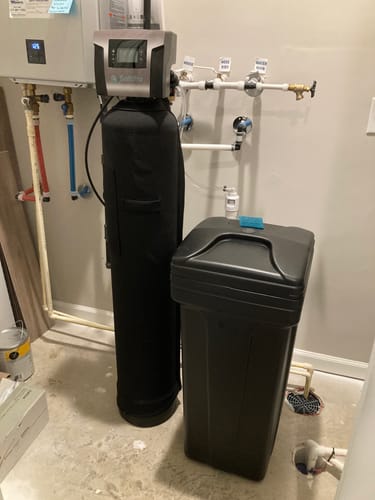
How do AIO and greensand filters actually compare where it counts—iron, manganese, and sulfur removal? The differences are sharper than most people expect.
Katalox Light handles up to 30 ppm of iron—roughly double what greensand manages. That gap matters enormously if your water tests high. But iron capacity is just the start.
Greensand struggles with manganese and hydrogen sulfide, while Katalox Light tackles both effectively. If rotten-egg odor or black staining is your problem, greensand often falls short.
pH tolerance is another critical edge. Greensand needs a minimum pH of around 6.2 to function. Katalox Light works down to 5.8—a meaningful advantage if your water runs acidic. For households dealing with multiple contaminants, that broader performance range changes everything.
High Iron, Low pH, Sulfur: Which System Handles Your Water
If your water test shows high iron, low pH, and sulfur all at once, you're dealing with a combination that exposes the real limits of greensand filters. Potassium permanganate struggles under these stacked conditions, leaving performance inconsistent and maintenance demanding.
Katalox Light AIO filters handle this exact scenario with no chemicals required. Here's what makes it the stronger choice:
- Removes up to 30 ppm of iron reliably
- Operates effectively at lower pH levels
- Eliminates hydrogen sulfide without chemical injection
- Requires no potassium permanganate regeneration
- Reduces long-term media replacement frequency
We've seen this water profile challenge greensand systems repeatedly. When iron, pH, and sulfur converge, Katalox Light's wider operating range and chemical-free design deliver the consistent, low-maintenance performance your water demands.
What Greensand's Chemical Requirement Really Costs You
Choosing greensand means committing to potassium permanganate—and that commitment carries real costs most homeowners don't fully anticipate. The EPA classifies this chemical as a hazardous substance for good reason: it's corrosive, it irritates skin, eyes, and lungs, and it demands careful handling every time you replenish it. That's not a one-time inconvenience—it's a recurring operational reality.
Those costs add up fast. You're paying for the chemical itself, factoring in safety equipment, and absorbing the liability of storing a hazardous material on your property. AIO filters running Katalox Light eliminate that entire equation. No chemicals, no safety protocols, no repeat purchases—just consistent iron removal for 10+ years before media replacement. When we compare true lifetime costs, greensand's chemical dependency becomes its biggest disadvantage.
How to Choose Between AIO and Greensand Based on Your Water Test
Once you understand what greensand's chemical costs really look like over time, the next logical question is which system actually fits your water. Your water test results tell you everything.
Here's how to read them:
- Iron above 15 ppm → AIO with Katalox Light
- Manganese up to 15 ppm → AIO handles it; greensand struggles
- pH below 7 or as low as 5.8 → AIO without chemicals; greensand fails here
- Iron under 3 ppm with pH above 7 → Birm filter may suffice
- Complex water chemistry combining iron, manganese, and low pH → AIO with Katalox Light wins decisively
Katalox Light's 10+ year lifespan versus greensand's 4-6 years compounds those savings further. Match your media to your actual numbers, not assumptions.
Frequently Asked Questions
What Is the Best Iron Filter for an Irrigation System?
For irrigation systems, we recommend Birm or Katalox Light—both skip chemical regeneration entirely. If your iron's under 5 ppm, Birm's your budget pick. Need more capacity or lower pH? Katalox Light's your answer.
How Long Do Greensand Filters Last?
Greensand filters typically last 5 to 8 years, but here's the catch—chlorine exposure, iron bacteria, and poor maintenance can reduce that lifespan considerably. Proper regeneration with potassium permanganate keeps your media performing at its peak.
How Often Should the Greensand Filter Be Backwashed?
We recommend backwashing your greensand filter every 2-3 days to prevent channeling and maintain peak iron removal. Each cycle should run 10-15 minutes at 10-15 gpm per square foot, ensuring thorough media regeneration and preventing bacterial buildup.
What Is the Best Iron Removal Filter for Home Use?
We recommend Katalox Light as the best iron removal filter for home use. It's chemical-free, handles up to 30 ppm of contaminants, operates at lower pH levels, and lasts 10+ years—outperforming greensand filters considerably.


