


![SoftPro™ Chlorine+ Carbon Whole House Water Filter to Remove PFAS, Chlorine, Chloramine & Pesticides [City Water Filters Series]](http://softprowatersystems.com/cdn/shop/files/SoftPro_Whole_House_Carbon_Filter_with_Spin_Down_Water_Filter.webp?v=1783547361&width=140)


 855-683-8488


Cartridge Iron Filters vs Backwashable Iron Filters: What's the Difference?

Cartridge iron filters use mechanical filtration to trap iron particles, but they fail above 3 ppm and need frequent, costly replacements. Backwashable iron filters take a different approach — they oxidize dissolved iron first, then filter it out, handling up to 30 ppm while self-cleaning through backwash cycles. One struggles under pressure; the other thrives. Understanding exactly how each system works will help you make the right call for your well water.
Key Takeaways
- Cartridge iron filters use mechanical filtration to capture iron particles, while backwashable filters use oxidation to convert dissolved iron into filterable particles.
- Cartridge filters fail above 3 ppm iron concentration, whereas backwashable filters handle levels up to 30 ppm.
- Backwashable filters remove iron, manganese, and hydrogen sulfide in a single pass; cartridge filters cannot oxidize multiple contaminants.
- Backwashable filters are self-cleaning through backwash cycles, while cartridge filters require frequent, costly manual replacements.
- Backwashable filters last 6–8 years with higher upfront costs, whereas cartridge filters have lower initial costs but higher long-term expenses.
How Cartridge and Backwashable Iron Filters Remove Iron

When it comes to removing iron from your water, these two filter types couldn't be more different in their approach. Cartridge filters work through straightforward mechanical filtration — they physically capture iron particles as water passes through. Simple, but limited.
Backwashable filters play a smarter game. They use oxidation to convert dissolved ferrous iron into filterable ferric particles, then capture those precipitated solids within the filter media. Systems using Katalox Light media handle both clear water iron and red water iron with equal effectiveness.
Think of it this way: cartridge filters catch what's already there, while backwashable filters transform what's invisible into something they can trap. Understanding this fundamental difference helps you match the right technology to your specific iron problem.
Cartridge vs. Backwashable: Iron Removal Performance Compared
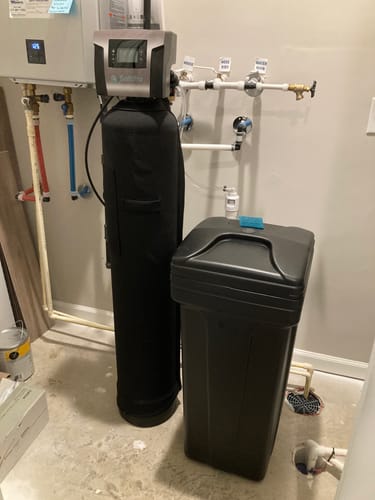
Both filter types can remove iron effectively — but the real story is in the limits.
Cartridge filters handle up to 30 ppm of iron, manganese, and hydrogen sulfide — solid performance for most households. Backwashable systems push beyond that ceiling, making them the better choice for severe contamination.
Here's where it gets interesting:
- Cartridge filters deliver consistent performance throughout their lifespan
- Backwashable media degrades over time, gradually reducing efficiency
- Backwashable systems with Katalox Light media last 6-8 years before needing replacement
- Backwash cycles waste significant water, while cartridge systems don't
If your water has moderate iron levels, cartridges win on consistency and efficiency. Higher contamination? Backwashable systems earn their place — just understand the trade-offs before committing.
Where Cartridge Iron Filters Hit Their Limits
Cartridge iron filters work well — until they don't. Once iron levels climb past 3 ppm, they clog fast, lose effectiveness, and demand constant, costly replacements. There's no backwash cycle to self-clean — just a filter silently failing.
They can't oxidize and filter iron, manganese, and hydrogen sulfide in a single pass. And don't confuse them with water softeners — ion exchange doesn't remove dissolved iron either.
Here's where cartridge filters consistently break down:
| Limitation | Cartridge Filter | Backwashable Filter |
|---|---|---|
| Iron capacity | Fails above 3 ppm | Handles high iron levels |
| Maintenance | Frequent replacements | Self-cleaning backwash |
| Multi-contaminant removal | Single-stage only | Iron, manganese, H₂S |
The pattern's clear — cartridge filters aren't built for iron-heavy well water.
Iron Filter Costs, Maintenance, and Lifespan Breakdown
Choosing between these two systems often comes down to one question: what're you actually paying over time?
Cartridge filters win on upfront cost but demand frequent attention — replacements every 6–12 months at $50–$200 each add up fast. Backwashable systems cost more initially, yet their media lasts 6–8 years, dramatically reducing long-term expenses.
Here's what separates them operationally:
- Cartridge filters require simple, regular cartridge swaps
- Backwashable filters involve more complex maintenance routines
- Water efficiency favors cartridge systems — backwashing wastes significant water
- Contaminant capacity favors backwashable systems, handling iron, manganese, and hydrogen sulfide up to 30 ppm
We recommend thinking beyond the purchase price. Your true cost lives in the years of operation ahead, not the initial invoice.
Which Iron Filter Is Right for Your Well Water?
The right iron filter for your well water isn't a one-size-fits-all answer — it starts with knowing exactly what's in your water. If your iron levels sit below 3 ppm, a cartridge filter delivers reliable, straightforward performance.
Push beyond that threshold, and a backwashable system with advanced media like Katalox Light becomes the smarter investment.
We can't stress this enough — professional water testing isn't optional. It reveals your exact iron and manganese concentrations and verifies your system is properly sized for peak household demand. Guessing costs you more in the long run.
Think of it this way: the upfront data drives the right decision. Get your water tested, match the system to your numbers, and you'll never second-guess your choice.
Frequently Asked Questions
Should You Backwash a Cartridge Filter?
No, you shouldn't backwash a cartridge filter. It can damage the cartridge and reduce its effectiveness. Instead, we simply replace the cartridge when it's spent, keeping our filtration system performing at its best.
What Is the Best Iron Filter for an Irrigation System?
We recommend a backwashing iron filter with Katalox Light media for your irrigation system. It'll handle higher flow rates, remove up to 30 ppm of iron, and self-clean automatically—keeping your system running efficiently with minimal maintenance.
How Often Should an Iron Filter Backwash?
We recommend backwashing your iron filter every 3-4 days, but if your well water has higher iron or sediment concentrations, you'll need to backwash daily to maintain peak performance and prevent clogging.
What Type of Pool Filter Is Most Effective?
We've found that DE filters reign supreme, removing particles as small as 5 microns. However, if you're chasing cutting-edge performance, regenerative media filters push filtration even further, capturing particles down to 3 microns.


