


![SoftPro™ Chlorine+ Carbon Whole House Water Filter to Remove PFAS, Chlorine, Chloramine & Pesticides [City Water Filters Series]](http://softprowatersystems.com/cdn/shop/files/SoftPro_Whole_House_Carbon_Filter_with_Spin_Down_Water_Filter.webp?v=1783547361&width=140)


 855-683-8488


Cartridge vs Backwash Iron Filter: Which Suits Your Iron Level Best?

If your iron level is below 10 ppm, a cartridge filter can handle the job efficiently with minimal fuss. Push past that threshold, and you'll likely need a backwash system with stronger oxidizing media. Your water's pH, iron type, and whether manganese or hydrogen sulfide tags along all shape the right choice too. Stick with us, and we'll walk you through exactly which system matches your water's specific profile.
Key Takeaways
- Cartridge filters suit iron levels below 10 ppm, offering compact size, low maintenance, and no backwash water waste.
- Backwash filters handle iron levels up to 30 ppm using air-injection oxidation or aggressive media like Katalox.
- Water with combined iron, manganese, or hydrogen sulfide requires a backwash system with appropriate oxidation media.
- Cartridge replacements cost $50–$200 each, while backwash media lasts 6–10 years, favoring backwash for higher iron loads.
- Flow rates exceeding 8 GPM or larger households need backwash systems capable of handling up to 20 GPM.
Iron Level, Type, and pH: What Actually Determines Your Filter Choice

Before choosing between a cartridge and backwash iron filter, you need to understand what's actually in your water. Three factors drive that decision: iron level, iron type, and pH.
The right iron filter starts with knowing your water — iron level, iron type, and pH drive everything.
Clear water? That's ferrous iron — it's dissolved and needs oxidation before filtration. Reddish-brown water signals ferric iron, which you can filter directly. Get the distinction wrong, and your system underperforms from day one.
If manganese is present, you'll need a specialized media like Katalox-Light. If hydrogen sulfide is causing that rotten egg smell, look for systems with air injection oxidation.
Don't overlook pH either. Water below 6.8 is acidic enough to compromise filter performance entirely, requiring pre-treatment first. Know these variables upfront, and you'll choose the right system with confidence.
When a Cartridge Iron Filter Is Enough for Your Water
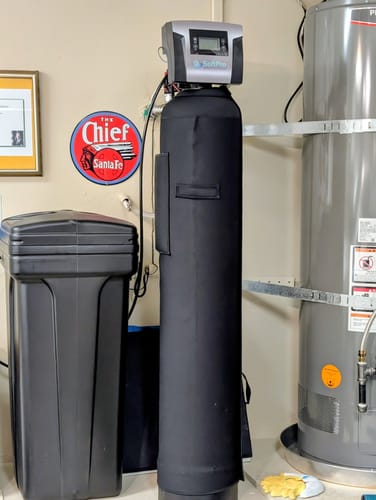
If your iron levels sit at or below 10 ppm, a cartridge filter can handle the job cleanly and simply. These systems remove both ferrous and ferric iron effectively without the complexity of a backwash tank setup.
Here's what makes them worth considering:
- Compact footprint – they fit where larger tank systems won't
- Low maintenance – cartridge replacements every 6–12 months keep things running
- Cost-efficient upfront – you avoid the higher investment a backwash system demands
- Consistent performance – no media degradation means reliable filtration long-term
- Water-efficient – no backwash cycles wasting hundreds of gallons
If your water chemistry fits within that 10 ppm threshold, a cartridge filter delivers exactly what you need without overengineering the solution.
When You Need a Backwash Tank Iron Filter Instead
Some water problems simply outgrow what a cartridge filter can handle. When your iron levels climb above 10 ppm, you'll need a backwash tank system that can manage heavier contaminant loads without constant maintenance headaches.
Ferric iron especially demands more aggressive media like Katalox or Pro-OX, which only backwash systems effectively deploy. If your well pump exceeds 8 GPM, a backwash tank also guarantees you're generating enough flow to actually clean the media properly.
Dealing with a combination of iron, manganese, and hydrogen sulfide? Multi-stage backwash setups handle that complexity far better than cartridges ever could. And if iron bacteria are your enemy, pairing a backwash tank with chlorine or ozone injection gives you the oxidation power to eliminate the problem at its source.
High Iron, Manganese, or Sulfur? How to Match the Filter to Your Water
Matching the right filter to your water chemistry makes all the difference between a system that lasts and one that constantly struggles. If you're dealing with iron alone up to 30 ppm, an air-injection oxidation system like the SoftPro Iron Master AIO handles both ferrous and ferric iron efficiently.
But when manganese or hydrogen sulfide enters the picture, you'll want Katalox or chemical oxidation media—they're built for that multi-contaminant complexity.
Flow rate matters too. SpringWell's high-capacity systems support up to 20 GPM, so larger households won't sacrifice pressure. And don't overlook pump flow rate, iron concentration, and any co-contaminants when sizing your system. Get those variables right, and your filter works with your water—not against it.
Cartridge Replacements vs. Backwash Systems: Which Costs Less Over Time
Once you've matched the right filter media to your water chemistry, the next question hits your wallet: what's this going to cost you over time?
Cartridge systems look cheaper upfront, but replacements run $50–$200 per cartridge. Standard cartridges need frequent swaps, though ultrafiltration membranes can stretch that to five years. Still, homes with moderate-to-high iron levels often burn through cartridges fast, and those costs compound.
Backwash tank systems demand more investment initially, but their media lasts 6–10 years. Yes, they use extra water during backwash cycles, but that expense is negligible compared to relentless cartridge replacement costs.
The math usually favors backwash systems for higher iron loads. If you're planning for the long haul, total lifetime ownership cost should drive your decision—not the sticker price.
Frequently Asked Questions
What Type of Water Filter Is Best for Iron?
For iron levels up to 30 ppm, we recommend air-injection oxidation filters. They're highly effective, but if you're unsure of your iron type, testing your water first guarantees you'll choose the right system.
What Is the Best Water Treatment for High Iron Levels?
For high iron levels, we recommend a backwashing iron filter like the SpringWell WS or Terminox®. They'll automatically oxidize and flush out iron, handling 10-20 GPM while tackling ferrous, ferric, and manganese contaminants effectively.
How Often Should I Backwash My Iron Filter?
We recommend backwashing your iron filter every 3-7 days, depending on your household's water usage. High-usage homes need it every 3-4 days, while lighter usage allows weekly cycles to keep your filter media performing excellently.
What Are Common Problems With Iron Filters?
Common iron filter problems we see include clogging, channeling, resin fouling, and bypassing. You'll also encounter iron bacteria buildup, pressure drops, and incorrect regeneration cycles—all of which tank your filter's efficiency if left unchecked.


