


![SoftPro™ Chlorine+ Carbon Whole House Water Filter to Remove PFAS, Chlorine, Chloramine & Pesticides [City Water Filters Series]](http://softprowatersystems.com/cdn/shop/files/SoftPro_Whole_House_Carbon_Filter_with_Spin_Down_Water_Filter.webp?v=1783547361&width=140)


 855-683-8488


Chemical Iron Filter Systems: What They Involve and What They Cost

Chemical iron filters use oxidizing agents like chlorine or potassium permanganate to convert dissolved iron into solid particles, which a filter bed then traps and removes. They work, but they're not cheap or low-maintenance. You're looking at $300–$800 annually in chemicals, electricity, and professional service visits — and that's before unexpected repairs. If you're weighing whether this system actually makes sense for your situation, there's a lot more worth knowing before you decide.
Key Takeaways
- Chemical iron filters use oxidizing agents like chlorine or potassium permanganate to convert dissolved iron into solid, filterable particles.
- The process requires continuous chemical dosing via a feed pump, making it dependent on consistent chemical replenishment.
- Accumulated iron particles are trapped in filter media and must be regularly flushed through frequent backwashing cycles.
- Annual operating costs range from $300 to $800, covering chemicals, electricity, and professional maintenance visits.
- These systems work best for iron levels above 7 ppm but are less cost-effective than chemical-free alternatives for general use.
What Is a Chemical Iron Filter?

Chemical iron filters tackle dissolved iron by introducing an oxidizing agent — typically chlorine or potassium permanganate — that converts it into solid particles we can physically filter out. Think of it as forcing invisible iron out of hiding. Once oxidized, those particles become trapped in the filter media, leaving you with cleaner, iron-free water.
What makes this system distinct is its reliance on continuous chemical dosing. A chemical feed pump delivers precise amounts of oxidizing agent to sustain effective removal — without it, the process simply stops working. That ongoing chemical dependency separates these systems from air-injection or catalytic carbon alternatives, which operate without added chemistry. Understanding this distinction helps us evaluate whether a chemical iron filter genuinely matches our water treatment goals.
How Chemical Iron Filters Remove Iron From Well Water
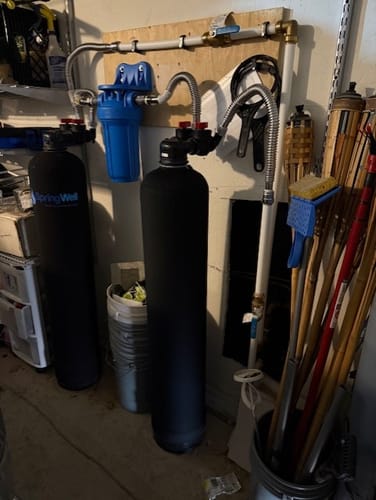
Now that we comprehend what chemical iron filters are, let's look at exactly how they do the heavy lifting. These systems introduce oxidizing agents—typically chlorine or potassium permanganate—directly into your water supply. That chemical contact forces dissolved iron out of solution, converting it into iron hydroxide and iron oxide precipitates.
These solid particles don't just disappear. They accumulate inside the filter media bed, where they're physically trapped and removed from your water. But that bed fills up fast. To keep performance sharp, you'll need frequent backwashing cycles to flush accumulated sediment and restore the media's capacity. It's an active, chemistry-driven process—effective, but one that demands consistent attention to keep running properly.
The Real Annual Cost of Running a Chemical Iron Filter
Running a chemical iron filter isn't just a purchase—it's an ongoing financial commitment that surprises most homeowners. Let's break down exactly where your money goes annually.
| Expense | Frequency | Annual Cost |
|---|---|---|
| Oxidizing agents | Monthly | $240–$480 |
| Electricity (backwashing) | Monthly | $60–$180 |
| Professional maintenance | 2–4 visits/year | $300–$700 |
| Media replacement | Every 3–5 years | $40–$267 |
These numbers add up fast—$300–$800 annually before you factor in unexpected repairs. The oxidizing chemicals alone drain your wallet steadily, and most homeowners never anticipate the professional maintenance visits. Understanding these costs upfront helps you evaluate whether a chemical iron filter truly fits your budget or whether alternative systems deserve serious consideration.
Why Some Homeowners Switch From Chemical to Chemical-Free Iron Filters
After spending hundreds of dollars annually on oxidizing chemicals and professional maintenance visits, it's no surprise that many homeowners start questioning whether there's a better way. Chemical-free air injection oxidation (AIO) filters offer a compelling answer.
The switch typically comes down to four factors: cost, convenience, safety, and performance. AIO systems eliminate chemical feed pumps, storage tanks, and recurring chemical purchases entirely. Their media lasts 6-10 years, far outlasting greensand and similar alternatives. Homeowners also avoid the real safety concerns of storing and handling hazardous chlorination chemicals.
Perhaps most convincingly, AIO systems actually deliver better water quality — improved taste, reduced odor, and less strain on your plumbing and appliances. Once homeowners understand what's possible, the decision rarely feels difficult.
When a Chemical Iron Filter Makes Sense: and When It Doesn't
That said, chemical iron filters aren't obsolete — they still make sense in specific situations. If your iron levels exceed 7 ppm, a chemical system's aggressive oxidation process handles what gentler alternatives can't. They're also effective when you're dealing with combined contamination — iron, manganese, and hydrogen sulfide simultaneously.
But here's where it gets complicated. If your water tests acidic, a chemical filter will underperform and degrade faster, making it a poor long-term investment. And if operating costs matter — they should — expect to spend $300–$800 annually in chemicals and electricity, considerably more than air-injection alternatives.
The honest answer? Chemical iron filters solve specific, high-demand problems exceptionally well. Outside those conditions, you're likely paying more for less.
Frequently Asked Questions
How Much Does an Iron Filter System Cost?
We're looking at $1,500 to $3,000 for the system itself, plus $200 to $600 for professional installation. Factor in $300 to $800 annually for operating costs, and you'll recoup your investment within 2-3 years.
What Is the Price of an Iron Filter?
Iron filters typically run $1,000–$3,500, depending on size and technology. Whole-house AIO systems average $1,500–$2,500, while smaller well water units start around $800. We'll find you're paying more upfront but saving long-term.
What Are the Different Types of Iron Filters?
There are three main types of iron filters we'd recommend exploring: oxidizing filters, which use air injection; catalytic carbon filters; and chemical oxidation systems that use chlorine or potassium permanganate to remove dissolved iron effectively.
How Long Does an Iron Filtration System Last?
With proper maintenance, an iron filtration system lasts 6–10 years. The filter media typically needs replacement every 6–8 years, though consistent backwashing and monitoring can push that closer to a decade.


