


![SoftPro™ Chlorine+ Carbon Whole House Water Filter to Remove PFAS, Chlorine, Chloramine & Pesticides [City Water Filters Series]](http://softprowatersystems.com/cdn/shop/files/SoftPro_Whole_House_Carbon_Filter_with_Spin_Down_Water_Filter.webp?v=1783547361&width=140)


 855-683-8488


Chemical Iron Removal vs Chemical-Free AIO Iron Filtration: Which to Choose?

Choosing between chemical iron removal and chemical-free AIO filtration comes down to what's actually in your water. AIO systems use air as the oxidant — no chemicals, no ongoing purchases, just clean water for around $40 a year in maintenance. Chemical feed systems hit harder when contamination levels are extreme. Test your water first, know your numbers, and the right answer becomes obvious. Stick with us and we'll break down exactly which system wins for your situation.
Key Takeaways
- AIO systems use air as a natural oxidant, requiring no purchased chemicals, while chemical feed systems depend on ongoing reagent purchases.
- AIO handles iron and manganese up to 30 ppm and strips sulfur odors, making it a versatile, chemical-free solution.
- Chemical feed systems outperform AIO for extreme iron, high hydrogen sulfide, or stubborn high-concentration contaminants.
- Over 10 years, AIO costs roughly $400 total versus $1,000–$4,000 for chemical feed systems due to recurring chemical expenses.
- Choose AIO when contaminants fall within manageable thresholds; choose chemical feed when levels exceed those limits.
How AIO and Chemical Feed Iron Filters Actually Work?

There are 2 fundamentally different philosophies behind iron filtration, and understanding them changes how you evaluate everything else. AIO systems harness air as the oxidant, injecting it directly into the process to convert dissolved iron and manganese before filtration begins. No chemicals purchased, no reagents added — just air doing the work.
Chemical feed systems take a different path. They introduce oxidizing agents like potassium permanganate to trigger that same reaction, creating a dependency on purchased chemicals you'll need to monitor and replenish indefinitely. One system is self-contained; the other builds an ongoing maintenance obligation into your ownership experience. That distinction isn't just technical — it shapes what living with each system actually looks like long-term. Knowing this upfront lets you evaluate both options with clarity.
Which Contaminants Each System Handles Best?
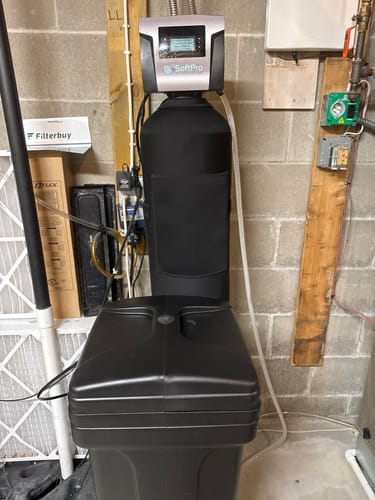
Knowing how each system works is only half the battle — the real question is whether a given system can actually handle what's in your water. Here's how each stacks up by contaminant:
- Iron & Manganese (up to 30 ppm): AIO systems handle both simultaneously — no chemicals required.
- Sulfur Odors: AIO wins here too, stripping that rotten-egg smell alongside iron and manganese in one pass.
- Extreme Iron & Sulfur Levels: Chemical feed systems using potassium permanganate or chlorine take over when contamination exceeds what air injection can oxidize.
- Stubborn, High-Concentration Contaminants: Chemical feed outperforms AIO when your water profile demands aggressive intervention.
AIO is your versatile everyday workhorse. Chemical feed is your heavy artillery. Knowing the difference lets you match the right system to your actual water.
What Your Water Test Results Tell You About Which to Choose?
Your water test results are the map — without them, you're just guessing. Once you've got real numbers, the decision becomes surprisingly straightforward.
| Water Condition | Recommended System |
|---|---|
| High ferrous iron only | AIO Air Injection |
| High iron + manganese | AIO or combined approach |
| Elevated hydrogen sulfide | Chemical feed system |
Here's how we read the results: if you're dealing with ferrous iron alone, AIO wins on efficiency and cost. Add manganese, and AIO still holds up well in standard well conditions. Spike the sulfur, and chemical feed shifts from AIO to target hydrogen sulfide more precisely — AIO simply can't match that specificity.
One more thing — if your water quality is improving over time, that's your signal to move from chemical feed to AIO and cut long-term costs.
The Real 10-Year Cost: AIO vs. Chemical Feed
Let's talk real numbers — because the cost difference between these two systems over a decade is significant enough to drive the decision on its own.
Over 10 years, here's what you're actually spending:
Over 10 years, the real cost of your water treatment system tells a story most salespeople won't.
- AIO systems: ~$400 total, including roughly $40 annually in maintenance
- Chemical feed systems: $1,000–$4,000, driven by constant chemical refills and media replacements
- Hidden compounding costs: Chemical systems quietly stack expenses most homeowners never anticipate upfront
- AIO's payoff: That higher initial investment returns measurable savings through dramatically lower operating expenses
The math isn't subtle. Chemical feed systems demand ongoing financial commitment that compounds year over year. AIO systems don't. Once you're running one, you're finished spending — and that's a powerful position to be in.
Which Iron Filter Is Right for Your Well Water?
Choosing the right iron filter comes down to what's actually in your water — and that starts with testing. You need to know your iron, manganese, and hydrogen sulfide levels before committing to any system.
If your iron stays under 30 ppm, manganese under 15 ppm, and hydrogen sulfide under 10 ppm, an AIO system handles the job cleanly and cheaply — roughly $400 over a decade.
But when contamination pushes past those thresholds, chemical feed systems using potassium permanganate or chlorine become necessary.
Don't overlook pH either. Low pH water demands a neutralizer before iron removal, which shapes your entire system design.
Test thoroughly, understand your numbers, and you'll make a decision you won't regret years down the road.
Frequently Asked Questions
What Is the Best Filter to Remove Iron From Water?
The best filter depends on your iron levels. We recommend AIO systems for up to 30 ppm—they're chemical-free and cost-effective. Beyond that, chemical feed systems with potassium permanganate or chlorine outperform them.
What Is the Best Water Treatment for High Iron Levels?
For iron levels above 30 ppm, we recommend chemical-feed systems using potassium permanganate or chlorine—they'll outperform anything else. Below 30 ppm, AIO systems handle it effectively without chemicals, saving you thousands long-term.
What Is the Best Iron Removal Filter for Home Use?
We recommend AIO systems for most homes—they're chemical-free, remove up to 30 ppm iron, last 6-10 years, and cost just $400 over a decade. For extreme contamination, chemical feed systems handle higher levels effectively.
Is Iron Remover Necessary for a Water Purifier?
If your water supply has high iron content, we'd say yes — it's essential. Without it, you'll face staining, bad taste, and damaged plumbing and appliances over time.


