


![SoftPro™ Chlorine+ Carbon Whole House Water Filter to Remove PFAS, Chlorine, Chloramine & Pesticides [City Water Filters Series]](http://softprowatersystems.com/cdn/shop/files/SoftPro_Whole_House_Carbon_Filter_with_Spin_Down_Water_Filter.webp?v=1783547361&width=140)


 855-683-8488


Chemical Oxidation of Iron vs Natural Air Injection Oxidation: The Difference

Both methods oxidize dissolved iron, turning it from a soluble nuisance into filterable particles — but they do it differently. Chemical oxidation uses injected chemicals for precise, powerful treatment, handling up to 50 PPM and tackling stubborn bacterial iron. Air injection systems use pressurized air instead, eliminating chemicals entirely while automatically backwashing and treating iron, sulfur, and manganese simultaneously. Each approach fits different water conditions, and understanding those differences will help you choose the right system for your home.
Key Takeaways
- Chemical oxidation handles iron up to 50 PPM, while air injection oxidation (AIO) systems are limited to 30 PPM.
- AIO systems eliminate the need for liquid chemicals, whereas chemical oxidation requires careful dosing and regular replenishment.
- Chemical oxidation is more effective against organic or bacterial iron forms that AIO systems may struggle to treat.
- AIO systems automatically backwash and simultaneously treat sulfur and manganese, offering broader treatment in one unit.
- Chemical oxidation demands consistent monitoring and maintenance, while AIO systems operate with minimal homeowner intervention.
How Chemical Oxidation Removes Iron From Well Water

When iron levels in your well water get too high, chemical oxidation is one way to tackle the problem. We inject potassium permanganate or chlorine directly into the water, which converts dissolved ferrous iron (Fe2+) into insoluble ferric iron (Fe3+) particles. Those particles then get filtered out, leaving you with cleaner water.
It's a powerful approach, especially when you're dealing with high iron concentrations that simpler methods can't handle. But it's not without trade-offs. The chemical feed system demands careful monitoring, precise dosing, and consistent maintenance. You'll also need to account for potential byproducts that may require additional treatment, plus the safe handling and storage of the oxidants themselves. The ongoing complexity and costs are real factors worth weighing.
Chemical vs. Air Injection: Which Iron Filter Actually Wins
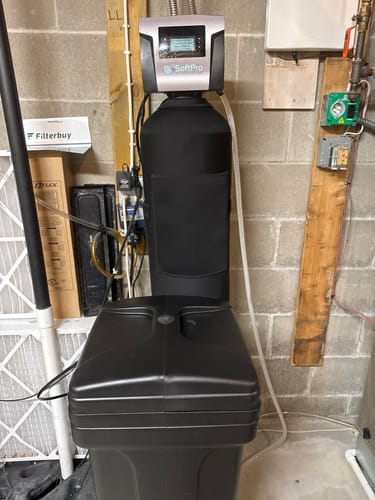
Chemical oxidation gets the job done, but it comes with a lot of moving parts—and that's exactly where air injection oxidation (AIO) systems pull ahead. Chemical systems cap out at 5 ppm of iron, demand manual backwashing, and require constant chemical replenishment. AIO systems handle up to 30 ppm, backwash themselves automatically, and eliminate the need for liquid chemicals entirely.
Here's what really tips the scale: AIO doesn't just tackle iron. The Katalox Light media simultaneously oxidizes sulfur and manganese, making it a broader solution for complex well water problems. You're getting a catalytic filter and physical filtration in one unit.
When you weigh cost, maintenance, and versatility side by side, AIO systems don't just compete with chemical oxidation—they replace it.
When Chemical Oxidation Outperforms an Air Injection Iron Filter
Air injection oxidation wins in most scenarios, but it does have a ceiling—and chemical oxidation is built to push past it. When iron levels climb above 10 PPM, air injection starts struggling.
Air injection oxidation wins in most scenarios—but when iron levels climb past 10 PPM, it starts to struggle.
Chemical oxidation handles concentrations up to 50 PPM, compared to air injection's 30 PPM cap.
But raw capacity isn't the only advantage. If your water contains organic or bacterial iron, chemical oxidation handles it far more effectively—those forms resist standard filtration, and air simply can't overcome that resistance.
We also love how precise chemical systems are. They're tunable to your exact water conditions and can automatically dose the right amount of oxidizing agent without constant monitoring. When complexity demands precision, chemical oxidation delivers what air injection fundamentally cannot.
Why Air Injection Iron Filters Skip the Chemicals Entirely
What makes air injection iron filters so appealing is their elegant simplicity—they harness something we already have in abundance: air. Instead of dosing your water with chlorine or potassium permanganate, these systems create a compressed air pocket that oxidizes dissolved iron naturally, converting it into solid particles the filter media then traps and removes.
No chemical tanks. No refills. No environmental footprint.
| Feature | Air Injection Filter |
|---|---|
| Oxidizer Required | None |
| Iron Removal Capacity | Up to 30 ppm |
| Targets | Iron, manganese, sulfur |
| Maintenance Level | Low |
| Chemical Waste | Zero |
That's a compelling case for whole-house filtration. We're talking about a system that works continuously, stays clean, and never asks you to handle hazardous chemicals.
Why Most Homeowners Choose Air Injection Over Chemical Treatment
When homeowners start comparing their options, the choice often comes down to one thing: how much hassle are you willing to accept? Chemical systems demand constant attention—you're regularly replenishing chemicals, monitoring dosing levels, and managing ongoing costs.
The real question isn't which system treats water better—it's how much hassle you're willing to live with.
Air injection systems sidestep all of that.
Here's what makes the difference: air injection handles up to 30 ppm of iron, tackles manganese and hydrogen sulfide simultaneously, and only asks for periodic backwashing in return. No chemicals. No complicated maintenance schedules.
We also can't ignore the practical reality—chemical systems are bulkier and energy-hungry compared to the compact, low-energy footprint of air injection. For most homeowners, that combination of thorough treatment, minimal upkeep, and efficient design makes the decision straightforward. Air injection simply works harder while demanding less.
Frequently Asked Questions
What Is Air Injection Oxidation?
Air injection oxidation uses a venturi nozzle to pull ambient air into your water tank, creating a compressed air pocket that transforms dissolved iron (Fe2+) into solid particles (Fe3+) we can then filter out.
Is It Safe to Drink Well Water That Has Iron in It?
Well water with iron below 0.3 ppm is generally safe to drink, but higher levels can cause gastrointestinal issues. We recommend testing your water to know exactly what you're dealing with.
What Are the Pros and Cons of Katalox Light?
Katalox Light's pros include handling up to 30 ppm iron, operating at low pH, and requiring less backwash. Its cons include a minimum pH requirement of 5.8 and potential limitations with extremely high contaminant levels.
What Is the Best Whole House Filter for Iron?
We recommend the Air Injection Oxidation (AIO) filter as the best whole-house iron removal solution. It handles up to 30 ppm of iron, eliminates sulfur and manganese, and requires zero chemicals.


