


![SoftPro™ Chlorine+ Carbon Whole House Water Filter to Remove PFAS, Chlorine, Chloramine & Pesticides [City Water Filters Series]](http://softprowatersystems.com/cdn/shop/files/SoftPro_Whole_House_Carbon_Filter_with_Spin_Down_Water_Filter.webp?v=1783547361&width=140)


 855-683-8488


Chemical vs Non-Chemical Iron Removal for High-Volume Well Water Systems

For high-volume well water iron above 10 ppm, you'll need chemical methods like hydrogen peroxide or chlorination to oxidize and filter it out. Below 10 ppm, non-chemical air injection or ozone systems handle the job without ongoing chemical costs. The right choice depends on your iron concentration, budget, and how much maintenance you're willing to commit to. Stick with us, and we'll help you find the solution that fits your water.
Key Takeaways
- Well water iron above 10 mg/L requires a point-of-entry system specifically engineered to handle high-volume iron concentrations.
- Chemical methods like hydrogen peroxide treat iron up to 20 ppm but require ongoing maintenance, precise dosing, and consistent chemical replenishment.
- Air injection systems remove iron up to 8 ppm without chemicals, pumps, or ongoing supply costs, protecting plumbing and appliances.
- Combining air injection with ozone generation handles up to 10 ppm, delivering whole-house chemical-free performance for moderately high iron levels.
- Katalox-Light air-injection filters last 6–10 years without chemical replacement, offsetting higher upfront costs compared to chlorine-injection systems.
What Qualifies as High-Volume Iron in a Well Water System?

When it comes to well water, not all iron problems are created equal. Most residential wells fall between 0.3 and 5 mg/L—manageable with standard filtration.
But once you cross the 10 mg/L threshold, you're dealing with high-volume iron, and the rules change entirely. At that level, you're not just noticing orange stains in your sink. You're watching iron systematically destroy your plumbing, clog your appliances, and compromise your entire water supply. Standard treatment equipment simply can't keep up.
That's why high-volume iron demands a point-of-entry system engineered specifically for this challenge—one that processes large water volumes while consistently tackling elevated concentrations. Understanding this distinction isn't academic; it's the foundation for choosing a solution that actually works.
How Hydrogen Peroxide and Chlorination Remove Iron at High Concentrations
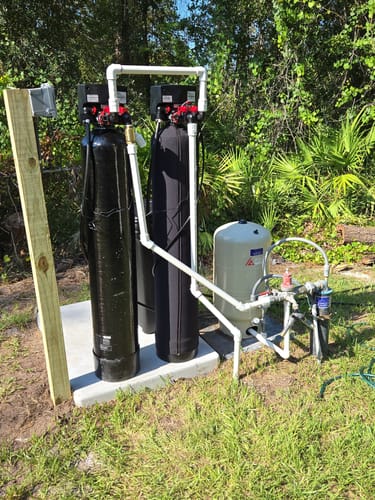
Once iron concentrations climb past 10 mg/L, standard oxidation methods can't keep pace—and that's where hydrogen peroxide and chlorination step in as the heavy hitters.
When iron levels exceed 10 mg/L, standard oxidation methods fail—hydrogen peroxide and chlorination become necessary.
Hydrogen peroxide handles ferrous iron up to 20 ppm, converting Fe2+ into filterable Fe3+ without introducing residual chemicals into your water. It's automated, whole-house capable, and clean.
Chlorination using sodium hypochlorite accomplishes the same oxidation but demands more from you—precise dosing, consistent monitoring, and regular chemical replenishment. Miss a step, and iron precipitation becomes inconsistent.
Your choice depends entirely on how much ongoing maintenance you're willing to commit to.
How Air Injection and Ozone Tackle Iron Without Chemicals
The appeal of air injection systems is straightforward—no chemicals, no feed pumps, no ongoing supply costs. Systems like the Flexx Oxi-Gen harness natural oxidation to tackle up to 8 ppm of iron, letting oxygen do the heavy lifting. That's a compelling baseline for most households on private wells.
But when iron levels push higher, we can step things up by incorporating ozone generation directly into the air injection process. That combination handles up to 10 ppm—still without introducing a single chemical into your water supply.
Both approaches protect your plumbing, appliances, and fixtures from iron staining while delivering whole-house performance. For well water users who want powerful, low-maintenance iron removal, air injection and ozone represent a genuinely elegant solution.
Chemical vs. Non-Chemical Iron Removal: Matching the Method to Your Water
Choosing between chemical and non-chemical iron removal really comes down to one thing: how much iron you're actually dealing with. If your well water tests above 10 ppm, you'll likely need a chemical system using chlorine or hydrogen peroxide, since these handle concentrations up to 20 ppm. Below that threshold, a greensand filter or aeration system becomes your cleaner, more cost-effective path forward.
We've seen homeowners make the mistake of over-engineering their setup. A greensand filter running at 8 ppm doesn't need chlorine injection. Conversely, chemical systems shine when iron levels demand serious oxidizing power.
Beyond concentration, consider your flow rate, available space, and whether you want chemicals in your treatment loop at all. Match the method to your water, not your neighbor's.
Long-Term Costs and Maintenance for Well Water Iron Removal Systems
Long-term costs separate good iron removal decisions from expensive ones. We've watched homeowners choose cheaper upfront systems, only to face compounding expenses that drain budgets quietly over years.
The cheapest iron removal system today often becomes the most expensive decision you'll regret tomorrow.
Here's what the numbers actually look like:
- Katalox-Light air-injection filters last 6–10 years without chemical replacement, backwashing every 3–7 days using 98–140 gallons per cycle
- Greensand filters demand chemical regeneration continuously and media replacement every 5–8 years, shortening your ownership advantage
- Chlorine-injection systems carry ongoing pump and chemical costs that never disappear from your maintenance budget
Katalox-Light's higher upfront investment pays for itself through eliminated chemical costs and extended media life. We're not just buying a filter—we're buying freedom from recurring expenses that quietly erode the value of cheaper alternatives.
Frequently Asked Questions
What Is the Best System to Remove Iron From Well Water?
For high iron levels, we recommend Katalox-Light oxidizing filters—they'll remove up to 20 ppm of both ferrous and ferric iron without chemicals, lasting 6-10 years with minimal maintenance costs.
How to Get Rid of High Iron in Well Water?
We recommend manganese greensand filters for high iron levels—they'll tackle both dissolved and oxidized iron efficiently. For concentrations up to 20 ppm, hydrogen peroxide-based oxidation systems work exceptionally well without recurring chemical costs.
Is It Safe to Drink Well Water With High Iron?
While high iron in well water isn't a direct health hazard, we'd still recommend treating it—especially if manganese is present, since levels above 0.3 mg/L pose real health risks.
How Much Does It Cost to Remove Iron From Well Water?
We're looking at $2,595–$6,725 for the system itself, plus $500–$1,500 for installation. Ongoing maintenance runs just $50–$100 annually—a small price compared to costly plumbing repairs iron-damaged pipes eventually demand.


