


![SoftPro™ Chlorine+ Carbon Whole House Water Filter to Remove PFAS, Chlorine, Chloramine & Pesticides [City Water Filters Series]](http://softprowatersystems.com/cdn/shop/files/SoftPro_Whole_House_Carbon_Filter_with_Spin_Down_Water_Filter.webp?v=1783547361&width=140)


 855-683-8488


Complete Well Water Test for Iron Treatment: What Labs Measure and Why

A complete well water test for iron treatment measures more than just iron levels — it captures ferric and ferrous iron separately, pH, hardness, manganese, and iron bacteria. Each number tells a different part of the story. You can't choose the right filter without knowing all of them together. Miss one, and your treatment system will likely fail or fall short. Stick with us, and we'll show you exactly what those numbers mean for your water.
Key Takeaways
- Labs measure ferric and ferrous iron separately, since each type requires a different treatment method to remove effectively.
- pH levels are tested because water below 7.0 neutralizes oxidizing iron filters, making them ineffective without prior treatment.
- Manganese above 0.05 ppm is flagged separately, as it requires specialized media beyond standard iron filtration systems.
- Iron bacteria are identified through testing because they demand unique removal strategies that conventional iron filters cannot address.
- Hardness levels determine whether an iron filter, water softener, or combined sequenced system is the appropriate treatment solution.
How Does Iron Get Into Your Well Water?

Iron sneaks into your well water in two main ways: nature and your own infrastructure. First, rain and snowmelt dissolve iron from surrounding soil and rocks, gradually seeping that iron-rich water into your well.
Second, your pipes and casings corrode over time, releasing rust directly into your water supply.
Here's where it gets interesting — not all iron looks the same. When iron dissolves completely, it stays invisible in water, a form called ferrous iron. Expose that same water to air, and oxidation transforms it into ferric iron, producing that familiar reddish-orange tint. Think of the endings as your guide: ferrous means you can't see it, ferric means you can. Understanding this distinction matters enormously when selecting the right treatment approach.
What Does a Certified Iron Water Test Actually Measure?
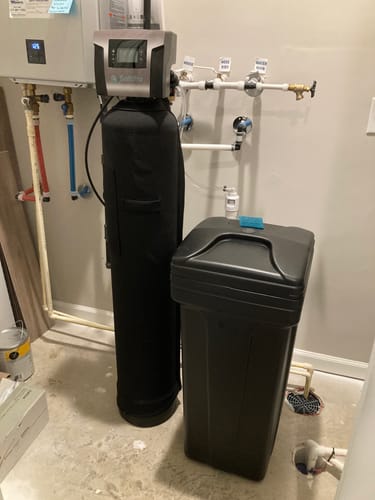
Once you know iron's two forms, the next question becomes obvious — how do you actually measure what's hiding in your water? A certified lab test goes far beyond a ballpark estimate.
Knowing iron's two forms is just the beginning — the real answers come from certified lab testing.
Here's what it precisely captures:
- Exact iron concentration — specific ppm readings for both ferric and ferrous iron, telling you how much and which type you're dealing with
- pH levels — determines how aggressively your water chemistry behaves with iron
- Hardness and manganese — these interact directly with iron, complicating treatment if ignored
- Bacteria presence — iron bacteria require completely different removal strategies
Unlike DIY test strips that approximate, certified results give you verifiable, actionable data. That precision matters enormously when sizing filtration equipment to your exact water conditions.
The 6 Numbers That Tell You Which Iron Filter You Need
Your test results arrive, and suddenly you're staring at a page full of numbers — but six of them do the real heavy lifting when it comes to choosing the right iron filter. Here's what actually matters:
Iron concentration tells us filter size and type. pH warns us if acidic water will foul that filter before it even commences working. Water hardness decides whether a dedicated iron filter or an iron-removing softener makes more sense. Manganese levels above 0.05 ppm mean we're adding specialized media to the equation. Hydrogen sulfide presence signals we'll need pre-oxidation first. And flow rate guarantees whatever system we choose can actually keep up with your household's demand. Miss any one of these, and we're guessing.
What High Iron, Low pH, and Hardness Readings Mean Together
When high iron, low pH, and high hardness show up together on the same test report, we're no longer dealing with a single-fix problem — we're looking at a chain reaction. Each number compounds the others, making standard single-unit solutions fall short.
Here's what that combination actually means:
- Low pH neutralizes iron filters — acidic water below 7.0 renders oxidizing media useless before treatment even begins.
- High iron overwhelms softeners — without pre-treatment, iron fouls resin beds fast.
- High hardness blocks complete iron removal — competing minerals reduce system efficiency.
- Together, they demand sequenced treatment — neutralization first, oxidation second, softening third.
Miss one stage, and the entire system underperforms. That's why reading all three numbers together changes everything.
What Should You Do With Your Iron Water Test Results?
Everything on that test report means nothing if we don't act on it — so let's talk about what actually comes next.
Start by matching your numbers to a treatment system designed for your specific combination of problems. High ferrous iron alone responds well to water softeners. Add low pH, and you need neutralization first. Throw in bacteria, and you're looking at shock chlorination before anything else touches the system.
Don't guess at equipment sizing either. Your flow rate, iron concentration, and hardness levels together determine what capacity you actually need.
Share your full results with a water treatment specialist — not just the iron number. Every parameter we've covered interacts with the others, and treating one without addressing the rest usually means solving the same problem twice.
Frequently Asked Questions
How Do You Know if Your Well Water Is High in Iron?
We'll notice telltale signs: water with a yellow, red, or brown tint, a metallic taste, stained fixtures and laundry, clogged pipes, or slimy reddish-brown deposits from iron bacteria lurking in our system.
How Do You Know if Your Well Has Iron Bacteria?
We'll know iron bacteria's lurking if we spot slimy, reddish-brown buildup, notice foul odors, or see discoloration. Confirming suspicions requires a specialized BART test or professional water assessment.
How Do You Test for Iron in Well Water?
We recommend sending your water to a certified lab—it's the gold standard for measuring iron in precise ppm readings. DIY test strips can estimate levels, but they're not accurate enough to size treatment equipment properly.
What Is an Acceptable Iron Level in Well Water?
We consider iron levels below 0.3 mg/L acceptable by EPA secondary standards. Above that, you'll notice staining and taste issues. Levels exceeding 3 mg/L raise health concerns, and anything above 10 mg/L demands immediate action.


