


![SoftPro™ Chlorine+ Carbon Whole House Water Filter to Remove PFAS, Chlorine, Chloramine & Pesticides [City Water Filters Series]](http://softprowatersystems.com/cdn/shop/files/SoftPro_Whole_House_Carbon_Filter_with_Spin_Down_Water_Filter.webp?v=1783547361&width=140)


 855-683-8488


Greensand Iron Filters vs Air Injection Systems: Which Removes More Iron?

Air injection removes more iron than greensand — up to 30 ppm versus greensand's 20 ppm ceiling. Air injection also handles higher manganese levels, eliminates hydrogen sulfide odor, and works reliably at lower pH levels where greensand struggles. Greensand depends on potassium permanganate chemicals to stay effective, while air injection needs no chemical additions. Your water chemistry ultimately determines which system wins, and the details behind that decision might surprise you.
Key Takeaways
- Air injection systems handle up to 30 ppm iron, while greensand filters max out at 20 ppm.
- Greensand uses manganese dioxide coating to oxidize iron but struggles beyond its 20 ppm capacity.
- Air injection creates an oxidizing environment using pressurized air, activating catalytic media like Katalox-Light.
- At pH below 6.8, greensand performance drops significantly, while air injection operates reliably from pH 6.0 up.
- For high iron levels, hydrogen sulfide, or low pH water, air injection consistently outperforms greensand filtration.
How Greensand and Air Injection Each Remove Iron

Both systems tackle iron removal differently, and understanding how each works can help you choose the right one for your home. Greensand filters rely on a manganese dioxide coating to oxidize dissolved iron, converting it into solid particles that the media then captures. It's a proven method, but it requires regular potassium permanganate additions to keep the media regenerated and effective.
Air injection systems take a chemical-free approach. They introduce pressurized air into the water, creating an oxidizing environment that activates media like Katalox-Light to trap iron. What makes this method particularly compelling is its versatility — it simultaneously targets manganese and hydrogen sulfide, giving you broader contaminant removal without the ongoing chemical maintenance that greensand demands.
Where Air Injection Outperforms Greensand on Iron Removal
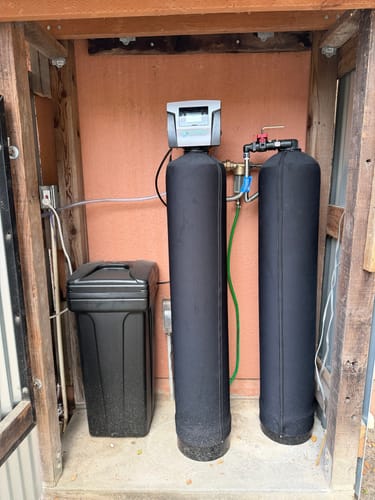
When iron levels push past 20 ppm, greensand filters simply can't keep up — but air injection systems handle up to 30 ppm without breaking a sweat. That's a 50% higher capacity, and it matters enormously when you're dealing with heavily contaminated well water.
Air injection systems also tackle manganese up to 15 ppm versus greensand's 10 ppm ceiling, and they'll strip out hydrogen sulfide up to 10 ppm simultaneously. Greensand can't touch that combination.
What makes this performance possible? The pairing of the Fleck 2510AIO valve with Katalox Light media creates an oxidation environment that consistently outperforms greensand's chemical-dependent process. We're also seeing better results across challenging water chemistry conditions, including low pH — territory where greensand struggles to perform reliably.
How Air Injection Handles What Greensand Can't: Sulfur, Manganese, and Low pH
Three contaminants — sulfur, manganese, and low pH — expose greensand's biggest weaknesses, and air injection handles all three without the chemical dependency or narrow operating conditions greensand demands.
Greensand struggles where your water gets complicated. Air injection doesn't.
| Challenge | Air Injection Advantage |
|---|---|
| Hydrogen sulfide odor | Oxidizes and removes it completely |
| Manganese oxidation | Catalytic media handles it effectively |
| Low pH water | Operates reliably at 6.0 and above |
| pH range restriction | Greensand requires 6.8–7.5; air injection doesn't |
That wider pH tolerance alone makes air injection a smarter fit for most real-world water conditions. Add sulfur elimination and reliable manganese oxidation, and you've got a system that performs where greensand consistently falls short.
What Greensand's Potassium Permanganate Actually Costs Over Time
Most greensand filter owners don't think much about potassium permanganate until the bills start adding up — and they do. At $50–$100 per year, it's not catastrophic, but it's recurring, and it compounds over time.
What's more, potassium permanganate isn't just an expense — it's a hazardous, corrosive chemical that demands careful handling. That adds hidden costs: proper storage, safety equipment, and the risk of mishandling it during regeneration.
Air injection systems sidestep all of this entirely. No chemicals, no hazmat concerns, no annual supply orders. Just clean, effective iron removal without the overhead.
When you're calculating the true lifetime cost of a filtration system, those recurring chemical expenses matter. We always encourage homeowners to look beyond the upfront price tag.
Greensand or Air Injection: Which Fits Your Water Chemistry?
Choosing between greensand and air injection comes down to one thing: your water chemistry.
Greensand performs best within a narrow pH window of 6.8–7.5. Push outside that range, and its efficiency drops. Air injection handles pH 6.0 and above, giving you far more flexibility.
Here's what your water test results should drive:
- Iron levels above 15 ppm — air injection handles up to 30 ppm; greensand can't compete.
- pH below 6.8 — greensand struggles here; air injection thrives.
- Hydrogen sulfide present — air injection removes up to 10 ppm; greensand doesn't address this.
We can't stress this enough: test your water first. Your chemistry dictates your technology, not the other way around.
Frequently Asked Questions
What Is the Best Filter for Removing Iron From Water?
We recommend air injection systems with Katalox Light media — they'll remove up to 30 ppm of iron, outperforming greensand filters while eliminating the need for hazardous chemicals like potassium permanganate.
What Is the Best Water Treatment for High Iron Levels?
For high iron levels, we recommend air injection systems with Katalox-Light media. They're chemical-free, handle up to 30 ppm of iron, and outperform greensand filters without requiring potassium permanganate regeneration or frequent media replacement.
What Is the Best Iron Removal Filter for Home Use?
We recommend air injection systems with Katalox-Light media—they're chemical-free, remove up to 30 ppm of iron, and outperform greensand filters in lifespan, pH flexibility, and overall contaminant removal for your home.
What Is the Cheapest Way to Remove Iron From Well Water?
Greensand filters are the cheapest upfront option for removing iron from well water. However, we've found that ongoing potassium permanganate costs and a shorter 5-8 year lifespan make them pricier long-term than air injection systems.


