


![SoftPro™ Chlorine+ Carbon Whole House Water Filter to Remove PFAS, Chlorine, Chloramine & Pesticides [City Water Filters Series]](http://softprowatersystems.com/cdn/shop/files/SoftPro_Whole_House_Carbon_Filter_with_Spin_Down_Water_Filter.webp?v=1783547361&width=140)


 855-683-8488


How Alkalinity Affects Iron Oxidation in an AIO Iron Filter

Alkalinity plays a bigger role in your AIO iron filter's performance than most people realize. When alkalinity climbs too high, bicarbonates and carbonates compete with iron for available oxygen, effectively starving the oxidation process. Without enough dissolved oxygen, ferrous iron can't convert to ferric iron, so it slips right through your filter. The ideal range sits between 40-80 mg/L as CaCO3. Keep exploring and you'll discover exactly how to take back control.
Key Takeaways
- Alkalinity directly impacts iron oxidation efficiency in AIO filters, with an ideal range of 40-80 mg/L as CaCO3 for optimal performance.
- High alkalinity causes bicarbonates and carbonates to compete with iron oxidation, consuming dissolved oxygen needed for ferrous-to-ferric iron conversion.
- Alkalinity above 200 mg/L as CaCO3 signals significant AIO performance challenges, often causing iron breakthrough and persistent red-brown staining.
- Regular water testing using home kits or laboratory analysis is essential for identifying alkalinity-related AIO iron filter performance issues.
- High alkalinity can be corrected through CO2 injection, acid injection systems, ozone-based filters, or potassium permanganate chemical oxidation.
What Alkalinity Means for Your AIO Iron Filter?

When it comes to your AIO iron filter's performance, alkalinity plays a bigger role than most people realize. It's your water's ability to neutralize acids, and that directly impacts how effectively your system oxidizes and removes ferrous iron. Think of it as a hidden variable quietly undermining your results.
Ideal alkalinity sits between 40-80 mg/L as CaCO3. Push beyond that range, and your AIO system struggles to oxidize iron efficiently. The water's buffering capacity virtually fights back against the oxidation process.
The good news? It's a fixable problem. By understanding where your alkalinity stands, you can make targeted adjustments — sometimes as straightforward as adding acid — to restore your system's iron removal performance.
Why High Alkalinity Starves Your AIO Filter of Oxygen
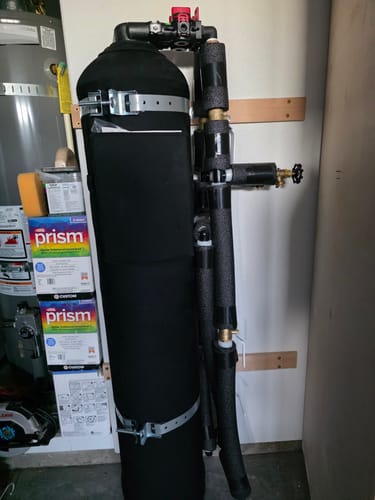
High alkalinity doesn't just slow down your AIO filter — it actively starves it of the oxygen it needs to work.
Bicarbonates and carbonates dissolved in high-alkalinity water consume available oxygen before it can drive iron oxidation. That leaves your AIO system with insufficient dissolved oxygen to convert ferrous iron into filterable ferric particles.
High alkalinity starves your AIO filter — bicarbonates and carbonates steal oxygen before iron oxidation ever begins.
Think of it as a competition your filter can't win. The higher the alkalinity climbs, the more oxygen gets consumed, and the less your system can oxidize iron effectively. The result? Reduced performance, shorter filter run times, and iron slipping through untreated.
Maintaining adequate dissolved oxygen isn't optional — it's the engine behind every successful oxidation cycle. High alkalinity quietly dismantles that engine before the process even begins.
Warning Signs High Alkalinity Is Blocking Iron Removal
Once your AIO filter starts losing the oxygen battle to high alkalinity, the evidence shows up fast — you just need to know where to look. The most obvious red flag is persistent red or brown staining in sinks, tubs, or laundry. That's dissolved ferrous iron passing right through unfilterd because oxidation never completed.
We also watch for iron breakthrough — detectable iron levels in treated water that should be clean. Don't ignore your pressure differential either. When the filter isn't converting iron properly, media performance shifts in ways gauges reveal. Regular water testing gives us the clearest picture.
If alkalinity reads above 200 mg/L as CaCO3 and staining persists, your system isn't failing — it's being chemically outmatched.
How to Test Well Water Alkalinity for AIO Performance
Before we can fix an alkalinity problem, we need to know what we're actually dealing with — and that means testing your well water. You've got two solid options: use a home test kit for quick results or send a sample to a certified laboratory for precise analysis. Lab testing is the more reliable choice if you want actionable data.
What you're looking for is an alkalinity reading between 100–300 mg/L as CaCO3. That's the sweet spot where your AIO system oxidizes ferrous iron efficiently. Fall outside that range, and you'll know exactly why your filter's underperforming.
This number also guides equipment decisions — it helps determine the right system size and media type for consistent, long-term iron removal.
Fix High Alkalinity or Switch to a Better Iron Filter
When alkalinity climbs above 300 mg/L, your AIO filter's oxidation efficiency takes a real hit — but you've got options.
High alkalinity doesn't mean you're stuck — it means your AIO filter needs a smarter approach.
Here's what we recommend tackling first:
- Inject CO₂ upstream to temporarily lower pH and alkalinity before water enters the AIO tank, improving oxidation conditions.
- Add an acid injection system using citric or sulfuric acid to bring alkalinity into the 150–200 mg/L sweet spot.
- Upgrade to an ozone-based iron filter, which overpowers high-alkalinity interference through stronger oxidation potential.
- Switch to a chemical oxidation system using potassium permanganate, which performs reliably regardless of alkalinity levels.
Each solution carries different costs and maintenance demands. Matching the fix to your water chemistry — not just your iron levels — is what separates a permanent solution from a recurring problem.
Frequently Asked Questions
What Are Common Problems With Iron Filters?
Common iron filter problems we see include iron breakthrough, channeling, media exhaustion, and improper backwash cycles. Low alkalinity's a sneaky culprit too — it slows oxidation, leaving dissolved iron untreated and slipping past your filter.
Does Reverse Osmosis Get Rid of Iron in Water?
Yes, reverse osmosis removes dissolved ferrous iron effectively, but it struggles with ferric (particulate) iron, which can clog RO membranes. We recommend pre-filtering ferric iron before it reaches your RO system.
What Is the Best Filter for Removing Iron From Water?
We recommend an Air Injection Oxidation (AIO) filter as the best solution for removing iron from your water. It effectively converts ferrous iron into filterable ferric iron, ensuring consistently clean, iron-free water.
What Happens to Iron in Water When It Is Oxidized?
When iron oxidizes in water, it transforms from dissolved ferrous iron (Fe²⁺) into solid ferric iron (Fe³⁺). We call this "rust," and it's what we can actually filter out of our water.


