


![SoftPro™ Chlorine+ Carbon Whole House Water Filter to Remove PFAS, Chlorine, Chloramine & Pesticides [City Water Filters Series]](http://softprowatersystems.com/cdn/shop/files/SoftPro_Whole_House_Carbon_Filter_with_Spin_Down_Water_Filter.webp?v=1783547361&width=140)


 855-683-8488


How to Account for Seasonal Iron Variation When Sizing Your Iron Filter

When sizing an iron filter, never rely on a single water test. Iron levels in well water shift dramatically across seasons, often swinging from under 1 mg/L to over 5 mg/L during spring snowmelt and fall lake turnover. We recommend testing during peak periods and oversizing your filter by at least 50% to handle worst-case surges. There's a lot more to this than most homeowners realize, and the details could save you from a costly mistake.
Key Takeaways
- Test iron levels during peak spring and fall seasons, not just once, to capture the highest concentrations your filter must handle.
- Size your iron filter for worst-case iron levels, not average readings, to prevent breakthrough during seasonal surges.
- Oversize your filter by at least 50% to build in a buffer that handles unpredictable seasonal iron spikes.
- Verify your well's flow rate meets backwash requirements, since larger filter beds need higher GPM for effective cleaning.
- Retest water quarterly and after major precipitation events to confirm your system still performs under changing iron loads.
Why Your Well's Iron Level Peaks in Spring and Fall

If you've ever noticed your well water turning rusty or leaving more stains around certain times of year, you're not imagining it. Spring snowmelt and heavy rainfall dissolve iron from surrounding soils before pushing it into your aquifer.
Meanwhile, fall brings what's called lake turnover — oxygen-rich surface water mixes downward, oxidizing dissolved iron and spiking your well's concentration. There's another layer: iron bacteria thrive in these transformative seasons, adding biologically bound iron on top of the chemical load.
Together, these forces create predictable annual peaks that can catch homeowners off guard. Understanding why these spikes happen is the first step toward sizing a filter that handles your water's worst days — not just its average ones.
Test at Peak Iron, Not Average Iron
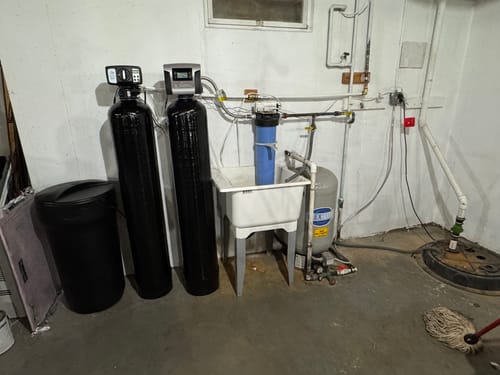
Most homeowners test their well water once and call it done — but that single snapshot can lead you straight into trouble when iron levels surge each spring and fall.
Here's what matters: iron concentrations shift dramatically across seasons, and if you size your filter around average readings, you're building for calm weather while ignoring the storm.
We recommend testing during peak periods — typically spring snowmelt and fall rainfall — when iron hits its highest concentrations. That's the number your filter needs to handle reliably, not the comfortable middle-ground average. Undersized systems don't just underperform; they allow iron breakthrough and burn through filter media faster than expected. Test at the worst-case level, and your system handles everything else with ease.
Why a Filter Sized for Average Iron Will Fail at Peak Demand
Sizing a filter around average iron levels is like buying a raincoat rated for drizzle and then standing in a downpour — it works fine until it doesn't. When seasonal iron spikes hit, an undersized filter simply can't keep up.
When you size for average:
- Flow drops — the filter becomes overwhelmed, starving your household of adequate water pressure
- Bleed-through occurs — unfiltered iron slips past, staining fixtures and laundry
- Water quality suffers — iron concentration in your supply climbs unpredictably
- Peak demand exposes the gap — average-based sizing masks the real worst-case scenario
Oversizing your filter capacity eliminates these failure points, ensuring consistent iron removal even when seasonal concentrations surge.
Why Oversizing Your Iron Filter Protects Against Seasonal Spikes
Oversizing your iron filter by at least 50% gives you a built-in buffer that absorbs seasonal iron surges without letting contamination slip through. Most households manage with a 2.5 cubic foot filter, but jumping to 3.5 cubic feet handles those unpredictable peak loads.
Here's the catch — larger media beds demand higher backwash rates:
| Filter Size | Minimum Backwash Rate |
|---|---|
| 2.5 cubic feet | Standard flow |
| 3.5 cubic feet | 15 GPM required |
| Typical well output | 8–10 GPM |
| Undersized backwash | Incomplete cleaning |
| Solution | Professional assessment |
If your well only produces 8–10 GPM, that 3.5 cubic foot filter won't backwash properly, defeating the entire strategy. We always recommend consulting a water treatment professional who'll match filter sizing to your actual water chemistry and seasonal patterns.
When to Retest Your Well Water for Seasonal Iron Changes
Getting your filter sizing right is only half the battle — even a perfectly sized system can fall behind if you don't know what your water is actually doing throughout the year. Iron doesn't stay static; it shifts with rainfall, water table changes, and seasonal pressure on your aquifer.
Test annually at minimum — iron levels can swing from under 1 mg/L to over 5 mg/L
Test quarterly if you notice seasonal water quality changes
Retest after significant precipitation events or drought periods
Adjust your filter system settings when iron load increases noticeably
Retesting isn't maintenance busywork — it's how you confirm your system's actually performing, not just running.
Frequently Asked Questions
How to Size an Iron Filter?
To size an iron filter, we'll need to test our water's iron levels, measure our flow rate in GPM, and factor in seasonal fluctuations—iron concentrations often spike during heavy rainfall or drought periods.
How Often Should an Iron Filter Regen?
We recommend regenerating your iron filter every 3-7 days, though high-capacity media like Katalox Light can stretch that to 1-2 weeks. Watch your pressure drop—it'll tell you exactly when it's time.
Will a 5 Micron Filter Remove Iron?
A 5 micron filter won't remove dissolved ferrous iron — it's simply too large to capture those molecules. For true iron removal, we need specialized media like Pro-OX that oxidizes and filters iron effectively.
Is a 20 or 25 Micron Filter Better?
We recommend a 20 micron filter over 25 micron for iron removal. It's finer pore size traps more oxidized ferric iron particles, preventing red-brown staining and capturing particulate matter more effectively, especially during high-iron seasonal fluctuations.


