


![SoftPro™ Chlorine+ Carbon Whole House Water Filter to Remove PFAS, Chlorine, Chloramine & Pesticides [City Water Filters Series]](http://softprowatersystems.com/cdn/shop/files/SoftPro_Whole_House_Carbon_Filter_with_Spin_Down_Water_Filter.webp?v=1783547361&width=140)


 855-683-8488


Iron and Hardness Together in Well Water: Testing and Treatment Planning

If your well water has rust stains on fixtures and scale buildup in pipes, you're almost certainly dealing with iron and hardness together. These two problems share the same origin — low-oxygen, acidic groundwater that dissolves iron while pulling in hardness minerals. Testing for both is essential before you design any treatment plan, because the order you install equipment determines whether your system actually works. Stick around and we'll walk you through everything you need to know.
Key Takeaways
- Iron and hardness commonly occur together in well water, as acidic, low-oxygen groundwater dissolves both iron and hardness minerals simultaneously.
- Key signs of iron and hardness problems include rust stains, metallic taste, scale buildup, and mineral deposits in toilet tanks.
- Lab testing should measure total iron, ferrous and ferric iron, iron bacteria, total hardness, and pH for accurate treatment planning.
- Effective treatment requires a sequenced system: sediment filter, acid neutralizer, iron filter, water softener, and carbon filter in that order.
- Iron must always be removed before water softening, as iron destroys softener resin and hardness minerals can foul iron filters.
Why Do Iron and Hardness Occur Together in Well Water?

When you pump water from a well, it's traveled through layers of underground rock and soil — and along the way, it picks up whatever minerals those formations contain. Iron and hardness almost always show up together because they share the same origin story.
Low-oxygen, slightly acidic groundwater dissolves iron from surrounding rock while simultaneously pulling calcium and magnesium into solution — the very minerals responsible for hardness. Deeper wells intensify this problem. The longer water sits in contact with mineral-rich formations, the more it accumulates both.
Signs Your Well Water Has Both Iron and Hardness
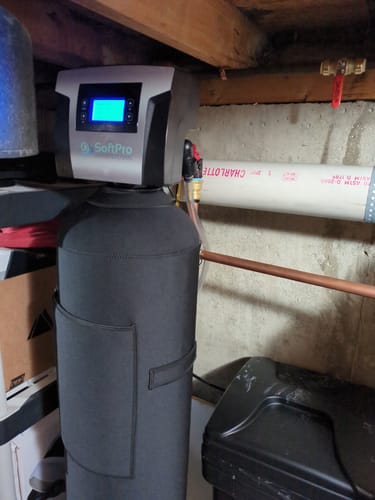
Most well owners don't need a lab report to suspect something's wrong — their home tells the story first. Rust-colored stains on sinks, toilets, and laundry? That's iron and hardness leaving their mark. A metallic taste or reddish-brown tint in your water confirms elevated iron working alongside hardness minerals.
Scale building up inside your water heater or appliances signals the same culprits. You might also notice your treatment equipment clogging more frequently than it should — that's what happens when iron and hardness minerals interact under pressure. Even your toilet tank can betray you, with strange mineral deposits forming along the walls.
These signs aren't coincidences. They're your well system communicating a chemistry problem that demands a deliberate, informed response.
How to Test Well Water for Iron and Hardness
Once you recognize those signs, the next step is confirming what you're actually dealing with — because treating a problem you haven't measured is just guessing. A proper water test gives you the numbers you need to make smart treatment decisions.
Treating a problem you haven't measured is just guessing — test your water before making any decisions.
Here's what an exhaustive test should cover:
- Total iron — distinguishing ferrous (clear-water) from ferric (red-water) iron
- Iron bacteria — often overlooked but critical for treatment selection
- Total hardness — measured in grains per gallon (GPG) or mg/L
- pH — directly impacts how iron behaves and which treatments work
We recommend sending samples to a certified lab rather than relying solely on home kits. You'll get actionable data — not approximations — and that precision shapes everything that follows.
How to Treat Well Water With Iron and Hardness Problems
Now that you know what's in your water, it's time to fix it — and the good news is that iron and hardness problems are very solvable when you install the right equipment in the right order. Sequence matters enormously here.
We recommend starting with a sediment filter, then an acid neutralizer to raise pH, followed by an iron/manganese filter, a water softener, and finally a carbon filter. Manganese greensand filters handle both dissolved and oxidized iron and manganese exceptionally well. Don't skip the acid neutralizer — softer, neutralized water protects every component downstream.
Water softeners can tackle dissolved iron, but only after oxidized iron is already removed. Size everything correctly, install it properly, and maintain it consistently. Get that part right, and your water quality transforms.
Why Installation Order Determines Whether Your System Works
Getting the order wrong doesn't just reduce your system's effectiveness — it can render the entire setup useless. Iron must be removed before water reaches your softener. Period. Hardness minerals foul iron filters, and iron destroys resin beds. Sequence is everything.
Pre-filter removes sediment that would clog downstream equipment. Iron filter eliminates iron before it contacts the softener resin. Water softener tackles hardness without iron interference. Carbon filter polishes taste and removes residual chlorine last.
We've seen homeowners install softeners first, then wonder why resin turns orange within months. That's iron poisoning your investment. Treat each stage as dependent on the previous one, because it is. Respect the sequence, and your system performs as designed.
Frequently Asked Questions
Does Iron Affect Water Hardness?
Iron doesn't directly affect your water's hardness level, but it'll foul your softener's resin, cutting its capacity and efficiency. We must treat iron first, then soften, to protect your system and achieve clean water.
How to Test Water for Iron and Hardness?
We recommend sending your water sample to a certified laboratory for precise iron and hardness measurements. While DIY kits offer rough estimates, professional testing gives you the accurate data you'll need to select the right treatment system.
What Is the Acceptable Iron Level in Well Water?
The acceptable iron level in well water is 0.3 mg/L. We recommend keeping levels below this threshold to avoid staining, taste issues, and the headaches that come with untreated iron buildup.
Can Too Much Iron in Your Well Water Make You Sick?
While too much iron won't typically make you sick, it's worth noting that iron-rich water can actually feed harmful bacteria, making infections harder to fight off. Let's test your water to know for sure.


