


![SoftPro™ Chlorine+ Carbon Whole House Water Filter to Remove PFAS, Chlorine, Chloramine & Pesticides [City Water Filters Series]](http://softprowatersystems.com/cdn/shop/files/SoftPro_Whole_House_Carbon_Filter_with_Spin_Down_Water_Filter.webp?v=1783547361&width=140)


 855-683-8488


Iron and Manganese Together in Well Water: Combined Health Considerations

Iron and manganese almost always appear together in well water, and that combination deserves serious attention. While iron mainly causes staining and taste issues, manganese is a neurotoxin that can cause real neurological harm — especially for infants and pregnant women. Testing your water tells you exactly how severe each mineral is, and the right treatment system can remove both at once. Keep going to understand what's really at stake.
Key Takeaways
- Iron and manganese commonly occur together in well water, as both dissolve from the same rocks, soils, and geological formations.
- Iron is primarily a nuisance contaminant, while manganese poses serious neurological health risks at elevated concentrations.
- Infants and pregnant women face the greatest danger from manganese exposure due to higher absorption rates and developing nervous systems.
- Both minerals are measured in mg/L, with EPA thresholds set at 0.3 mg/L to guide safe consumption limits.
- Effective treatment must address both minerals simultaneously, using oxidizing filters or chemical oxidation based on test results.
Why Iron and Manganese Almost Always Come Together in Well Water

Most well water containing iron also contains manganese — and that's no coincidence. These two minerals share remarkably similar chemical properties, and they dissolve from the same rocks and soils through identical geological processes. Think of them as chemical companions that rarely travel alone.
The moment that water hits oxygen — either at the surface or inside your plumbing — both minerals oxidize simultaneously, forming those familiar reddish-brown and black-tinted deposits.
Understanding their co-occurrence isn't just interesting chemistry — it's practically essential. Because they behave so similarly, the treatment approach you choose must effectively address both minerals at once.
Manganese vs. Iron: Why One Is Far More Dangerous to Your Health
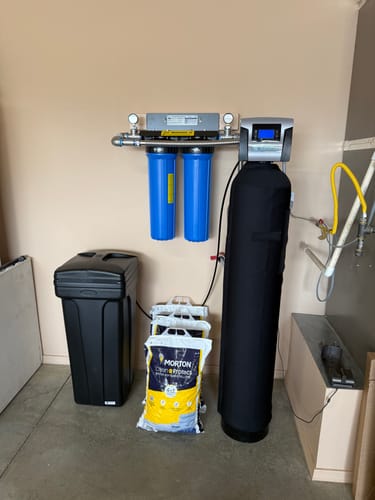
While iron and manganese often travel together, they don't pose equal risks to your health — and the difference matters more than you might expect. Iron is primarily a nuisance: stained fixtures, metallic-tasting water, and clogged pipes. Your body actually needs iron, so moderate exposure rarely triggers serious harm.
Manganese is a different story entirely. At elevated concentrations, it's a neurotoxin. Research links chronic manganese exposure to neurological damage resembling Parkinson's disease, cognitive decline, and developmental delays in children — even at levels the EPA once considered acceptable. Infants and young children face the greatest vulnerability.
This asymmetry changes how you should approach treatment. Removing iron protects your home. Removing manganese protects your brain. Both matter, but one demands urgency the other simply doesn't.
Are Infants and Pregnant Women at Higher Risk From Manganese?
When we talk about manganese as a neurological threat, the risk isn't spread equally across the population — some people are far more vulnerable than others, and infants and pregnant women sit at the top of that list.
- Absorption gap — Infants absorb more manganese than adults while excreting substantially less, compounding their total exposure.
- Neurological sensitivity — Developing nervous systems are disproportionately vulnerable to manganese toxicity compared to mature ones.
- Stricter safety thresholds — Pregnant women and young children should stay below the 0.3 mg/L manganese Action Level specifically because standard limits aren't protective enough for them.
Manganese does serve essential roles — digestion, bone strength, immune function — but that benefit disappears quickly when levels climb beyond safe boundaries.
What Your Iron and Manganese Test Results Actually Tell You
Getting your iron and manganese test results back is just the first step — knowing how to read them is what actually matters. Both minerals are measured in mg/L, and the EPA's aesthetic threshold for iron sits at 0.3 mg/L, with manganese sharing that same 0.3 mg/L health advisory benchmark.
But here's what the numbers really reveal: severity. Iron spans five categories from normal to extreme, and manganese follows the same five-tier scale. These classifications aren't arbitrary — they directly guide which treatment approach will actually work for your specific situation.
Manganese demands extra attention because of its health implications, particularly for infants. So when you're reviewing your results, don't just note the numbers — understand where they land on the severity scale.
The Most Effective Ways to Remove Both Iron and Manganese at Once
Once you know your severity levels for both minerals, the real question becomes: what's the most efficient way to tackle them together? Fortunately, several proven methods address both simultaneously.
- Oxidizing filters (greensand or Birm media) convert dissolved iron and manganese into filterable particles, then trap them — one system, two problems solved.
- Air injection systems use pressurized oxygen to oxidize both minerals before filtration, making them highly effective for elevated concentrations.
- Chemical oxidation with chlorination followed by filtration handles stubborn cases where biological manganese or high ferrous iron resists standard approaches.
Matching the method to your specific test results isn't optional — it's essential. The wrong system leaves contaminants behind while costing you time and money.
Frequently Asked Questions
Is It Normal for Well Water to Have High Iron and Manganese Levels?
Yes, it's common! We often find iron and manganese naturally occurring together in well water, especially where underlying geology contains these minerals. Understanding their combined levels helps us make smarter treatment decisions.
What Are the Potential Risks of High Levels of Iron and Manganese in Drinking Water?
While iron's risks are mostly aesthetic, high manganese levels can seriously harm our nervous system, especially in infants and young children. We'll want to keep manganese below the EPA's 0.3 mg/L advisory level.
Is Too Much Iron in Your Well Water Bad for You?
While iron in well water isn't directly harmful, we should know that excessive intake over time can cause hemochromatosis, leading to serious organ damage. We recommend keeping iron levels below 0.3 mg/L.
Is It Safe to Drink Well Water With Manganese?
Manganese in well water isn't safe above 0.3 mg/L—we're talking neurological risks, especially for children. We recommend testing your water regularly and installing a proper filtration system if levels exceed EPA guidelines.


