


![SoftPro™ Chlorine+ Carbon Whole House Water Filter to Remove PFAS, Chlorine, Chloramine & Pesticides [City Water Filters Series]](http://softprowatersystems.com/cdn/shop/files/SoftPro_Whole_House_Carbon_Filter_with_Spin_Down_Water_Filter.webp?v=1783547361&width=140)


 855-683-8488


Iron at 5 PPM in Well Water: What Treatment Is Required?

At 5 PPM, iron in your well water is over 16 times the acceptable limit, so it demands a real solution. A simple sediment or carbon filter won't cut it here. You'll need an oxidizing filter that converts dissolved ferrous iron into solid particles and then captures them. In some cases, pre-treatment through aeration or chemical injection is required first. Stick with us, and we'll walk you through exactly what your water needs.
Key Takeaways
- At 5 PPM, iron is over 16 times the acceptable threshold, requiring a comprehensive treatment strategy beyond simple filtration.
- Test your water first to identify iron type, total iron levels, pH, hardness, and presence of iron bacteria.
- An oxidizing filter is the recommended solution, converting dissolved ferrous iron into solid particles for effective removal.
- Pre-treatment through aeration or chemical injection must occur before filtration to prevent rapid clogging and filter failure.
- Monitor water pressure, test iron levels regularly, backwash the filter, and replace media every 5–10 years.
Is 5 PPM of Iron in Well Water Actually a Problem?

When you're pulling water from a well, finding out you've got 5 PPM of iron isn't exactly a worst-case scenario — but it's not something you can ignore either. It won't threaten your health, but it'll absolutely threaten your fixtures, appliances, laundry, and water taste. The threshold for "undesirable" sits at just 0.3 PPM — you're sitting at more than sixteen times that level.
That means you're likely already seeing orange staining, metallic-tasting water, and accelerated wear on water-using equipment. The real issue isn't danger — it's damage and livability. At 5 PPM, you're past the point where minor adjustments help. You need a real treatment strategy, and choosing the right one starts with knowing exactly what form of iron you're dealing with.
How to Confirm Your Iron Type Before Choosing a Filter
Before you spend a dime on treatment equipment, you need to know exactly what form of iron you're dealing with — because the wrong filter for the wrong iron type is money down the drain. Start with a simple iron test: fill a clear glass, let it sit, and watch for yellow or orange discoloration — that's ferrous iron revealing itself.
Then send a sample to a certified lab for a full breakdown — total iron, ferrous versus ferric, and iron bacteria presence. Review those results carefully alongside pH, hardness, and manganese levels, since manganese often hitchhikes with iron and demands its own removal strategy. These parameters together determine which treatment technology will actually work for your specific situation.
Why an Oxidizing Filter Is the Right Fix at 5 PPM
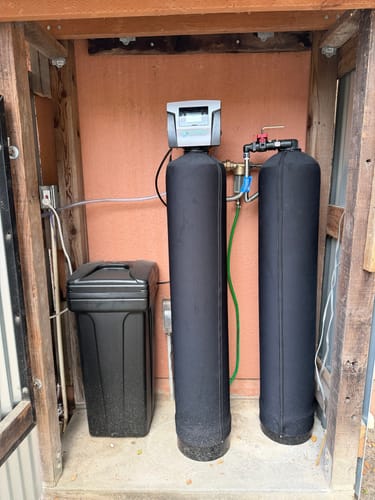
At 5 PPM, ferrous iron is invisible in the water — no rust, no sediment, nothing to catch — which is exactly why a standard sediment or carbon filter won't touch it. You need oxidation first, and that's where an AIO filter earns its place.
Here's what the AIO system does for you:
- Injects air to oxidize dissolved ferrous iron into solid ferric particles
- Captures those particles through a dedicated media bed
- Handles up to 10 PPM, giving you reliable headroom above your 5 PPM problem
- Backwashes automatically to flush accumulated iron and stay clog-free
It's a complete, self-maintaining solution — and it targets your specific iron type directly.
When Well Water at 5 PPM Needs Pre-Treatment Before Filtration
There are two jobs your filtration system has to do when iron hits 5 PPM — and if you skip the first one, the second one fails fast.
At 5 PPM, your filtration system has two jobs — skip the first one, and the second one fails fast.
At 5 PPM, your iron is still ferrous — dissolved, invisible, and impossible to capture with filter media alone. It flows right through like it's not even there. That's why pre-treatment isn't optional at this concentration; it's the foundation.
We need to oxidize first — either through aeration or chemical injection — converting that dissolved ferrous iron into solid ferric particles your backwashing filter can actually grab. Skip this step, and your Katalox or greensand media clogs fast, loses effectiveness, and costs you money.
Get the sequence right: oxidize, then filter. That's how we win at 5 PPM.
How to Tell If Your Iron Filter Is Working or Needs Service
Everything we just did to treat that iron — the oxidation, the filtration, the backwashing sequence — only pays off if the filter's actually working. Here's how we verify it's doing its job:
- Watch for discolored water or staining — rusty sinks and orange-tinted water signal the filter's losing the battle.
- Monitor water pressure — a noticeable drop often means media buildup is choking flow.
- Test iron levels before and after the filter — numbers don't lie; this confirms actual removal efficiency.
- Inspect and backwash regularly — accumulated iron destroys performance fast if we ignore it.
If media's exhausted, we replace it every 5–10 years. If demand's grown, we upgrade capacity. Simple diagnostics, serious results.
Frequently Asked Questions
Is 5 Ppm Iron in Water Bad?
Yes, 5 ppm iron's definitely problematic for your home. While it won't harm your health, it'll stain fixtures, clog pipes, ruin laundry, and leave your water tasting metallic — far exceeding the 0.3 ppm aesthetic limit.
What Is the Cheapest Way to Remove Iron From Well Water?
For 5 ppm iron, we recommend an air injection oxidation (AIO) filter as your most affordable solution. It converts ferrous iron into filterable particles, effectively cleaning your water without expensive chemicals or complex systems.
What Is the Best Way to Get Rid of Iron Bacteria in Well Water?
We'll want to shock chlorinate the well first, then follow up with continuous disinfection and filtration. This one-two punch kills the bacteria and prevents that slimy biofilm from clogging your pipes again.
How to Treat Iron Well Water?
We'll tackle iron well water by using an air injection oxidation filter to convert ferrous iron into filterable particles, then backwash it through Katalox or BIRM media for clean, iron-free results.


