


![SoftPro™ Chlorine+ Carbon Whole House Water Filter to Remove PFAS, Chlorine, Chloramine & Pesticides [City Water Filters Series]](http://softprowatersystems.com/cdn/shop/files/SoftPro_Whole_House_Carbon_Filter_with_Spin_Down_Water_Filter.webp?v=1783547361&width=140)


 855-683-8488


Iron Buildup in Irrigation System From Well Water: Signs and Solutions

If your irrigation system's running sluggish, leaving dry patches, or producing that telltale reddish-brown slime in the pipes, iron bacteria from your well water is likely the culprit. It clogs emitters, corrodes metal components, and quietly destroys your system's efficiency. The fix starts with proper testing, followed by shock chlorination and commercial-grade filtration built for the job. Stick with us — we'll walk you through everything you need to know.
Key Takeaways
- Iron bacteria forms reddish-brown slime that clogs pipes, emitters, and sprinkler heads, causing uneven water distribution and stressed plants.
- Key warning signs include orange surface staining, reduced water pressure, musty odors, and feathery growths inside filters.
- Standard residential filters cannot handle the high flow rates large properties demand, leaving iron bacteria largely untreated.
- Testing well water requires visual inspection, lab sampling, and iron and pH analysis to determine contamination extent.
- Shock chlorination with concentrated chlorine eliminates iron bacteria at the source, though professional assistance is strongly recommended.
What Iron Bacteria Does to Irrigation Systems

When iron bacteria take hold in an irrigation system, they don't just quietly sit there — they get to work building a slimy, rusty biofilm that clogs pipes, sprinkler heads, and drip emitters. That buildup restricts water flow, creates uneven coverage, and leaves your turf with dry spots and stressed plants.
The damage doesn't stop there. Iron bacteria accelerate metal corrosion inside your system and leave stubborn rust stains across hardscapes. If your well is the water source, the slime can block pump components and reduce overall well output.
You'll also notice it through your senses — the water takes on a musty, rotten odor and an unpleasant discoloration. Once iron bacteria establish themselves, they compromise your entire irrigation system's efficiency and reliability.
Warning Signs Your System Has Iron Bacteria
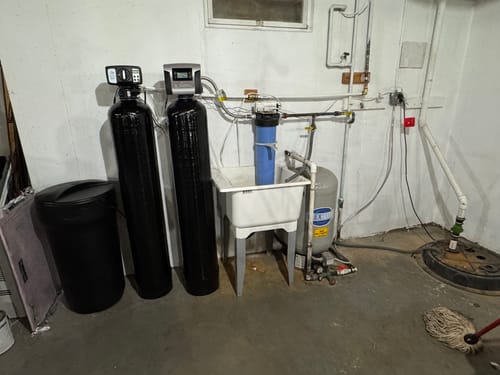
Iron bacteria rarely go unnoticed for long — they leave behind a trail of clues that are hard to miss once you know what to look for.
| What You See | What You Smell | What You Feel |
|---|---|---|
| Reddish-brown slime in pipes | Musty, swampy odor | Clogged filters and emitters |
| Orange or red surface staining | Oily smell from standing water | Reduced water pressure |
| Rainbow sheen on water | Stagnant, earthy scent | Restricted sprinkler flow |
| Feathery growths in filters | Foul well water smell | Uneven water distribution |
| Yellow deposits on nozzles | Persistent sulfur-like odor | Sluggish system performance |
Catching these signs early saves your system — and your wallet. Each symptom compounds the next, turning a manageable problem into a full system failure if we ignore it too long.
Why Standard Filters Can't Kill Iron Bacteria
Many homeowners assume a standard filter is enough to tackle iron bacteria — but that assumption can cost them dearly. Residential filters are built for 5-15 gallons per minute, yet large properties routinely demand 20-50 GPM or more. That gap matters enormously.
At higher flow rates, water races through filter media too quickly, slashing contact time and leaving iron bacteria largely untreated. The media fouls rapidly, and when backwashing can't keep pace with accumulation, particulates build up layer by layer. Performance declines steadily until the system fundamentally stops working.
We've seen it repeatedly — homeowners invest in standard filtration, only to watch their irrigation system deteriorate anyway. Effectively treating high iron concentrations at scale requires commercial-grade filtration systems engineered specifically for the demands large properties place on them.
How to Test Well Water for Iron Bacteria
Catching iron bacteria early starts with knowing what to look for — and fortunately, some of the most telling signs don't require a lab at all. That reddish-brown slime coating your well components? That's your first warning.
| Test Method | What It Detects | Why It Matters |
|---|---|---|
| Visual Inspection | Slimy reddish-brown coating | Quick, no-cost first indicator |
| Water Sample Lab Test | Bacterial presence | Confirms diagnosis definitively |
| Iron & Manganese Analysis | Contamination extent | Guides treatment intensity |
| pH & Dissolved Oxygen | Water chemistry factors | Reveals growth conditions |
| Professional Interpretation | Full water profile | Guarantees correct treatment selection |
We recommend combining visual checks with all-encompassing lab testing. A water treatment professional can then translate those results into an action plan that actually works.
Shock Chlorination and Filtration Treatments That Work
Once you've confirmed iron bacteria through testing, it's time to fight back — and shock chlorination is one of the most effective first moves we can make. It works by flooding your well and plumbing with a concentrated chlorine solution, eliminating iron bacteria at the source. Concentration and contact time are everything here — get either wrong, and you're just going through the motions.
A solution that's too strong can damage system components, so we strongly recommend bringing in a trained professional. After treatment, whole-house or point-of-entry filters capture dead slime while restoring taste and odor. For stubborn cases, professionals may escalate to surfactants, acids, or heat pasteurization — advanced tools that deliver results but demand expert handling.
Frequently Asked Questions
How Can I Remove Iron From My Well Water for Irrigation?
We'll tackle iron removal with a few solid options: install scrubber valves, use chemical treatments like Rid-O-Rust, or implement a brine solution system to neutralize iron before it damages your irrigation components.
What Are the Symptoms of Too Much Iron in Well Water?
We'll notice reddish-brown stains on surfaces, reduced water pressure, clogged nozzles, and sluggish valves. Iron bacteria can even create a thick, slimy buildup inside pipes, making our system increasingly difficult to maintain.
What Dissolves Iron Build Up?
We've found that chelating agents like EDTA, acidic solutions like citric or sulfamic acid, and oxidizing agents like hydrogen peroxide effectively dissolve iron buildup by converting stubborn ferric deposits into soluble, flushable compounds.
What Is the Cheapest Way to Remove Iron From Well Water?
The cheapest way we can remove iron from well water is by using a basic sediment filter. It's cost-effective, simple to install, and works well for low-to-moderate iron levels in your system.


