


![SoftPro™ Chlorine+ Carbon Whole House Water Filter to Remove PFAS, Chlorine, Chloramine & Pesticides [City Water Filters Series]](http://softprowatersystems.com/cdn/shop/files/SoftPro_Whole_House_Carbon_Filter_with_Spin_Down_Water_Filter.webp?v=1783547361&width=140)


 855-683-8488


Iron Cartridge Filter Replacement Frequency in High-Iron Well Water

In high-iron well water, cartridge filters need replacing every 1–3 months instead of the usual 6–12 months. Once iron levels exceed 2–3 ppm, particles physically bind inside the filter media, iron bacteria colonize the material, and flow gets choked fast. You'll notice orange stains, metallic taste, or pressure drops well before the expected replacement date. The good news? There's a smarter long-term solution worth knowing about.
Key Takeaways
- In normal conditions, iron cartridge filters last 6–12 months, but high-iron water above 2–3 ppm reduces lifespan to 1–3 months.
- Iron particles physically bind within filter media, permanently blocking flow pathways and accelerating the need for replacement.
- Iron bacteria colonize filter material over time, further speeding up clogging and compromising filtration efficiency.
- Replace your cartridge when pressure drops below 10 PSI, iron staining reappears, or water becomes discolored or metallic-tasting.
- Periodic water testing helps determine the right replacement schedule, and keeping spare cartridges prevents gaps in filtration coverage.
Why Cartridge Filters Fail Fast in High-Iron Well Water

Most cartridge filters simply aren't built to handle the iron loads found in well water. Here's why they fail so quickly: iron particles accumulate faster than standard cartridges can manage, creating blockages that choke flow and compromise filtration efficiency.
When iron concentrations run high, you're not dealing with trace contamination—you're fighting a relentless, particle-dense environment that exhausts filter media within weeks. Cartridges reach capacity fast, and once saturated, they can't recover.
The result? Replacements every one to three months, which adds up quickly in both cost and effort. We've seen this pattern repeatedly—what seems like a straightforward filtration solution becomes an expensive, high-maintenance cycle. Understanding this failure mechanism is the first step toward choosing a more effective, sustainable iron removal strategy.
Signs Your Iron Cartridge Filter Is Failing
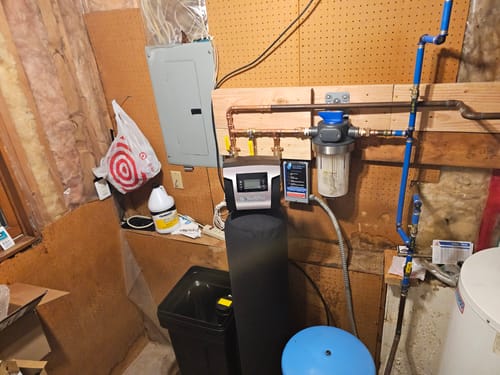
When your iron cartridge filter starts failing, it rarely goes quietly—there are clear warning signs that tell you it's time to act.
| Warning Sign | What It Means | Action Required |
|---|---|---|
| Orange/red stains on fixtures | Filter can't capture dissolved iron | Replace immediately |
| Metallic taste or rotten egg odor | Contaminant removal has failed | Inspect and replace |
| Cloudy or discolored water | Filter media is exhausted | Replace cartridge |
Beyond these visual cues, watch for frequent pressure drops and clogging—they signal saturation. If you're backwashing more often than the manufacturer recommends, your filter's already behind the curve. These signs don't just mean inconvenience; they mean unfiltered iron is moving freely through your system.
How High Iron Levels Shorten Cartridge Filter Lifespan
Those warning signs we just covered don't happen randomly—they happen faster when your iron levels are high, and understanding why helps you stay ahead of the problem.
Warning signs don't appear randomly—high iron levels make them happen faster and more destructively.
Iron attacks cartridge filters through several compounding mechanisms:
- Water with iron over 2 ppm reduces filter lifespan from 6–12 months down to just 1–3 months
- Iron particles physically bind within filter media, blocking flow pathways permanently
- Iron bacteria colonize filter material, accelerating clogging far beyond what dissolved iron alone causes
- Restricted flow and pressure drops signal a filter that's already compromised
- Replacement costs of $50–100 per cartridge stack up fast under high-iron conditions
We're not dealing with normal wear here—we're dealing with an accelerated failure cycle that demands a smarter long-term strategy.
How Often Should You Replace an Iron Cartridge Filter?
Under normal conditions, iron cartridge filters last 6–12 months—but if your iron levels climb above 3 ppm, that window shrinks fast, and waiting the full year could cost you more than just a filter.
Watch for two key replacement triggers: pressure dropping below 10 PSI or iron staining reappearing on fixtures. Either signal means your cartridge is exhausted and your downstream appliances are now at risk.
We recommend scheduling periodic water tests to dial in the right replacement frequency for your specific system—there's no universal answer. What works for 1 ppm won't work for 5 ppm.
Keep spare cartridges on hand. When your filter fails, you won't want to wait on shipping while iron-laden water damages your plumbing.
Why Air Injection Iron Filters Replace Cartridges Permanently
If you're tired of swapping cartridges every few months, air injection iron filters offer a fundamentally different approach—one that eliminates the need for replacements altogether. Instead of trapping iron in disposable media, these systems oxidize dissolved iron into solid particles, then flush them away automatically.
Here's what makes them a permanent solution:
- Oxidation-based filtration converts dissolved iron before it ever clogs anything
- Katalox Light media lasts 6–8 years versus 3–6 months for cartridges
- High contaminant capacity handles iron, manganese, and sulfur without becoming overwhelmed
- Automated backwashing eliminates manual maintenance cycles
- Long-term cost savings reduce both spending and environmental waste
We're talking about a system that works smarter—treating the problem at its source rather than repeatedly patching it.
Frequently Asked Questions
How Often Should an Iron Filter Be Replaced?
We recommend replacing your iron filter every 3-6 years, though high-iron water demands more frequent changes. Watch for reduced flow or returning stains—they're your filter's way of signaling it's exhausted.
What Is the Best Filter for Removing High Iron Levels From Well Water?
We've found that air injection oxidation systems with Katalox Light media are your best solution—they'll tackle high iron, manganese, and sulfur simultaneously in a single, efficient tank.
How Often Should an Iron Filter Regenerate?
For moderate iron (2–5 ppm), we recommend regenerating every 2–4 weeks. If your iron exceeds 5 ppm, regenerate weekly—it'll prevent pressure drops, filter breakthrough, and extend your system's lifespan considerably.
What Are Common Problems With Iron Filters?
We've seen iron filters struggle with clogging, pressure drops, iron bacteria growth, foul odors, rapid media depletion at high concentrations, and neglected injector maintenance—all compromising performance and cutting your filter's lifespan considerably shorter than necessary.


