


![SoftPro™ Chlorine+ Carbon Whole House Water Filter to Remove PFAS, Chlorine, Chloramine & Pesticides [City Water Filters Series]](http://softprowatersystems.com/cdn/shop/files/SoftPro_Whole_House_Carbon_Filter_with_Spin_Down_Water_Filter.webp?v=1783547361&width=140)


 855-683-8488


Iron Deposits in Dishwasher From Well Water: Diagnosis and Treatment

If your dishwasher has orange, rust-colored stains, your well water is carrying dissolved iron straight into your appliance. Even tiny amounts — just 0.3 ppm — cause visible buildup over time. You can remove existing stains with a dedicated iron cleaner like Iron OUT, but your water softener alone won't stop new deposits from forming. Treating the problem at the source is the only lasting fix, and we'll show you exactly how to do that.
Key Takeaways
- Well water with as little as 0.3 ppm iron causes visible orange or rust-colored staining inside dishwashers over time.
- Distinguish iron stains from hard water deposits: orange indicates iron, while white chalky buildup signals hard water minerals.
- Remove iron stains using Iron OUT cleaner for heavy buildup; avoid chlorine bleach, which won't effectively treat iron deposits.
- Standard water softeners don't remove dissolved iron; a dedicated iron filter is required to protect your dishwasher.
- Install an iron filter after your pressure tank and test water annually to prevent recurring iron buildup.
What Causes Iron Deposits in Your Dishwasher?

Well water is the sneaky culprit behind those stubborn pink or reddish-brown stains coating your dishwasher's interior. Here's what's actually happening: dissolved iron in your well water oxidizes when exposed to air and heat, depositing a persistent film on every surface it touches.
What's alarming is how little iron it takes to create visible damage — just 0.3 ppm triggers noticeable staining. Even if you're running a water softener, high iron concentrations can overwhelm the system, allowing buildup to continue unchecked.
There's another villain worth knowing: iron bacteria. These microorganisms thrive in iron-rich water, producing that dark reddish-brown slime you might notice forming. Together, oxidized iron and iron bacteria create a compounding problem that undermines your dishwasher's cleaning performance over time.
Is It Iron Stains or Hard Water? How to Tell the Difference
Two types of stains plague dishwashers, and knowing which one you're dealing with changes everything about how you treat it. Look closely at the residue. Orange or rust-colored deposits point directly to iron oxidizing in your water.
White, chalky buildup means you're fighting mineral accumulation from hard water instead.
The distinction matters because the fix differs completely. A vinegar rinse dissolves hard water deposits effectively, but it won't touch stubborn iron stains. Treating iron stains with vinegar wastes your time and leaves the real problem untouched.
We recommend testing your water to remove the guesswork entirely. Iron levels above 0.3 ppm produce visible staining, while anything under 1 ppm creates lighter deposits. Knowing your exact numbers tells you precisely what you're up against.
How to Remove Iron Stains From Your Dishwasher Right Now
Those orange stains aren't permanent, and clearing them out takes less effort than you'd expect.
Start with Iron OUT or a similar iron-removing cleaner for heavy buildup. For lighter deposits, run an empty hot cycle with one to two cups of white vinegar. While you're at it, pull out the filter and spray arms and scrub away any trapped iron particles.
One critical rule: never use chlorine bleach. It bonds iron stains permanently into surfaces.
| Method | Best For | Effort Level |
|---|---|---|
| Iron OUT cleaner | Heavy staining | Low |
| White vinegar cycle | Mild deposits | Very low |
| Filter/spray arm scrub | Trapped particles | Moderate |
| Bleach | Iron stains | Never use |
| Hot water flush | Loose iron | Very low |
Why Your Water Softener Isn't Protecting Your Dishwasher
If your water softener seems to be doing its job but your dishwasher still shows iron stains, the softener isn't actually the problem — it was never designed to fully remove iron in the first place. Softeners excel at addressing hardness minerals like calcium and magnesium, but dissolved iron slips right through.
Well water carries iron in forms that standard softeners simply weren't built to capture. Over time, that iron accumulates inside your dishwasher — coating spray arms, staining racks, and leaving that telltale pink film on dishes.
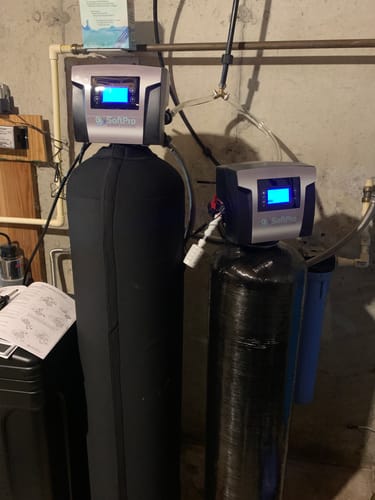
The real fix is installing a dedicated iron filter upstream of your softener. Together, they tackle different contaminants, giving your dishwasher the fully treated water it needs to perform consistently and stay protected long-term.
How to Stop Iron From Reaching Your Dishwasher for Good
Stopping iron before it ever reaches your dishwasher comes down to a few targeted steps that work together. First, install a dedicated iron filter—either an oxidizing filter or a birm filter—right after your pressure tank. This catches dissolved and particulate iron at the source.
Second, add a sediment pre-filter upstream to protect the iron filter from sand and debris that shorten its lifespan. Third, if your iron levels exceed 3 ppm, consider pairing that filtration with an air injection system, which oxidizes dissolved iron so your filter captures it efficiently.
Finally, test your water annually. Iron levels shift seasonally, and your treatment system needs to match what's actually coming out of the ground, not what was there two years ago.
Frequently Asked Questions
What Is the Best Way to Get Rid of Iron Bacteria in Well Water?
We recommend shocking your well with chlorine bleach — it kills iron bacteria effectively. Pour a diluted solution directly into the well, let it circulate, then flush thoroughly. Follow up with a whole-house iron filtration system for lasting protection.
How Much Does It Cost to Remove Iron From Well Water?
We're looking at $500 to $3,000+ to remove iron from well water. Most average homes spend $1,000–$2,000 on filtration systems, plus $50–$300 annually for maintenance like backwashing and media replacement.
Will Shocking a Well Get Rid of Iron Bacteria?
Shocking your well can temporarily kill iron bacteria, but they'll likely return. Without tackling the root cause of your iron problem, you'll need to repeat treatments. A proper filtration system offers the lasting fix you're after.
How Do You Know if You Have Iron Bacteria in Well Water?
We can spot iron bacteria by looking for pink, red, or brown slime in toilets or sinks, noticing reddish-brown stains on fixtures, smelling "rotten egg" odors, or seeing discolored particles floating in our water.


