


![SoftPro™ Chlorine+ Carbon Whole House Water Filter to Remove PFAS, Chlorine, Chloramine & Pesticides [City Water Filters Series]](http://softprowatersystems.com/cdn/shop/files/SoftPro_Whole_House_Carbon_Filter_with_Spin_Down_Water_Filter.webp?v=1783547361&width=140)


 855-683-8488


Iron Filter Control Valve Repair vs Replacement: How to Decide

When your iron filter control valve starts leaking, losing pressure, or failing to remove iron despite fresh media, it's time to make a tough call. We recommend using the 60% rule — if repair costs exceed 60% of a new valve's price, replacement usually wins. Your valve's repair history matters too. A troubled past predicts a troubled future. Stick around and we'll walk you through everything you need to make the right decision with confidence.
Key Takeaways
- If repair costs exceed 60% of a new valve's price, replacement is typically the smarter long-term financial decision.
- Persistent leaks, inconsistent pressure, or declining iron removal despite recent repairs are strong indicators for full replacement.
- Valves over 10 years old with worsening performance rarely justify continued repair investment.
- A documented repair history revealing repeated failures signals a pattern that future repairs are unlikely to break.
- When selecting repair, confirm the company holds factory certification and offers OEM parts with a repair warranty.
What Are the Warning Signs Your Iron Filter Control Valve Is Failing?

A failing iron filter control valve rarely gives out all at once — it sends signals long before it completely breaks down. Learn to read them early, and you'll avoid costly damage.
Watch for these warning signs:
Your iron filter control valve will warn you before it fails — if you know what to look for.
- Persistent leaks at the inlet or outlet that won't stop after tightening fittings
- Inconsistent flow or pressure fluctuations, including continuous water discharge
- Visible mineral buildup, corrosion, or physical damage on the valve itself
- Frequent manual intervention or inability to achieve complete closure
- Declining treatment performance despite regular backwashing and fresh media
Each symptom tells a story. A single sign might mean a minor fix. Multiple signs appearing together usually mean the valve's useful life is ending and replacement becomes the smarter investment.
The 60% Rule: When Iron Filter Valve Repair Costs Too Much to Justify
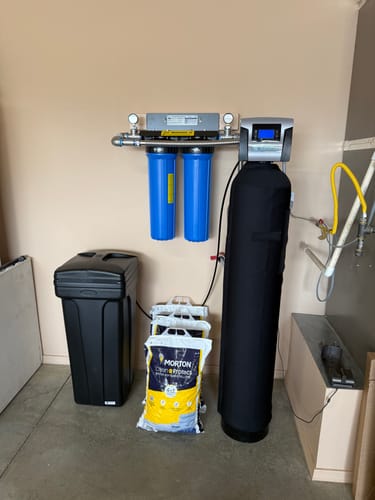
When repair costs start creeping toward the price of a new valve, there's a simple rule that cuts through the guesswork: the 60% threshold.
If your repair quote exceeds 60% of a replacement valve's cost, replacing wins every time. Here's why this rule works:
- Repairs approaching 60% signal deeper mechanical wear that won't stop at one fix.
- Frequent breakdowns compound costs faster than most homeowners anticipate.
- A new valve delivers reliability, efficiency, and restored water quality immediately.
- Replacement eliminates the cycle of diminishing returns that repeated repairs create.
We've seen homeowners chase cheap fixes only to spend far more long-term. The 60% rule removes emotion from the equation, giving you a clear, financially sound decision-making framework when it matters most.
What Your Valve's Repair History Tells You About Its Future
Your valve's repair history is one of the most reliable predictors of its future performance we have. Think of it like a report card—patterns don't lie. If you're seeing frequent repairs stacking up, that valve's telling you something important about its future.
This is exactly why keeping a maintenance log or using a tracking system like ValvKeep matters so much. Historical data transforms guesswork into informed decisions. When you can look back and see a valve's been repaired multiple times, you're not just counting costs—you're reading a pattern.
Valves with fewer issues typically continue performing reliably. But those with a troubled history? They tend to keep that trend going. Combine that insight with the 60% rule, and you've got a powerful decision-making framework.
What to Look for in an Iron Filter Valve Repair Company Before You Commit
Choosing the right repair company can mean the difference between a valve that runs smoothly for years and one that's back on the workbench in months. Before you commit, vet your candidates carefully.
Here's what we look for every time:
- Factory certification — Confirm they're trained on your specific valve model.
- OEM parts access — Aftermarket substitutes can void warranties and compromise performance.
- Documented service history — A company familiar with your valve's past can anticipate its future needs.
- Repair warranty — They should stand behind their work, period.
We'd also ask about turnaround time upfront. Downtime costs money, and a reputable company respects that. The right partner doesn't just fix your valve — they extend its life.
Clear Signs Your Iron Filter Control Valve Needs Replacing, Not Repairing
Even with the right repair company in your corner, some valves simply aren't worth saving. Knowing when to walk away protects your budget and your water quality.
| Warning Sign | What It Means | Best Action |
|---|---|---|
| Valve over 10 years old | Performance will keep declining | Replace the system |
| Repair costs exceed 50% of new unit | Diminishing financial returns | Invest in replacement |
| Persistent leaks after recent repairs | Internal components are unrestorable | Replace the valve |
When your filter still fails to remove iron after recent fixes, that's the clearest signal repair won't cut it. Reliable water quality isn't negotiable. Sometimes replacing the entire system is simply the smartest, most cost-effective move we can make.
Frequently Asked Questions
How Often Should an Iron Filter Be Replaced?
We recommend replacing your iron filter media every 3-5 years, though premium models can stretch to 7 years. Budget filters may need replacement sooner—every 2-3 years—especially when you're tackling high iron concentrations.
What Are Common Problems With Iron Filters?
Common iron filter problems we see include leaks at the inlet/outlet, control valve failures from worn O-rings, bypass valve leaks, and degraded seals caused by aging, pressure fluctuations, and chemical exposure—all of which can compromise your filter's performance.
How to Rebed an Iron Filter?
To rebed an iron filter, we'll backwash first, then drain and vacuum out old media. Next, we carefully layer new media—gravel, sand, or iron-removing media—then flush and sanitize before returning the system to service.
What Is the Best Filter System for Removing Iron From Well Water?
We recommend oxidizing iron filters as your best bet—they convert soluble iron into filterable particles with minimal maintenance. If you're mastering iron removal, they'll deliver reliable, long-term performance without breaking your budget on upkeep.


