


![SoftPro™ Chlorine+ Carbon Whole House Water Filter to Remove PFAS, Chlorine, Chloramine & Pesticides [City Water Filters Series]](http://softprowatersystems.com/cdn/shop/files/SoftPro_Whole_House_Carbon_Filter_with_Spin_Down_Water_Filter.webp?v=1783547361&width=140)


 855-683-8488


Iron Filter 10-Year Cost of Ownership: What the Full Picture Looks Like

The sticker price on an iron filter tells you almost nothing about what you'll actually spend. Budget systems look cheaper upfront, but they cost $3,800–$7,500 over 10 years once you factor in frequent media replacements, maintenance, and installation. Premium systems, surprisingly, run just $3,400–$4,000 over the same period while removing over 95% of iron. Your water chemistry, hidden installation costs, and system performance all shape the real number — and the full breakdown might change everything you thought you knew.
Key Takeaways
- Budget iron filter systems cost $3,800–$7,500 over 10 years, while premium systems cost only $3,400–$4,000 despite higher upfront prices.
- Budget systems require media replacements every 6–12 months at $200–$600 per cycle, significantly increasing long-term ownership costs.
- Professional installation adds $500–$2,000, and plumbing modifications can push total costs even higher.
- Premium iron filters remove over 95% of iron, while budget systems only remove 70–80%, leaving stains and taste issues.
- Water testing is essential, as pH, iron concentration, and contaminants directly determine the right system size and cost.
What You're Actually Paying for an Iron Filter Over 10 Years

When shopping for an iron filter, most of us fixate on the sticker price and call it a day — but that's only part of the story. The real number that matters is the 10-year cost of ownership.
Budget systems run $3,800–$7,500 over a decade, while premium systems land between $3,400–$4,000. That gap exists because budget units demand frequent media replacements every 6–12 months at $200–$600 a cycle, plus $200–$600 in annual maintenance.
Premium systems? Media replacements stretch 3–5 years, and annual upkeep drops to just $40–$100. We're not just talking savings — we're talking better water quality, with premium filters removing over 95% of iron versus 70–80% for budget models. The full picture tells a very different story than the price tag.
How Your Water Quality Determines Which Costs Apply to You
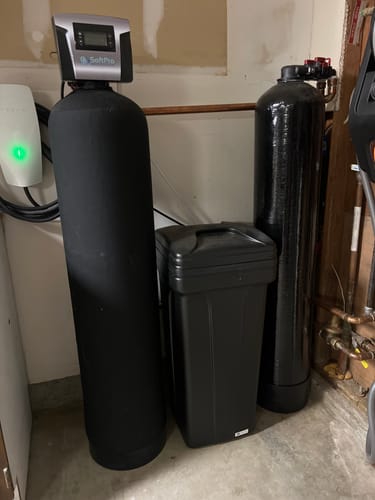
Before you can know which costs apply to your situation, you need to understand what's actually in your water. Your pH level, iron concentration, and the presence of sulfur or manganese dictate everything—system size, complexity, and price.
Your water's pH, iron levels, and contaminants determine everything—system size, complexity, and what you'll pay.
High iron paired with multiple contaminants means you're looking at a larger, more advanced system. That's just the reality. But if you've got low iron and mainly a sulfur odor problem, you might get away with a smaller, targeted solution at a fraction of the cost.
Water hardness adds another layer. It influences both system selection and long-term maintenance expenses.
This is why testing isn't optional—it's the foundation of smart buying. Without it, you're guessing, and guessing gets expensive fast.
Budget vs. Premium Iron Filters: Where the 10-Year Numbers Land
Once you know what's in your water, the next question is how much you're willing to spend—and this is where most people make a costly mistake. Budget systems run $800–$1,500 upfront, but frequent media replacements push 10-year costs to $3,800–$7,500. Worse, they only remove 70–80% of iron, leaving enough behind to stain fixtures and ruin the taste of your water.
Premium systems flip that equation. Yes, you're spending $3,000–$6,000 upfront, but lower maintenance needs compress 10-year costs to just $3,400–$4,000. They remove over 95% of iron and handle hydrogen sulfide too—problems budget filters simply ignore.
The numbers tell a clear story: premium systems cost less over time while delivering meaningfully better results.
Installation, Water Waste, and Iron Filter Costs Buyers Miss
The sticker price is only part of the story—installation costs catch most buyers off guard. Professional installation runs $500–$2,000 before adding anything else.
Here's what quietly inflates that number:
- Plumbing modifications can push installation toward the $2,000 ceiling
- Reverse osmosis units add up to $950 to your total
- UV sterilizers can tack on another $1,500
- Budget systems bleed $200–$600 every 6–12 months on media replacement
- Premium systems replace media every 3–5 years for just $300–$500
We've watched buyers celebrate a low unit price, then wince when the full invoice arrives.
Premium systems cost $40–$100 annually to maintain. Budget systems cost $200–$600. Over ten years, that gap compounds into a decision you can't undo.
Which Iron Filter Is the Smarter 10-Year Investment?
When you stack up the real numbers, a premium air-injection Katalox Light system runs $3,400–$4,000 over 10 years—while budget systems quietly drain $3,800–$7,500 over the same period. That gap widens further when you factor in what each system actually delivers.
Budget filters remove 70–80% of iron, leaving enough behind to stain fixtures and ruin water taste. Premium Katalox Light removes over 95%.
Annual maintenance tells the same story: $40–$100 versus $200–$600. Multiply that difference across a decade, and the choice becomes obvious. Add a 6–10 year media lifespan that outperforms Filox, Greensand, and Birm, and you're not just saving money—you're solving the problem completely. The higher upfront cost isn't a premium. It's the cheaper path forward.
Frequently Asked Questions
How Much Does a Whole House Iron Filter Cost?
Whole house iron filters typically cost between $895 and $2,000, though advanced systems can run $5,000–$10,000. We recommend wholesale providers, where you'll find quality systems ranging from $1,500–$2,500 without the inflated retail markups.
What Is the Life Expectancy of an Iron Filter?
We've seen iron filters last anywhere from 6 to 10 years, but with premium Katalox Light media and consistent backwashing maintenance, you'll often push closer to that decade mark reliably.
What Are the Pros and Cons of Katalox Light?
Katalox Light removes iron, manganese, and hydrogen sulfide without chemicals, lasts 6-10 years, and works at pH 6.0+. The tradeoff? It's a higher upfront investment, though long-term operating costs stay low.
What Are Common Problems With Iron Filters?
Common iron filter problems we've seen include incomplete iron removal, frequent media replacements, high maintenance costs, staining, and metallic taste—especially with budget systems that only remove 70-80% of contaminants compared to premium systems' 95%+.


