


![SoftPro™ Chlorine+ Carbon Whole House Water Filter to Remove PFAS, Chlorine, Chloramine & Pesticides [City Water Filters Series]](http://softprowatersystems.com/cdn/shop/files/SoftPro_Whole_House_Carbon_Filter_with_Spin_Down_Water_Filter.webp?v=1783547361&width=140)


 855-683-8488


Iron Filter for a Mobile Home on a Private Well: Sizing and Placement

If your mobile home's well water leaves reddish-brown stains on fixtures or tastes metallic, you've likely got an iron problem. We recommend a 1.0 cubic foot filter for iron levels up to 2 ppm, or stepping up to 1.5 cubic feet for higher concentrations. Your well's flow rate, water pH, and pipe material all affect which system works best. Stick with us—there's a lot more to uncover here.
Key Takeaways
- Test well water to confirm iron concentration and pH levels before selecting a filter size or media type.
- A 1.0 cubic foot filter handles up to 2 ppm iron for households with 4–6 residents.
- Wells with flow rates under 6 GPM should be limited to a 1.0 cubic foot filter system.
- Install the iron filter at the point-of-entry on the main water line to treat all incoming water.
- Low pH below 6.8 reduces filter effectiveness, requiring pH pre-treatment before iron filtration.
Does Your Mobile Home Well Water Actually Have an Iron Problem?

Before spending money on an iron filter, let's make sure you actually have an iron problem worth solving. The EPA's secondary maximum contaminant level for iron sits at 0.3 mg/L — a threshold your well water may already be exceeding without you knowing it.
Look for the obvious clues first: reddish-brown stains on your fixtures, laundry, and appliances, or a metallic taste coming through your tap. These are iron's calling cards.
But visible signs alone won't give you the full picture. You'll need to test your water to confirm iron concentration, identify whether you're dealing with ferrous or ferric iron, and check your pH levels. That data drives every sizing and equipment decision that follows.
What Size Iron Filter Does a Mobile Home Need?
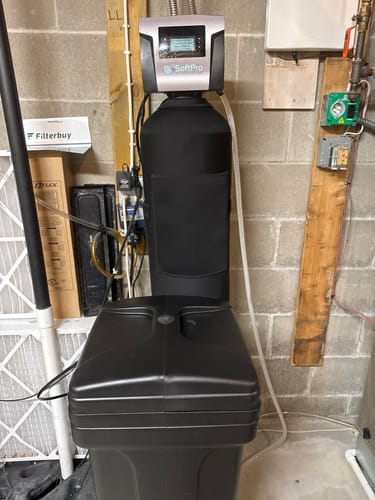
Sizing your iron filter correctly is where most mobile home owners get tripped up — and getting it wrong means either under-treated water or a system that can't keep up with your household's demand.
For most mobile homes with 4-6 residents and iron levels up to 2 ppm, a 1.0 cubic foot iron filter handles the job well. But if your iron tests above 3 ppm or your household runs heavier, step up to a 1.5 cubic foot system.
Your well's flow rate matters just as much as iron concentration. Most mobile home wells deliver 5-7 GPM, and your filter must match that rate to backwash effectively and maintain pressure during peak usage. Don't guess — test first, then size accordingly.
Why Well Flow Rate Limits Your Iron Filter Size
Your well's flow rate isn't just a number — it's the hidden gatekeeper that decides which iron filter size you can actually run. Here's why: larger tanks demand higher backwash flows to flush themselves clean. If your well can't keep up, the filter never properly regenerates, and you've fundamentally bought an expensive sediment collector.
Most residential wells deliver 6–12 GPM, which supports standard sizing. But drop below 6 GPM, and you're looking at a 1.0 cubic foot tank or a parallel filter setup — not because we want to limit you, but because undersizing beats under-performing every time.
Before buying anything, run a simple bucket test. Knowing your actual flow rate eliminates guesswork and protects your investment from day one.
How pH and Pipe Type Affect Iron Removal in Mobile Homes
Once you know your flow rate, two more factors quietly shape whether your iron filter actually works: pH and pipe material. If your water's pH dips below 6.8, it'll suppress your filter's effectiveness before iron ever gets removed—you'll need a pH pre-treatment stage first.
Iron type matters just as much. Ferrous iron filters out more easily than ferric, so testing tells you which system to buy. Get that wrong, and you're paying for equipment that underperforms.
Your pipes compound the issue. Galvanized steel actively leeches iron into your water, demanding a more aggressive filtration setup. Copper and PVC don't carry that burden, so they simplify your system requirements. Test your water, know your pipes, then choose your filter.
Where Should You Install an Iron Filter in a Mobile Home?
There are 2 installation decisions that determine whether your iron filter actually does its job: where on the line it sits, and whether you can reach it when it needs service.
Install it at the point-of-entry — on the main water line before it splits to your fixtures. That placement guarantees every drop of water entering your home gets treated, not just what flows to one faucet.
Then choose your location wisely. A utility closet gives you the access you'll need for backwash cycles, filter checks, and eventual media replacement. Tight spaces in mobile homes make this critical — we recommend a compact 1.0 cubic foot system. It fits the footprint without sacrificing the flow rate and backwash capacity your household actually demands.
Frequently Asked Questions
How Big of an Iron Filter Do I Need?
For most mobile homes, we'd recommend a 1.0 cubic foot iron filter if your iron's under 2 ppm and you've got 6 or fewer people. Go bigger if either exceeds those limits.
What Are Common Problems With Iron Filters?
We've seen iron filters struggle with clogged media, excessive backwash cycles, improper sizing, low pH corrosion, and iron bacteria growth—each problem quietly undermining your system's performance until you're left with poor water quality.
What Is the Best Filter for Removing Heavy Iron From Well Water?
We recommend the Pro-OX Lite iron filter for heavy iron removal—it handles up to 5 ppm iron without chemical regeneration, outperforms traditional greensand, and delivers a longer-lasting, low-maintenance solution you'll appreciate.
What Is the Best Way to Filter Iron Out of Well Water?
We recommend using a pro-ox lite iron filter at your home's point of entry. It'll effectively tackle heavy iron, protecting your plumbing and appliances while delivering clean, iron-free water throughout your entire mobile home.


