


![SoftPro™ Chlorine+ Carbon Whole House Water Filter to Remove PFAS, Chlorine, Chloramine & Pesticides [City Water Filters Series]](http://softprowatersystems.com/cdn/shop/files/SoftPro_Whole_House_Carbon_Filter_with_Spin_Down_Water_Filter.webp?v=1783547361&width=140)


 855-683-8488


Iron Filter Tank Cracking: Causes, Warning Signs, and What to Do

Iron filter tanks crack for several reasons: over-tightening during installation, freezing temperatures, mineral buildup, UV exposure, and manufacturing defects. You'll notice warning signs like hairline fractures, discoloration, brittleness, or persistent leaks that won't quit even after you've replaced seals and fittings. Sometimes the fix is as simple as replacing O-rings or rewrapping fittings with Teflon tape — but other times, full replacement is the only real option. Keep scrolling to find out exactly where you stand.
Key Takeaways
- Iron filter tanks can crack due to over-tightening, freezing temperatures, mineral buildup, UV exposure, or manufacturing defects.
- Warning signs include hairline fractures, discoloration, brittleness, and persistent leaks despite replacing seals and fittings.
- Inspect O-rings, threaded fittings, and connectors to identify whether leaks stem from seals or actual tank damage.
- Minor leaks can be fixed by replacing O-rings, cleaning grooves, rewrapping threads with Teflon tape, and realigning connectors.
- Visible cracks, persistent leaks after repairs, or material brittleness indicate the tank requires full replacement.
What Actually Causes an Iron Filter Tank to Crack

When an iron filter tank cracks, it's rarely a mystery — there's almost always a clear culprit behind it. The most common causes include over-tightening during installation or servicing, which stresses the tank walls and creates hairline fractures that worsen over time.
Freezing temperatures cause the tank to contract, making older, more brittle models especially vulnerable. Prolonged exposure to mineral-rich water, UV light, and harsh environmental conditions gradually breaks down the tank's structural integrity, accelerating failure.
Manufacturing defects or material flaws can also introduce internal weaknesses that aren't immediately visible but develop into serious cracks with regular use. Understanding these root causes helps you catch problems early, extend your system's lifespan, and avoid the kind of damage that turns a minor repair into a costly replacement.
Physical Signs the Tank Itself Has Cracked
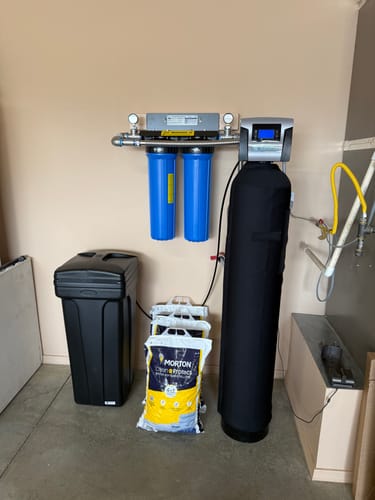
Knowing what causes a tank to crack is only half the battle — we also need to know what to look for so we catch it before it turns into a bigger problem. Start with a thorough visual inspection.
Hairline fractures are easy to miss but critical to spot — run your fingers along the tank's surface and look for thin, spider-web lines. Brittleness and discoloration are also red flags, signaling material breakdown at a structural level.
If you've already replaced the O-ring and resealed every fitting but the leak persists, that's a strong indicator the damage is internal. A cracked tank can't be patched — it compromises the entire system's integrity and demands immediate replacement.
Is Your Iron Filter Tank Cracked or Leaking at a Fitting?
Not every leak means the tank itself has failed — sometimes the culprit is something far simpler, like a loose fitting or a worn O-ring. Before assuming the worst, we want you to check the connection points first.
Threaded fittings that are loose or improperly sealed are common offenders. Inspect the O-rings carefully for cracks, misalignment, or dirt buildup — clean and grease them regularly to maintain a reliable seal. When reassembling any fitting, always apply fresh Teflon tape to the male threads.
If you've addressed every fitting and the leak continues, that's when internal damage becomes a real possibility. At that point, a full component evaluation isn't optional — it's necessary. Knowing the difference saves you time, money, and unnecessary replacements.
How to Fix a Leaking Iron Filter Tank
Once you've confirmed the leak isn't coming from a cracked tank, fixing it usually comes down to two things: the O-ring or the fittings.
Shut off the water supply, relieve pressure, then inspect the O-ring for cracks, flattening, or buildup. Clean the groove, apply food-grade silicone grease, and hand-tighten the housing. For fittings, replace worn Teflon tape, realign connectors, and add a quarter turn with a wrench.
| Component | Action | Success Indicator |
|---|---|---|
| O-ring | Inspect and replace | No housing seepage |
| O-ring groove | Clean thoroughly | Smooth seating surface |
| Teflon tape | Rewrap threaded fittings | Dry fitting connection |
| Connectors | Realign for even pressure | Uniform contact |
| Tank fittings | Quarter-turn wrench tighten | No dripping after pressure |
If leaks persist after both fixes, the tank itself likely needs replacement.
When Your Iron Filter Tank Needs Full Replacement
Some damage goes beyond what a new O-ring or fresh Teflon tape can fix. If you're spotting visible cracks—even hairline fractures—the tank's structural integrity is already compromised, and replacement isn't optional.
When hairline fractures appear, the tank's integrity is already gone—replacement isn't a suggestion, it's a requirement.
Persistent leaks after you've replaced seals and refitted connections signal internal damage that no surface repair will resolve.
Watch for brittleness or discoloration in the tank material itself. These aren't cosmetic issues—they indicate the material is breaking down from the inside out. Over-tightened tanks develop stress fractures that quietly worsen over time, eventually making the tank unsalvageable.
Regular maintenance assessments catch these problems early, before a failing tank creates bigger downstream issues. Know the warning signs, inspect consistently, and you'll always stay ahead of a full failure.
Frequently Asked Questions
What Are the Symptoms of Too Much Iron in Well Water?
We've seen iron issues show up as rust stains on fixtures, yellowish or orange-tinted water, metallic taste, cloudy sediment, rotten egg odors, decreased water pressure, and clogged filter media.
How to Tell if an Iron Filter Is Working?
We can tell if our iron filter's working by checking for rust stains, tasting metallic flavors, monitoring water pressure, and testing iron levels before and after filtration to confirm it's effectively removing contaminants.
Does Iron Bacteria Go Away?
No, iron bacteria won't go away on their own. We must aggressively treat it with shock chlorination to destroy the biofilm it creates, then maintain consistent testing and regular system disinfection to prevent it from reestablishing.
What Are the Symptoms of a Dirty Water Filter?
When your filter's dirty, you'll notice rust stains on fixtures, yellowish or orange-tinted water, a metallic taste, cloudy water with visible sediment, and iron readings exceeding 0.3 ppm—all signaling it's time we act fast.


