


![SoftPro™ Chlorine+ Carbon Whole House Water Filter to Remove PFAS, Chlorine, Chloramine & Pesticides [City Water Filters Series]](http://softprowatersystems.com/cdn/shop/files/SoftPro_Whole_House_Carbon_Filter_with_Spin_Down_Water_Filter.webp?v=1783547361&width=140)


 855-683-8488


Iron Filter Tank Discoloration and Staining: What It Indicates

Stains inside your iron filter tank are telling you something important—don't ignore them. Orange or rust-colored deposits mean dissolved iron is oxidizing inside the tank. Dark reddish-brown stains signal iron bacteria colonization. Gray or black marks point to manganese contamination. Blue-green staining reveals acidic water corroding your copper plumbing. Each color maps directly to a specific problem affecting your water quality and filter performance. Stick with us, and we'll walk you through exactly what each stain means and how to fix it.
Key Takeaways
- Orange or rust-colored stains indicate dissolved ferrous iron oxidizing inside the tank, often signaling iron concentrations above 3 ppm.
- Dark reddish-brown staining reveals iron bacteria colonization, requiring immediate shock chlorination to prevent further contamination.
- Gray or black stains point to manganese overload, which frequently accompanies iron contamination and needs different treatment.
- Blue-green staining signals acidic water corroding copper plumbing components, not an iron-related issue.
- Recurring stains indicate root causes like exhausted filter media or excessive iron levels that cleaning alone cannot resolve.
Iron Filter Tank Stain Colors and What Each One Means

When you notice staining inside your iron filter tank, the color itself tells you exactly what's going on. Each shade acts as a diagnostic signal, pointing to a specific water chemistry issue.
Orange or rust-colored stains mean dissolved ferrous iron is oxidizing inside the tank. If those stains shift to solid reddish-orange, you're likely dealing with iron concentrations above 3 ppm.
Dark reddish-brown staining signals something more serious — iron bacteria colonizing the tank. Gray or black stains indicate manganese, frequently paired with iron contamination. Blue or green stains suggest copper leaching from your pipes due to acidic water conditions.
Reading these colors accurately lets you diagnose problems faster, target the right treatment, and extend your system's performance considerably.
How Iron Type Determines the Staining Inside Your Filter Tank
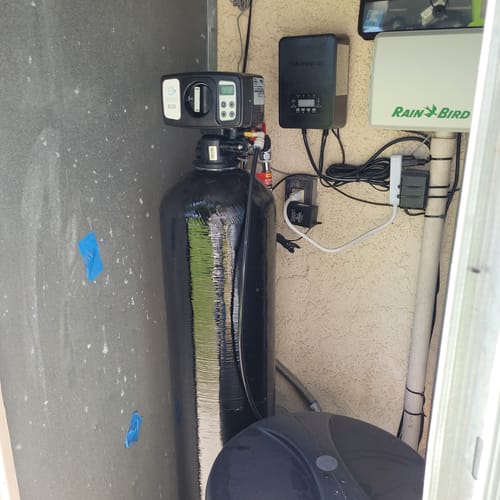
Understanding which type of iron you're dealing with changes everything about how you interpret tank staining. Each stain color maps directly to a specific iron form, and recognizing those patterns lets you diagnose problems before they escalate.
| Stain Color | Iron/Contaminant Type | What It Signals |
|---|---|---|
| Orange/Rust | Ferrous (dissolved) iron | Oxidation occurring inside tank |
| Dark Reddish-Brown | Iron bacteria | Biological growth present |
| Gray/Black | Manganese | Often paired with iron contamination |
We also want you to watch for greenish-blue staining—that's copper from acidic water corroding your plumbing, not iron at all.
Stain intensity matters too. Heavier discoloration typically means higher concentrations, while patchy patterns can reveal uneven filtration or channeling inside the media bed.
Stain Patterns That Indicate Filter Failure or Media Exhaustion
Stain patterns inside your filter tank don't just tell you what's in your water—they tell you whether your system is still doing its job. Reddish-brown buildup signals iron bacteria growth, meaning you need to shock chlorinate immediately.
Reddish-brown buildup inside your filter tank isn't just a stain—it's iron bacteria telling you to act now.
Consistent red-orange deposits on tank walls mean ferric iron is overwhelming your filter's capacity. Blackish-gray staining points to manganese overload, which demands a completely different treatment approach.
Blue-green marks indicate acidic water corroding copper components—a chemistry problem, not just a filtration one. White, chalky scale means hardness minerals are defeating your softening system.
Each pattern is a diagnostic clue. When you learn to read them accurately, you stop guessing and start solving the right problem before it escalates into costly equipment failure.
Why Iron Filter Tank Discoloration Keeps Coming Back
If you've ever scrubbed your iron filter tank clean only to watch the rust-colored stains creep back within days, you're not dealing with a cleaning problem—you're dealing with a source problem. Dissolved iron continuously flows through your system, oxidizes on contact, and deposits residue with every cycle. Cleaning addresses the symptom, not the cause.
Without an effective removal system, iron bypasses filtration entirely, guaranteeing persistent discoloration. Even a functioning filter eventually exhausts its media, losing its capacity to capture iron before it redeposits inside the tank.
Two things stop the cycle: consistent maintenance—including timely media replacement—and resolving the root cause of elevated iron levels in your water supply. Handle both, and the stains stop returning.
How to Stop Iron Filter Tank Staining From Getting Worse
Stopping the staining from getting worse comes down to staying ahead of it rather than reacting to it. We've found that consistent maintenance beats corrective action every time.
| Action | Purpose | Frequency |
|---|---|---|
| Backwash and clean tank | Prevent buildup and discoloration | Weekly |
| Replace exhausted filter media | Restore iron removal capacity | As needed |
| Inspect distribution system | Catch clogging and deterioration early | Monthly |
Maintaining proper chlorine dosing keeps iron-oxidizing bacteria from gaining a foothold. When iron concentrations spike beyond what your current system handles, don't force it—upgrading to a more robust setup protects your water quality long-term. Staying disciplined with these steps keeps staining manageable and your system performing at its best.
Frequently Asked Questions
How to Tell if an Iron Filter Is Working?
We can tell our iron filter's working when water's clear, fixtures stay stain-free, and there's no metallic taste. Watch for rust-colored sediment, reduced flow, or tank discoloration—these signal it's time for media replacement.
What Does an Iron Stain Look Like?
Iron stains typically appear as orange or rust-colored deposits on your filter tank. We're looking at heavier, darker staining when iron levels are higher — it's your system's way of showing you what's dissolved in your water.
How Long Should an Iron Filter Last?
Your iron filter media should last 2–4 years, but we'd recommend watching for warning signs—increased regeneration cycles, dropping water pressure, and returning rust stains—that'll tell you it's time for replacement sooner.
Are Iron Stains Permanent?
Iron stains aren't permanent! We can remove them using oxalic acid-based cleaners like Bar Keepers Friend. Just avoid chlorine bleach—it'll actually set the stains, making them tougher to tackle later.


