


![SoftPro™ Chlorine+ Carbon Whole House Water Filter to Remove PFAS, Chlorine, Chloramine & Pesticides [City Water Filters Series]](http://softprowatersystems.com/cdn/shop/files/SoftPro_Whole_House_Carbon_Filter_with_Spin_Down_Water_Filter.webp?v=1783547361&width=140)


 855-683-8488


Iron Filter Tank Pressure Rating and Long-Term Structural Safety

Most iron filter tanks need a PSI rating between 75 and 100 to match standard residential systems safely. Getting this wrong doesn't just reduce efficiency — it risks catastrophic failure over time. Tank material matters just as much as the rating itself, since plastic degrades under sustained pressure while fiberglass and stainless steel hold strong for decades. Pair the right rating with smart backwash habits, and your system lasts far longer. Stick with us and we'll show you exactly how.
Key Takeaways
- Iron filter tanks should be rated between 75–100 PSI, aligning with residential system demands and compatible components like the Fleck 2510AIO valve.
- Fiberglass-reinforced polyester and stainless steel tanks offer superior long-term structural integrity compared to plastic, which degrades under sustained pressure.
- Vortech tanks handle up to 100 PSI and distribute backwash flow evenly, eliminating localized pressure spikes that weaken standard tanks.
- Warning signs of tank failure include visible bulging, unexplained pressure drops, water pooling, unusual sounds, and discoloration around fittings.
- Maintaining backwash flow rates of 7–10 GPM and avoiding unnecessary cycles reduces pressure fatigue and extends tank structural lifespan.
What PSI Rating Does an Iron Filter Tank Actually Need?

When sizing an iron filter tank, the pressure rating is one of the first specs we need to get right. Most iron filter tanks carry a standard rating of 75-100 PSI, which is precisely what's needed to handle both backwash cycles and sustained static water pressure.
Here's what makes that range ideal: it aligns perfectly with typical residential and light commercial water systems without over-engineering the build. The tank doesn't need to exceed that threshold because the system components are matched to it. The Fleck 2510AIO valve handles up to 125 PSI, and Katalox Light media tolerates up to 150 PSI, so the tank itself becomes the defining pressure boundary.
Getting this spec right from the start means fewer failure points and more predictable long-term performance.
Why Tank Material Determines Long-Term Pressure Safety
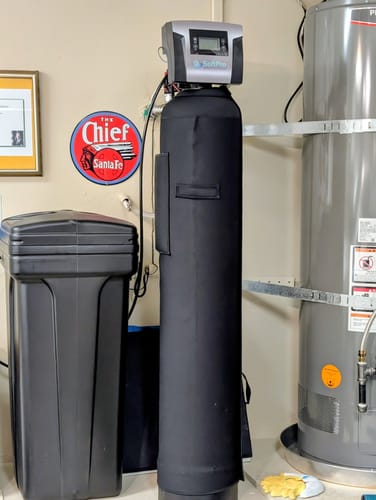
Once we've locked in the right pressure rating, the tank material becomes the next critical variable—because a rating on paper only holds up as long as the material behind it can deliver. Plastic tanks may handle initial pressure fine, but they degrade, crack, and fail under sustained stress. High-strength alternatives like fiberglass-reinforced polyester and stainless steel maintain structural integrity far longer.
| Material | Pressure Tolerance | Long-Term Durability |
|---|---|---|
| Plastic | Low | Poor |
| Polyethylene | Moderate | Fair |
| Fiberglass-Reinforced Polyester | High | Excellent |
| Stainless Steel | Very High | Excellent |
| Carbon Steel | High | Good (with coating) |
Choosing the right material isn't just about specs—it's about preventing catastrophic failures that damage property or cause injury.
Vortech vs. Standard Iron Filter Tanks: Which Handles Pressure Better?
Not all iron filter tanks are built the same—and that gap becomes obvious when you compare Vortech tanks to standard models under real operating conditions. Vortech tanks handle up to 100 PSI versus 75 PSI for standard tanks—a meaningful advantage when you're running air-injection iron filtration systems.
What really separates them, though, is the underdrain design. Vortech's system distributes backwash flow evenly, eliminating the localized pressure spikes that wear standard tanks down over time. Standard tanks rely on gravity-based flow, which creates uneven stress patterns that compound with every backwash cycle.
Add thicker walls and more robust materials to the equation, and Vortech tanks aren't just rated higher—they're engineered to sustain that rating reliably across the system's entire lifespan.
Signs Your Iron Filter Tank Is Failing Under Pressure
Catching tank failure early can mean the difference between a simple repair and a full system replacement. We want you watching for these warning signs before small problems escalate.
Look for visible bulging or deformation along the tank's sidewall — that's structural stress made visible. Unexplained pressure drops during service cycles suggest internal wall compromise.
Bulging sidewalls and unexplained pressure drops aren't minor quirks — they're your tank signaling structural failure is already underway.
Water pooling beneath the tank without obvious connection leaks often signals micro-fractures developing under cyclic pressure stress.
Listen, too. Unusual creaking or popping sounds during pressurization indicate the tank wall is flexing beyond its design tolerance. Additionally, if bypass valve testing reveals inconsistent pressure holding, your tank's integrity is already questionable.
Don't ignore discoloration or resin deposits around fittings either — they're early evidence of stress fractures releasing material under pressure.
Backwash Settings and Habits That Protect Your Tank Long-Term
How you configure your backwash settings directly determines how much cyclic stress your tank absorbs over its lifetime. Keep flow rates between 7–10 GPM and cycles around 14 minutes—that balance cleans the media without hammering the tank walls repeatedly.
| Setting | Recommended Range |
|---|---|
| Backwash Flow Rate | 7–10 GPM |
| Cycle Duration | ~14 minutes |
| Backwash Frequency | Usage-dependent |
We also recommend adjusting backwash frequency based on your actual iron and manganese levels rather than running it on a rigid schedule. Unnecessary cycles compound pressure fatigue over time. Pair smart scheduling with routine tank inspections—checking for wear, micro-cracks, or fitting stress—and you'll dramatically extend your system's structural lifespan while catching problems before they escalate.
Frequently Asked Questions
What Is the Life Expectancy of an Iron Filter?
We'd expect your iron filter's Katalox Light media to last 6-10 years, with minimal water usage pushing it toward the longer end—outperforming alternatives like Filox, Greensand, and Birm considerably.
What Are the Pros and Cons of Katalox Light?
Katalox Light's pros include no chemicals needed, a 6–10 year lifespan, and low pH tolerance down to 6.0. The con? It's pricier upfront, though its longevity and performance make it worth the investment.
Should the Iron Filter Be Installed Before or After the Pressure Tank?
We recommend installing the iron filter before the pressure tank. This protects the pressure tank from iron fouling, extends its lifespan, and guarantees it only receives clean, iron-free water.
Will a 5 Micron Filter Remove Iron?
A 5 micron filter won't remove dissolved iron — it passes right through. We recommend catalytic media like Katalox Light, which oxidizes ferrous iron, trapping it effectively for whole-house removal.


