


![SoftPro™ Chlorine+ Carbon Whole House Water Filter to Remove PFAS, Chlorine, Chloramine & Pesticides [City Water Filters Series]](http://softprowatersystems.com/cdn/shop/files/SoftPro_Whole_House_Carbon_Filter_with_Spin_Down_Water_Filter.webp?v=1783547361&width=140)


 855-683-8488


Iron From Plumbing Corrosion vs Iron From Groundwater: What Changes the Fix

When iron shows up in your water, the fix depends entirely on where it's coming from. Pipe corrosion produces already-oxidized iron that clears up after running the tap, while groundwater iron affects every faucet uniformly and often arrives clear before turning rusty. Treating the wrong source means wasting money and still living with stained sinks and metallic-tasting water. Get the source right first, and everything that follows becomes a whole lot clearer.
Key Takeaways
- Water testing before and after the pressure tank identifies whether iron originates from corroded pipes or the groundwater supply.
- Pipe-based iron appears rusty initially but clears after running water for a few minutes, unlike groundwater iron.
- Groundwater iron affects every tap uniformly, while pipe corrosion causes localized issues tied to specific plumbing sections.
- Groundwater iron arrives dissolved and clear, then oxidizes to reddish-brown, whereas pipe iron is already oxidized ferric iron.
- Pipe corrosion requires mechanical plumbing repairs, while groundwater iron demands oxidation, filtration, ion exchange, or disinfection treatments.
Why the Source of Your Iron Determines the Right Fix

When iron shows up in your water, the fix isn't one-size-fits-all — and guessing wrong can cost you both time and money. The source of that iron completely changes the solution.
Corroded pipes demand plumbing repairs — replacing deteriorated pipes or fittings. Groundwater iron calls for a different approach entirely, like filtration or oxidation systems.
Corroded pipes need plumbing repairs. Groundwater iron needs filtration. The source determines the solution — always.
Treat groundwater iron as a plumbing problem, and you'll waste money on repairs that don't touch the real issue. Flip that mistake, and you'll install equipment that never solves your staining or discoloration.
That's why we always start with water testing. Identifying whether your iron originates from your pipes, your aquifer, or even iron bacteria points you directly toward the most effective, cost-efficient fix available.
How to Tell If Your Pipes Are Causing the Iron Problem
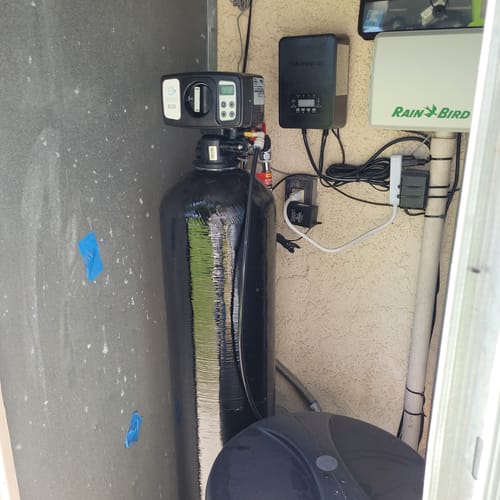
Knowing iron's source matters — but how do you actually figure out if your pipes are the culprit? Start by paying attention to the clues your water's already giving you.
That metallic taste and rusty-brown staining on fixtures? Classic signs of corroding iron or galvanized steel pipes.
If your water runs clear after a few minutes, you've likely disturbed iron deposits sitting inside your plumbing — not your well.
Orange or brown buildup around faucets and visible corrosion on exposed pipes confirm the problem lives inside your home.
Testing water before and after your pressure tank pinpoints exactly where iron enters. Older homes with galvanized pipes are especially vulnerable. These observations alone can save you from installing the wrong treatment system entirely.
Signs Your Iron Is Coming From Groundwater
Groundwater iron tells a different story than pipe corrosion — and the clues show up everywhere, not just at one faucet. When iron's dissolving from surrounding soil and rock formations, you'll notice yellow or reddish-brown water coming from every tap, not a single corroded line. Staining hits fixtures, dishes, and laundry uniformly. That widespread pattern matters — it points upstream, past your plumbing, straight to the source.
There's another giveaway we can't ignore: iron bacteria. These microorganisms feed on dissolved iron and leave behind slimy deposits and foul odors that no pipe replacement will fix. And once iron exceeds 0.3 mg/L, it's unacceptable regardless of health risk. Groundwater iron demands specialized treatment — aeration, filtration, or ion exchange — because standard fixes simply won't reach the root cause.
How Pipe-Based Iron and Groundwater Iron Behave Differently
The behavior of these two iron types gives us our clearest diagnostic clues. Groundwater iron enters your home clear, then oxidizes into that familiar reddish-brown after exposure to air. Pipe-based iron shows up discolored immediately—it's already oxidized ferric iron from corrosion.
Groundwater iron arrives clear, then betrays itself. Pipe iron skips the disguise—it's already rust before it reaches you.
The fix changes completely—groundwater demands oxidation and filtration at the source, while pipe-based iron requires flushing, fixture replacement, or targeted filters.
Groundwater iron affects everyone drawing from the same source—your neighbors notice it too. Pipe-based iron is yours alone—isolated to your specific plumbing system.
Understanding this distinction isn't just academic. It determines whether you're solving a household problem or a supply problem—two entirely different battles requiring two entirely different strategies.
Which Treatment Actually Fixes Your Iron Problem
Once it's determined whether iron is coming from our pipes or our water supply, one can stop guessing and start fixing. Pipe corrosion demands mechanical solutions—replacement or water softeners—while groundwater iron needs oxidation and filtration.
The iron's form matters just as much as its source. Clear, dissolved ferrous iron responds well to water softeners. Particulate or organic iron requires specialized filters or oxidizing systems. If iron bacteria are present, we must shock chlorinate or apply UV disinfection before any standard treatment works.
Here's what trips most people up: skipping thorough water testing. Without knowing the exact form and source, we're throwing money at the wrong solution. Test first, treat second, and maintain equipment properly—or iron precipitates creep back in.
Frequently Asked Questions
How Do I Fix Iron in My Water?
We'll need to test your water first—it tells us if iron's coming from your pipes or groundwater. That determines whether you need new plumbing, a water softener, oxidizing filter, or shock chlorination.
Do Water Filters Remove Iron From Water?
Some filters do remove iron, but it depends on the type. Sediment filters catch ferric iron particles, while specialized iron filters or water softeners tackle dissolved ferrous iron—matching the filter to your iron type is key.
What Is the Most Cost-Effective Way to Remove Iron From Well Water?
For dissolved clear iron, we'd recommend starting with a water softener—it's typically your most budget-friendly solution. It tackles iron efficiently while also handling hardness, giving you two problems solved with one investment.
Does Iron in Water Cause Corrosion?
Yes, iron in water accelerates corrosion. Dissolved oxygen oxidizes ferrous iron into rust deposits that eat through pipes, while iron bacteria form corrosive biofilms, and acidic or high-chlorine water compounds the damage substantially.


