


![SoftPro™ Chlorine+ Carbon Whole House Water Filter to Remove PFAS, Chlorine, Chloramine & Pesticides [City Water Filters Series]](http://softprowatersystems.com/cdn/shop/files/SoftPro_Whole_House_Carbon_Filter_with_Spin_Down_Water_Filter.webp?v=1783547361&width=140)


 855-683-8488


Iron in Well Water Visual Diagnosis Guide: What You See and What It Means

Iron stains in well water aren't random—they're clues. Orange or yellow streaks usually mean dissolved ferrous iron, while reddish-brown flakes point to oxidized ferric iron. Dark slime signals iron bacteria, which needs a completely different fix. Your water can even look crystal clear and still carry damaging iron levels. Matching what you see to the iron type is the key to choosing a treatment that actually works—and there's a lot more to unpack here.
Key Takeaways
- Orange, yellow, or red stains on fixtures signal dissolved ferrous iron that has oxidized upon contact with air or surfaces.
- Reddish-brown flakes or sediment in water indicate ferric iron, meaning oxidation has already occurred before reaching your tap.
- Black or dark green slime in plumbing confirms iron bacteria colonies requiring targeted disinfection treatment beyond standard filtration.
- Clear water that leaves stains after use points to invisible dissolved ferrous iron, undetectable without a bottle oxidation test.
- Misidentifying your iron type leads to ineffective treatment, making accurate visual diagnosis essential before selecting any filtration system.
Why Iron Stains in Well Water Vary in Color and Location

Why do iron stains in well water show up as different colors in different places? It comes down to iron's form. Ferrous iron stays dissolved and clear in water, but once it oxidizes on surfaces like sinks and toilets, it leaves behind telltale stains.
Ferric iron is already oxidized, producing those familiar red or brown deposits you'll spot in bathtubs and toilet bowls.
Then there's iron bacteria—a different problem entirely. These microorganisms create slimy, reddish-brown buildup inside your plumbing fixtures. You'll also notice iron's impact beyond your fixtures: laundry yellowing or turning orange signals iron levels that are actively damaging your clothes. Recognizing these color and location patterns lets us pinpoint exactly what type of iron we're dealing with.
Why Your Well Water Can Look Perfectly Clear and Still Contain Iron
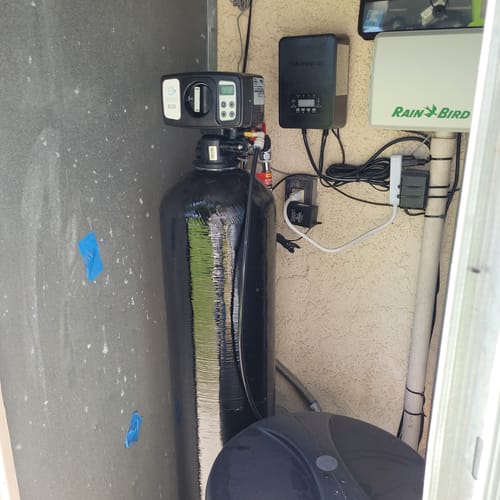
Appearances can be deceiving when it comes to well water. Dissolved ferrous iron, called "clear-water iron," remains completely invisible until it hits oxygen. That's when oxidation converts it into ferric iron, producing those familiar rust-colored particles.
| Iron Type | Visual Clue |
|---|---|
| Ferrous (dissolved) | Water looks clear |
| Ferric (oxidized) | Rust-colored particles |
| Post-air exposure | Sediment forms in glass |
Here's what makes this tricky: standard sediment filters won't catch dissolved iron because it's not yet a particle. You're fundamentally filtering nothing.
We recommend a simple bottle test—fill a clear glass and let it sit exposed to air. If rust appears, you've got ferrous iron requiring targeted treatment beyond basic filtration.
Black Slime vs. Reddish Flakes: What Each Iron Type Looks Like
Once you know that iron can hide in plain sight, the next step is recognizing what it looks like when it does show up. Each form leaves a distinct signature:
- Black or dark green slime coating pipes, fixtures, or toilet tanks points directly to iron bacteria colonies feeding on dissolved iron.
- Reddish-orange flakes or sediment signal oxidized ferric iron — particles your water's already carrying before it reaches your tap.
- No visible signs whatsoever means you're likely dealing with dissolved ferrous iron, the "clear water" type we covered earlier.
Here's why this matters: misidentifying the iron type leads to mismatched treatment. Each form requires a different solution, and we'll walk you through exactly how to match what you see to what works.
Lab Tests and DIY Checks That Confirm Your Well Water Iron Type
Knowing what your water looks like is a solid starting point, but visual clues alone can't tell you whether you're dealing with 2 mg/L of iron or 20 mg/L — and that difference determines everything about your treatment plan. DIY test strips give you a quick directional answer, but they won't size your filtration system accurately. For that, you need a certified lab test delivering exact mg/L readings.
Lab analysis goes further than numbers, though. It identifies whether you're dealing with dissolved ferrous iron or oxidized ferric iron — a distinction that directly drives your treatment choice. We also recommend testing pH, hardness, manganese, sulfur, and bacteria simultaneously. Treating iron in isolation often misses interconnected problems that will undermine even a well-designed filtration system.
Which Iron Filter Matches the Stain Pattern You're Seeing
What your stains look like isn't just a cosmetic clue — it's a diagnostic map that points directly to the filter type you need.
Match your pattern to the right solution:
- Orange, yellow, or red stains on fixtures, laundry, or dishes signal dissolved ferrous iron — an iron-specific clear-water filter handles this effectively.
- Reddish-brown deposits or slime in toilet tanks or on showerheads indicate both ferrous and ferric iron — you'll need a filter rated for oxidized particulate removal.
- Brown or black staining points to iron bacteria, which demands specialized treatment beyond standard filtration.
If staining is damaging expensive fixtures or appliances, skip the guesswork — get a full water test to pinpoint exact iron concentration before choosing your system.
Frequently Asked Questions
What Are the Signs That Iron Bacteria Are Present in Well Water?
We'll spot iron bacteria through slimy reddish-brown biofilm in toilet tanks, clogged fixtures, discolored cloudy water, stubborn reddish-brown stains on surfaces, and offensive "swampy" or "sewage-like" odors from our water supply.
What Is Considered High Iron in Well Water?
We consider iron above 0.3 mg/L high in well water. Levels between 1–10 mg/L are common in private wells, 3 mg/L signals serious trouble, and anything over 10 mg/L demands immediate treatment.
How to Fix High Iron in Well Water?
To fix high iron, we'll need an oxidizing filter system using air injection or catalytic media. For levels above 2 mg/L, combine a sediment pre-filter, oxidation system, and carbon filtration for best results.
What Are the Signs of High Iron Levels in Water?
We'll spot high iron levels through orange or brown stains in sinks and tubs, metallic-tasting water, yellowed laundry, reddish-brown sediment in glasses, and clogged fixtures with orange buildup.


