


![SoftPro™ Chlorine+ Carbon Whole House Water Filter to Remove PFAS, Chlorine, Chloramine & Pesticides [City Water Filters Series]](http://softprowatersystems.com/cdn/shop/files/SoftPro_Whole_House_Carbon_Filter_with_Spin_Down_Water_Filter.webp?v=1783547361&width=140)


 855-683-8488


Iron Staining on Shower and Tub: What Level of Iron Causes It

Even a small amount of iron in your water — as little as 0.3 ppm — is enough to leave those frustrating rust-colored streaks across your shower and tub. From there, staining gets progressively worse: 0.3–1 ppm causes light discoloration, 1–3 ppm brings moderate staining, and anything above 3 ppm creates heavy rust deposits. Above 10 ppm, your water may actually run visibly orange. But iron concentration is just the beginning of the story — the color of your stain reveals something even more important.
Key Takeaways
- Iron levels as low as 0.3 ppm can cause visible staining in showers and tubs.
- Concentrations between 0.3–1 ppm produce light discoloration on surfaces.
- Moderate staining occurs when iron levels reach 1–3 ppm.
- Heavy rust deposits form when iron exceeds 3 ppm in your water supply.
- At levels above 10 ppm, water may visibly run orange from the tap.
What Your Iron Stain Color Is Telling You

Those stubborn stains in your shower aren't all the same, and the color difference actually tells us a lot about what's happening in your water. Orange or rust-colored stains mean dissolved ferrous iron is oxidizing on contact with air.
Dark reddish-brown stains signal something worse—iron bacteria actively colonizing your plumbing. Gray or black stains point to manganese, which frequently travels alongside iron. Blue or green stains shift the problem entirely—that's copper leaching from your pipes due to acidic water.
Each color is fundamentally your water leaving a diagnostic fingerprint. Once we identify it correctly, we're no longer guessing at solutions. We're targeting the exact contaminant causing the damage, which makes treatment faster, more precise, and far more effective.
What Iron Level Actually Causes Shower and Tub Staining?
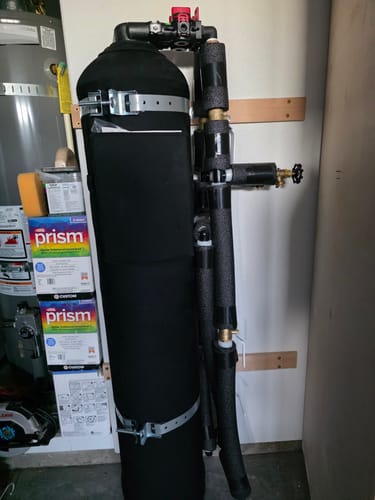
The threshold for visible staining is surprisingly low—just 0.3 parts per million (ppm) of iron in your water is enough to leave marks on shower and tub surfaces. From there, staining intensity scales predictably: 0.3–1 ppm produces light discoloration, 1–3 ppm creates moderate staining, and anything above 3 ppm delivers heavy, noticeable rust deposits. Once you're above 10 ppm, the water itself may run visibly orange.
Understanding these thresholds helps you diagnose your situation accurately and choose the right solution.
Every shower, every bath, every rinse adds another layer of iron oxide to your surfaces. Even dissolved iron at minimal concentrations oxidizes on contact with air and leaves its mark.
How to Remove Iron Stains From Your Shower and Tub (Without Making Them Worse)
Before you grab whatever cleaner is under the sink, there's one critical mistake you need to avoid: using chlorine bleach. It doesn't just fail to remove iron stains — it actually sets them permanently into your surfaces, making removal substantially more difficult.
Instead, reach for an oxalic acid-based cleaner like Bar Keepers Friend. It cuts through moderate to heavy iron stains on shower and tub fixtures without causing damage. Apply it directly, let it dwell briefly, then scrub and rinse.
For fabrics exposed to iron-laden water, you'll need a dedicated iron-removing laundry additive — bleach sets those stains too.
Once you've tackled existing stains, consider pairing regular cleaning with an iron filter to stop new staining before it starts.
Why Bleach Makes Iron Stains Worse
Bleach seems like a logical go-to — it's powerful, it whitens, and it kills bacteria. But on iron stains, it's the worst thing you can reach for. Here's why: bleach is an oxidizing agent, and iron stains are dissolved ferrous iron. When they meet, the iron rapidly oxidizes into insoluble ferric compounds that bond aggressively to your surfaces. That reddish stain you started with? It turns brown or black and becomes dramatically harder to remove.
Bleach fundamentally sets the stain — locking it in rather than lifting it out. Iron-specific cleaners like oxalic acid work the opposite way: they dissolve and lift the iron deposits entirely. The chemistry isn't complicated, but ignoring it means you're working against yourself from the first application.
How to Stop Iron Stains From Coming Back
Getting rid of iron stains is satisfying, but if we don't address the source, they'll keep coming back. The real fix starts at the water entry point. Installing an iron filter there removes iron before it ever reaches your plumbing, eliminating the root cause entirely.
Once the filter's in place, we need to maintain it. A neglected filter stops working, and the stains return. We should also ditch the chlorine bleach permanently—it sets iron stains deeper, making them harder to remove next time.
For ongoing management, oxalic acid-based cleaners like Bar Keepers Friend handle any residual staining effectively. Finally, test your water periodically to monitor iron levels and confirm the treatment system's actually performing. Consistent monitoring keeps us ahead of the problem long-term.
Frequently Asked Questions
What Is Considered High Iron in a Water Test?
We consider anything above 0.3 ppm of iron in your water high. At this threshold, you'll start seeing visible staining, so it's essential to test and address your water's iron levels promptly.
How to Get Rid of Iron Stains in a Shower?
We recommend using an oxalic acid-based cleaner like Bar Keepers Friend to tackle iron stains. Apply it directly, scrub thoroughly, and rinse. For prevention, we'd install an iron filter at your main water entry point.
Is It Safe to Shower in High Iron Water?
Yes, it's generally safe to shower in high iron water! While it won't harm your skin at most levels, it'll leave frustrating orange stains on your fixtures — that's the real concern we're tackling.
Will Iron Staining Go Away?
Iron stains won't go away on their own—they'll actually worsen over time. Since iron remains in your water supply, each shower or flush deposits more. You'll need oxalic acid cleaners and an iron removal filter to stop recurrence.


