


![SoftPro™ Chlorine+ Carbon Whole House Water Filter to Remove PFAS, Chlorine, Chloramine & Pesticides [City Water Filters Series]](http://softprowatersystems.com/cdn/shop/files/SoftPro_Whole_House_Carbon_Filter_with_Spin_Down_Water_Filter.webp?v=1783547361&width=140)


 855-683-8488


Iron Turbidity in Well Water: When Color Is and Is Not a Reliable Indicator

Orange or brown well water often points to iron, but color alone can mislead you. Tannins, manganese, sediment, or oxidized pipe scale can produce nearly identical discoloration. Even more surprising, dissolved ferrous iron is completely colorless, meaning your water can carry high iron concentrations without showing a single visible clue. Color gives you a hypothesis worth investigating, not a confirmed diagnosis. The real answers come from certified lab testing — and what those results reveal might surprise you.
Key Takeaways
- Orange or brown well water reliably suggests oxidized iron, while black or gray tints typically indicate elevated manganese levels.
- Color alone cannot confirm iron, as tannins, sediment, and pipe scale can produce nearly identical discoloration.
- Dissolved ferrous iron is completely colorless, meaning heavily contaminated water can appear visually clear and clean.
- Certified lab testing identifies iron concentration and type, providing reliable data that color observation simply cannot deliver.
- Accurate treatment selection depends on confirmed test results, not color-based assumptions, to avoid ineffective and costly solutions.
What Your Well Water Color Reveals About Iron and Manganese

Well water rarely lies — its color often tells the whole story of what's lurking beneath the surface. That orange or brown tint you're noticing? That's oxidized iron announcing itself. You'll likely notice a metallic taste and reddish-brown stains on your fixtures confirming the diagnosis. While iron won't necessarily threaten your health, it'll quietly destroy your appliances and ruin your water's flavor.
Black or dark gray water tells a different, more serious story — elevated manganese, which carries genuine health risks worth taking seriously. Persistent cloudiness or grayish hues suggest suspended particles or dissolved minerals that deserve closer investigation.
Color isn't just aesthetic here. It's diagnostic. Once you learn to read these signals, your well water becomes remarkably transparent about what it's hiding.
Why Orange or Brown Water Doesn't Always Mean High Iron
Color can mislead us more than we'd expect. We've seen water run a deep amber from a tap, and the homeowner assumes iron's the culprit—but the chemistry tells a different story. Tannins from decaying organic matter produce nearly identical discoloration. So does manganese, sediment disturbance, or even oxidized pipe scale.
Here's what sharpens our thinking: iron concentration and iron visibility don't always move together. Ferrous iron—the dissolved, "clear-water" form—registers invisibly until it oxidizes. Meanwhile, tannin-stained water can look alarming yet contain minimal iron.
This matters practically. Treating for iron when tannins are the real driver wastes money and fails entirely. Color gives us a hypothesis worth testing, never a conclusion worth acting on.
How to Test Your Well Water for Iron and Manganese
Once we've ruled out tannins and sediment as explanations, the next step is pinning down exactly what's in the water—and how much. Start with a certified lab test, not a home kit. Home kits detect presence but rarely distinguish between ferrous and ferric iron, and they miss manganese almost entirely.
A certified lab gives you concentration levels in mg/L, speciation, and pH—data you'll actually need to size treatment correctly. Send samples within 24 hours of collection, use lab-provided containers, and avoid aerating the water during collection, since oxygen converts ferrous iron to ferric, skewing results.
Test for total iron, ferrous iron, manganese, hardness, and pH together. That combination tells the complete story your water's been trying to tell you.
What Your Test Results Actually Mean for Your Water
Everything your water has been hiding shows up in those numbers—but comprehending what they mean is what turns data into action. Three thresholds matter most:
- Iron above 0.3 mg/L signals aesthetic problems—staining, metallic taste, discoloration
- Manganese above 0.05 mg/L crosses into health concern territory, not just nuisance
- High turbidity points toward suspended particles demanding sediment filtration
Iron and manganese results reveal what you're treating, but turbidity reveals how complex that treatment needs to be. We also recommend testing for bacteria and nitrates—because contamination rarely travels alone. Once we grasp the full picture, we're not guessing at solutions anymore. We're engineering them.
How to Treat Iron in Well Water Based on Confirmed Results
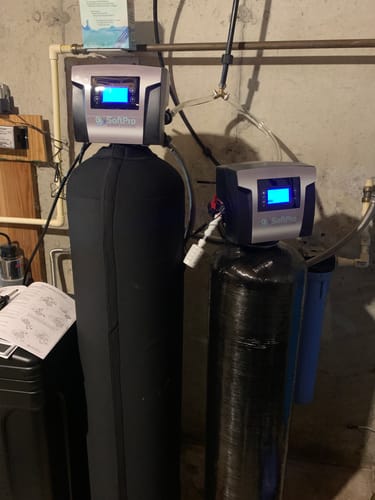
Now that we comprehend what those numbers mean, we can stop guessing and start fixing. For clear-water iron, home iron filters and oxidation-filtration systems work effectively before that dissolved iron ever oxidizes.
If your test reveals red-water iron instead, chemical oxidation paired with filtration intercepts the already-oxidized particles. But here's where most people stumble—they treat the water without treating the well. Iron bacteria quietly amplify the problem underground, so addressing them directly isn't optional.
Finally, match your technology precisely to what your confirmed results show, not what you suspect. A system solving the wrong problem solves nothing. Water testing isn't just a starting point—it's your blueprint. Every treatment decision should trace back to those numbers.
Frequently Asked Questions
What Is an Acceptable Level of Iron in Well Water?
We'd consider 0.3 mg/L the acceptable threshold—anything above that triggers aesthetic issues like metallic taste and staining. Though iron won't harm your health, it'll quietly wreak havoc on your pipes and appliances.
What Causes Turbidity in Well Water?
Turbidity sneaks in through suspended clay, silt, and organic matter, but it's also triggered by oxidizing iron, microbial biofilms, corroded plumbing, and disturbances like heavy rainfall stirring up settled sediment deep within your well.
What Does 50 NTU Water Look Like?
At 50 NTU, we're looking at water that's visibly cloudy, murky, and often brownish or gray—you can't see through it clearly. It's unmistakably dirty-looking, far exceeding safe drinking standards.
How to Tell if You Have Iron Bacteria in Well Water?
We'll want to look for slimy, gelatinous growths, reddish-brown discoloration, and foul odors. But to definitively confirm iron bacteria's presence, we'll need a certified laboratory test.


