


![SoftPro™ Chlorine+ Carbon Whole House Water Filter to Remove PFAS, Chlorine, Chloramine & Pesticides [City Water Filters Series]](http://softprowatersystems.com/cdn/shop/files/SoftPro_Whole_House_Carbon_Filter_with_Spin_Down_Water_Filter.webp?v=1783547361&width=140)


 855-683-8488


Iron Water Test Results Guide: From First Reading to Correct Filter Size

Your iron test results tell you far more than just iron levels. We're looking at pH, manganese, and hardness numbers that together determine which filtration system actually works for your water. Iron above 0.3 mg/L needs dedicated filtration, but pH below 6.8 or high hardness can completely undermine that filter's performance. Your well pump's flow rate then determines the correct filter size. Stick with us and we'll walk you through every number that matters.
Key Takeaways
- Iron levels above 0.3 mg/L require dedicated filtration, while ferrous iron may exist even in visually clear water.
- Test water across multiple seasons to capture peak iron levels, which determine the correct filtration system size.
- pH below 6.8 shuts down iron filters, requiring an acid neutralizer installed beforehand to ensure proper treatment.
- Your well pump's flow rate in GPM is essential for sizing filters correctly and avoiding premature clogging.
- Manganese above 0.05 mg/L and hardness above 10 GPG compound iron problems, demanding additional treatment steps first.
What Your Iron Test Results Say About Your Water

When you get your iron test results back, the first number to focus on is the concentration level — anything above 0.3 mg/L signals that you've got ferric iron in your water, the kind that leaves those stubborn rust stains and speeds up pipe corrosion.
But don't ignore readings below that threshold. Ferrous iron stays invisible until it oxidizes, meaning it's quietly present even when your water looks crystal clear.
Here's what makes interpretation tricky: iron levels shift with the seasons. A single test gives you a snapshot, not the full picture. We recommend testing across different times of year so you're sizing your filtration system against your actual peak iron load — not a misleadingly low reading.
Iron, pH, Manganese, and Hardness: The Numbers That Matter
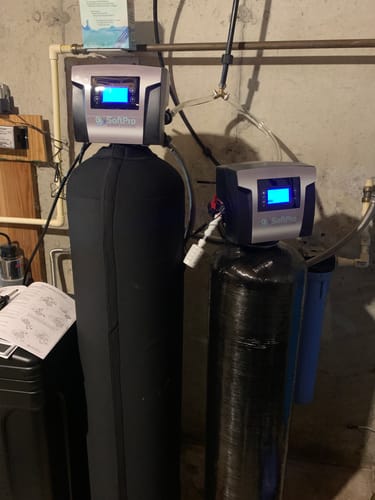
Iron concentration is only one piece of the puzzle. Your water's full picture includes pH, manganese, and hardness—and each number directly shapes which treatment system you'll need.
Here's what matters: manganese's SMCL sits at just 0.05 mg/L, and it compounds iron's damage when both are present. pH below 6.8 shuts down iron filters entirely, forcing you to add an acid neutralizer first.
Hardness above 10 grains per gallon disrupts iron oxidation, meaning a water softener enters the equation before filtration even begins.
These aren't minor details. They're the variables that determine whether your filter works or fails. Test for all four—iron, manganese, pH, and hardness—and you'll have everything needed to size your system correctly.
How Low pH and Hard Water Affect Iron Filter Performance
Low pH and hard water don't just reduce your iron filter's efficiency—they can shut it down entirely.
Ignore your water's pH and hardness long enough, and your iron filter won't just underperform—it'll fail completely.
- pH below 7.0 inhibits iron oxidation and precipitation, blocking your filter's core removal process.
- pH below 6.8 demands an acid neutralizer installed before the iron filter—skip this step and you're wasting money.
- High mineral content clogs filter media progressively, shrinking both flow rate and iron removal capacity.
- Heavily mineralized water exhausts media faster, forcing more frequent backwashing or full replacement.
We can't stress this enough—fix the underlying water chemistry first. Treating low pH and hardness upstream isn't optional maintenance; it's what keeps your iron filter performing reliably long-term.
Why Flow Rate Determines Your Iron Filter Size
Sizing your iron filter correctly starts with one number: your well pump's flow rate in gallons per minute (GPM). This figure determines the minimum backwash flow rate your filter needs to clean itself effectively — get it wrong, and you're fighting a losing battle.
Most residential wells deliver between 6–12 GPM, which aligns well with standard filter sizing. Drop below 6 GPM, though, and you'll need to ponder alternatives like a smaller tank or parallel filters to maintain performance.
Undersizing creates premature clogging and disappointing results. Oversizing, on the other hand, extends media lifespan and keeps your system running efficiently. That's why measuring your well pump's flow rate isn't optional — it's the essential first step before selecting any iron filter system.
Match Your Water Test Results to the Right Iron Filter
Once you've got your water test results in hand, matching them to the right iron filter comes down to a few key factors: total iron concentration, your home's water usage, and the broader chemistry of your water.
Matching your water test results to the right iron filter starts with three things: iron levels, daily usage, and water chemistry.
Iron concentration — Results above 0.3 mg/L require a properly sized filtration system built for your specific iron load.
Peak flow demands — Your filter's capacity must handle your home's daily usage without compromising performance.
Water chemistry — pH levels and co-existing contaminants directly affect iron removal efficiency and filter compatibility.
Seasonal testing — Iron levels shift throughout the year, so we recommend retesting regularly and adjusting your system accordingly.
A certified water treatment professional guarantees you get the sizing and installation right the first time.
Frequently Asked Questions
What Is Considered High Iron in a Water Test?
We consider iron levels above 0.3 mg/L high in a water test. That's the EPA's secondary limit—exceed it, and you'll likely need an iron filter to protect your water quality.
How Do I Read My Water Test Results?
When you read your water test results, find your iron level in mg/L or ppm—they're identical measurements. Compare that number against 0.3 mg/L (EPA's threshold), then check your pH, as it's equally critical.
What Size Iron Filter Do I Need?
To size your iron filter correctly, we'll need your peak flow rate and iron concentration from your water test. Multiply daily water usage by iron levels to calculate total iron load, then match that to filter capacity.
Is 5 Ppm Iron in Water Bad?
Yes, 5 ppm iron is bad for your plumbing and appliances. While it's safe to drink, you'll see orange-red staining, accelerated corrosion, and scaling—all signs you need treatment immediately.


