


![SoftPro™ Chlorine+ Carbon Whole House Water Filter to Remove PFAS, Chlorine, Chloramine & Pesticides [City Water Filters Series]](http://softprowatersystems.com/cdn/shop/files/SoftPro_Whole_House_Carbon_Filter_with_Spin_Down_Water_Filter.webp?v=1783547361&width=140)


 855-683-8488


Iron Water Test Results at 20-30 PPM: What It Takes to Treat Extreme Iron

When your iron test comes back at 20–30 PPM, you're not dealing with a typical iron problem — you're in extreme territory. Standard filters simply can't keep up at these levels. They clog fast, break down quickly, and fail to remove iron effectively. What actually works is a multi-stage system using chemical oxidation, proper sequencing, and the right media for your specific water chemistry. Stick with us and we'll walk you through exactly what your results mean and what it takes to fix it.
Key Takeaways
- Standard iron filters fail above 10 PPM, making 20–30 PPM levels require specialized oxidation-based multi-stage treatment systems.
- Effective treatment combines chemical oxidation using chlorine, hydrogen peroxide, or potassium permanganate with backwashing media filtration.
- Iron at these concentrations causes severe staining, appliance damage, pipe clogging, bacteria growth, and undrinkable water.
- Complete water testing must identify iron type, pH, bacteria presence, manganese, hardness, and total dissolved solids.
- Systems must be custom-engineered based on site-specific water chemistry for reliable performance at extreme iron levels.
What 20–30 PPM Iron Does to Your Home

Iron at 20–30 PPM isn't just a nuisance — it's a wrecking ball working its way through your home. At these concentrations, you're dealing with aggressive, rust-colored staining on every sink, bathtub, and toilet it touches.
Your appliances — washing machines, dishwashers, water heaters — are quietly taking damage, their internal components clogging and degrading faster than they should. Your pipes are narrowing, restricting flow and dropping pressure throughout the house.
Iron bacteria thrive at these levels, producing slimy deposits that compound the clogging problem. And when you turn on the tap? That metallic taste and odor make the water practically unusable for drinking or cooking. This isn't a minor inconvenience — it's systematic destruction that demands serious intervention.
Why Standard Iron Filters Fail at 20–30 PPM
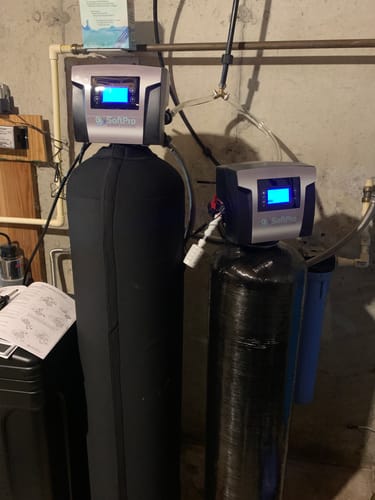
Most standard iron filters are built to handle up to 10 PPM — and at 20–30 PPM, you've already blown past that ceiling by two or three times over. That gap isn't minor. It's the difference between a system that works and one that fails fast.
Here's what happens when standard filters face extreme iron:
- Oxidation overload — Normal oxidation processes can't keep pace, leaving iron untreated and passing through.
- Media clogging — Filters choke under the iron load, demanding constant backwashing and premature media replacement.
- Component degradation — High iron aggressively breaks down filter media and internal parts, driving up repair costs.
Standard equipment simply wasn't engineered for these conditions. You need a customized, heavy-duty system built specifically for extreme iron concentrations.
What Treatment Systems Actually Work at 20–30 PPM Iron
Knowing what doesn't work is only half the battle — now let's talk about what actually does. At 20–30 PPM, you need oxidation-based treatment. That means chlorine injection, potassium permanganate, or hydrogen peroxide systems that force iron out of solution before filtration even begins. These aren't off-the-shelf fixes — they're engineered processes.
Most successful systems stack multiple stages: a sediment pre-filter, an oxidation system, then a backwashing media filter using manganese-oxide or greensand media. That last stage handles up to 15 PPM on its own, but paired with oxidation, it becomes genuinely powerful. The key is proper sizing and sequencing — get either wrong, and performance suffers. That's exactly why we recommend working with a certified water specialist before purchasing anything.
How to Match a System to Your Iron Type, pH, and Bacteria Results
Before selecting any system, you need answers to three critical questions:
- Iron type — Is it dissolved ferrous iron, particulate ferric iron, or both? Each demands a different oxidation strategy.
- pH level — Low pH inhibits oxidation and destroys media. High pH shifts which oxidizer performs best.
- Bacteria presence — Iron or sulfur bacteria require shock treatment before any filtration system can work effectively.
Hydrogen peroxide handles extreme iron conditions better than chlorine or air injection — but only when the system is engineered around your specific results. A Certified Water Specialist connects those dots precisely.
What Your Lab Results Must Show Before Sizing an Extreme Iron System
Matching a system to your iron type, pH, and bacteria results only works if those results are accurate and complete — and that means running a proper lab test before anything else. We need exact iron concentration confirmed above 10 PPM, identification of ferrous versus ferric iron, and a clear bacteria screen. We also need your pH reading — acidic water below 7.0 can shut down certain treatment systems entirely.
Beyond iron, the lab must measure hardness, manganese, sulfur, and total dissolved solids, because each variable shapes which solution actually works. Without these numbers in hand, we're guessing at sizing and configuration. When iron reaches 20–30 PPM or higher, guessing costs you. Complete lab results are what make precise, effective treatment possible.
Frequently Asked Questions
How Can I Fix High Iron Levels in My Water?
To fix iron levels at 20-30 PPM, we'll need a custom, multi-stage commercial system—oxidation, filtration, and ion exchange. Let's start with a professional lab analysis to engineer your perfect solution.
What Is an Alarming Iron Level?
We consider iron levels above 20 PPM truly alarming. At this concentration, you're facing potential plumbing damage, appliance deterioration, harmful bacterial growth, and likely additional contaminants like manganese and sulfur complicating your treatment strategy.
What Is the Best Water Treatment for High Iron Levels?
For extreme iron levels, we recommend a hydrogen peroxide oxidation system paired with specialized filtration media like Katalox Light. It converts dissolved iron into filterable particles, effectively meeting EPA's 0.3 PPM standard.
How Long Does It Take for Iron to Reverse Anemia?
With oral iron supplements, we can expect to reverse anemia within 2-4 weeks. If we need faster results, IV iron infusions work in 1-2 weeks. Severity and underlying causes affect our timeline markedly.


