


![SoftPro™ Chlorine+ Carbon Whole House Water Filter to Remove PFAS, Chlorine, Chloramine & Pesticides [City Water Filters Series]](http://softprowatersystems.com/cdn/shop/files/SoftPro_Whole_House_Carbon_Filter_with_Spin_Down_Water_Filter.webp?v=1783547361&width=140)


 855-683-8488


Low Iron in Well Water (Under 1 PPM): Do You Actually Need a Filter?

If your well water iron tests below 1 ppm, you probably don't need a dedicated iron filter at all. At that level, a water softener or catalytic carbon filter often handles any faint staining or metallic taste just fine. But here's the thing — low iron rarely tells the whole story. Your pH and hardness levels can quietly destroy pipes and appliances without any visible iron problem. Test your water first, and you'll discover exactly what's actually worth fixing.
Key Takeaways
- Well water iron under 1 ppm often doesn't require a dedicated iron filter; simpler solutions like a sediment filter may suffice.
- A catalytic carbon filter can effectively resolve faint staining or metallic taste caused by sub-1 ppm iron levels.
- Proper water testing is essential before purchasing equipment, as guessing leads to overspending or missing more serious water issues.
- Low pH and hard water above 7 grains per gallon can cause far more damage than mild iron levels under 1 ppm.
- A comprehensive water test reveals iron, pH, hardness, manganese, and bacteria, determining whether any treatment is actually necessary.
When Does Well Water Iron Actually Require a Filter?

Not every well water iron problem calls for a dedicated iron removal filter. If your levels test under 1 ppm, you're often in a manageable range where simpler solutions do the heavy lifting. A quality sediment filter or existing water softener may handle the problem entirely.
That said, we still see homeowners at sub-1 ppm levels dealing with faint staining or a metallic taste. In those cases, a catalytic carbon filter typically solves it without the cost and maintenance of a full iron removal system.
The real deciding factor? Your actual test results. Without proper water testing, you're guessing—and guessing means either overspending on equipment you don't need or underestimating a problem that's quietly damaging your fixtures and appliances.
What Low Iron Levels Look Like in Real Test Results
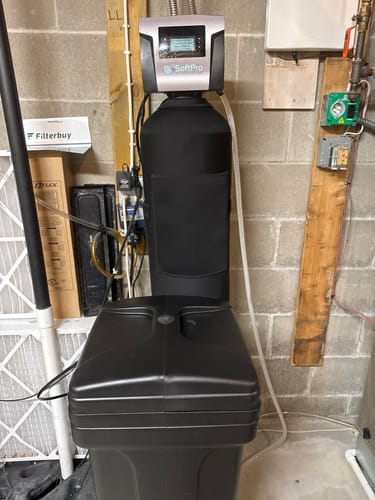
When you pull actual test results for well water in this low-iron range, the numbers tend to tell a reassuring story.
Pull actual test results for well water in the low-iron range, and the numbers tend to tell a reassuring story.
Here's what you'll typically see:
- Iron: 0.3–0.7 ppm — clear water, no metallic odor, no staining
- Manganese: Below 0.05 ppm — well within safe, non-problematic thresholds
- pH: Around 7.0 — neutral, requiring no acid neutralization
- Water appearance: Completely clear straight from the tap
- Hardness: Potentially elevated, sometimes still warranting a softener
These results describe water that's performing well on the iron front. No reddish stains in your sinks, no sulfur smell, no orange tint. The one wildcard worth watching is hardness — that's often the real problem hiding behind an otherwise clean report.
Which Well Water Problems Matter More Than Iron Under 1 PPM
Those clean iron numbers are worth celebrating — but they can also pull your attention away from problems that deserve it more.
If your pH is low, your pipes and appliances are quietly taking damage every day. That's a higher priority than a trace of iron. Hard water above 7 grains per gallon creates scale buildup and soap scum that shortens the lifespan of everything it touches. And if you're detecting sulfur odor or bacteria? Those problems demand immediate attention — full stop.
We see homeowners fixate on mild iron while ignoring the issues actually degrading their water and home. Think of it this way: fix what's breaking something first, then refine. Low iron under 1 PPM rarely breaks anything.
How pH and Hardness Cause Damage Even Without High Iron
Low pH water and hard water don't need iron as a co-conspirator to wreck your plumbing — they do plenty of damage on their own.
Corrosive low-pH water eats through pipes and fixtures, causing leaks and metal contamination.
Hard water scale builds up inside pipes, strangling water flow over time.
Appliances fail prematurely when mineral deposits accumulate inside water heaters and dishwashers.
Untested water leaves you blind to problems until expensive damage appears.
Ignoring hardness and pH accelerates deterioration regardless of how low your iron reads.
We've seen well owners fixate on iron while hardness destroys their water heater. Test for pH and hardness first — they're often the real culprits.
Why Testing First Saves You From the Wrong Well Water Fix
Testing your water before buying equipment isn't just smart — it's the difference between solving your actual problem and throwing money at the wrong one. We've seen homeowners install iron filters for water that tested under 0.3 PPM iron — then wonder why their problems persisted. The real culprit? Low pH silently corroding their pipes, or hardness quietly destroying their appliances.
A thorough test reveals your full water profile: iron, pH, hardness, manganese, and bacterial content. That data tells you exactly what you're dealing with. Maybe you need a softener, not an iron filter. Maybe you need pH correction. Maybe you need nothing at all. Without testing, you're guessing — and in water treatment, guessing almost always gets expensive.
Frequently Asked Questions
What Is the Cheapest Way to Remove Iron From Well Water?
For low iron levels under 1 ppm, we'd recommend a basic 10" Big Blue sediment filter — it's your cheapest fix at just $50-100 plus installation, effectively capturing particulate iron before it reaches your taps.
What Is the Acceptable Iron Level in Well Water in Ppm?
We'd say anything under 1 ppm is generally acceptable, though some experts prefer levels below 0.3 ppm for drinking water. Once you're exceeding 1 ppm, you'll start noticing staining and taste issues.
Will a Filter Remove Iron From Well Water?
Yes, a cartridge filter can remove low levels of iron from your well water. But if your iron levels are above 1 ppm, you'll need a dedicated iron filter system for effective removal.
Is It Safe to Drink Well Water That Has Iron in It?
Yes, it's safe! We can drink well water with iron levels under 1 ppm without worrying about health risks. Low concentrations won't cause iron overload or any harmful effects on our bodies.


