


![SoftPro™ Chlorine+ Carbon Whole House Water Filter to Remove PFAS, Chlorine, Chloramine & Pesticides [City Water Filters Series]](http://softprowatersystems.com/cdn/shop/files/SoftPro_Whole_House_Carbon_Filter_with_Spin_Down_Water_Filter.webp?v=1783547361&width=140)


 855-683-8488


Manufactured Home Well Water Treatment: Iron Filter First, Then What?

Starting with an iron filter is smart because iron destroys everything downstream. After that, we recommend a water softener to tackle hardness, protect your skin, and make soap actually work. If you want truly pure drinking water, a reverse osmosis system comes last. Each stage hands cleaner water to the next, which is exactly how the sequence should work. Keep going and we'll show you how to build the right combination for your specific well water.
Key Takeaways
- After the iron filter, install a water softener to remove hardness minerals, prevent scale buildup, and improve soap efficiency throughout your home.
- A sediment filter installed before the iron filter protects all downstream equipment by removing particulates that reduce system performance.
- If drinking water purity is a priority, add a reverse osmosis system after the softener as the final treatment stage.
- Installing components out of sequence causes serious damage; softeners before iron filters fail prematurely due to resin bed clogging.
- Test your well water first to confirm which contaminants are present before selecting your complete treatment combination.
Why the Iron Filter Comes First in Well Water Treatment

When it comes to well water treatment, sequence matters more than most people realize—and that's exactly why the iron filter earns its spot at the front of the line. Iron is destructive to downstream equipment. It coats softener resin beads, clogs carbon filter media, and shortens membrane life in reverse osmosis systems.
By tackling iron first, we protect every component that follows. Think of it as triage—remove the most damaging contaminant before it spreads its damage further into the system. Ferrous and ferric iron both wreak havoc differently, but both demand early interception.
When we get the order right, we extend equipment lifespan, reduce maintenance costs, and deliver consistently cleaner water throughout the entire treatment train.
The Right Filter Sequence for Manufactured Home Well Water
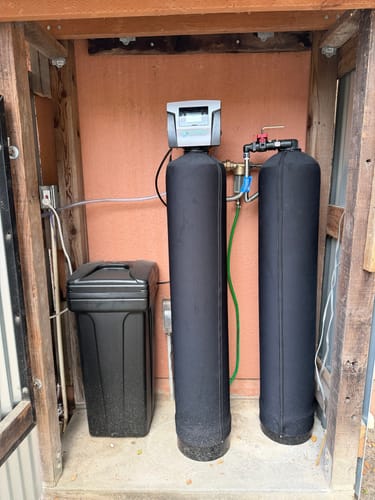
Since we've established why the iron filter leads the charge, let's map out the full sequence that gives manufactured home well water treatment its best shot at success.
Each stage builds on the last, and skipping one compromises everything downstream.
| Treatment Stage | What It Protects |
|---|---|
| Iron Filter | Pipes, fixtures, appliances |
| Water Softener | Skin, soap efficiency, scale buildup |
| Reverse Osmosis | Drinking water purity, peace of mind |
Notice how each stage hands off cleaner water to the next. The iron filter shields the softener's resin bed. The softener primes water for the RO membrane. That membrane then delivers what we all actually want—water we trust completely.
Get the sequence right, and every component performs at its peak.
Which Treatment Systems Does Your Well Water Actually Need?
Everything we've covered about sequence and stages only matters if we're running the right systems in the first place—and that starts with knowing what's actually in your water. Without proper testing, you're guessing—and guessing gets expensive fast.
Here's what testing tells you: if iron, manganese, or hydrogen sulfide are present, you need an iron filter. If hardness exceeds 7 grains per gallon, a water softener earns its place. And regardless of what else you're treating, a sediment filter belongs upstream, protecting every system behind it.
Not every well needs all three. Some need two. Some need specialized treatment beyond these basics. The only way to know is to test first, then build your system around the actual data.
What Happens When You Install Filters in the Wrong Order
Once we comprehend what's in our water and which systems we need, the next question is order—and getting it wrong doesn't just reduce performance, it destroys equipment.
Iron clogs carbon media. Sediment blinds membranes. Softener resin gets fouled by oxidized particles. Each misstep compounds the next.
| Wrong Order | What Gets Damaged | Performance Loss |
|---|---|---|
| Carbon before iron filter | Carbon media fouled | 60–80% capacity drop |
| Softener before iron filter | Resin bed clogged | Premature resin failure |
| RO before softener | Membrane scaling | Membrane lifespan halved |
| UV before sediment filter | UV blocked by particles | Disinfection failure |
Sequence isn't preference—it's physics. Water carries contaminants that react predictably with media downstream. We safeguard expensive systems by treating the most disruptive contaminants first, every time.
Well Water Treatment Combinations That Work for Manufactured Homes
Now that we comprehend sequencing, let's look at the combinations that actually solve real well water problems in manufactured homes—because no single filter handles everything, but the right stack handles nearly anything.
Iron + Sediment + Softener: Handles iron, hardness, and particulates—perfect for high-mineral wells.
Sediment + Carbon + UV: Eliminates cloudiness, chemicals, and bacteria without salt—ideal for lighter contamination profiles.
Iron Filter + Softener + Reverse Osmosis: Our most extensive stack, targeting iron, hardness, dissolved solids, and trace contaminants at the drinking tap.
Sediment + Carbon + Softener: Works beautifully when iron's absent but hardness and chloramines dominate.
Each combination addresses a specific contamination fingerprint. Test your water first—then match your stack to your actual problem, not your neighbor's solution.
Frequently Asked Questions
Should an Iron Filter Be Installed Before or After a Water Softener?
We recommend installing your iron filter before the water softener. This protects your softener's resin bed from iron fouling, extending its lifespan and ensuring both systems perform at peak efficiency.
What Is the Correct Order of Water Filters?
We recommend installing filters in this order: sediment filter first, then acid neutralizer, iron/sulfur filter, carbon filter, and finally the water softener. This sequence maximizes each filter's effectiveness and protects downstream components.
What Is the Correct Order for Water Treatment?
For whole-home well water treatment, we recommend this order: sediment filter first, then acid neutralizer, iron/sulfur filter, carbon filter, and finally the water softener. This sequence protects your softener resin from iron fouling.
How Often Should an Iron Filter Backwash?
We recommend backwashing your iron filter every 2-7 days, depending on your water usage and iron levels. Monitor your pressure drop closely—if it increases, it's time to backwash more frequently for ideal performance.


