


![SoftPro™ Chlorine+ Carbon Whole House Water Filter to Remove PFAS, Chlorine, Chloramine & Pesticides [City Water Filters Series]](http://softprowatersystems.com/cdn/shop/files/SoftPro_Whole_House_Carbon_Filter_with_Spin_Down_Water_Filter.webp?v=1783547361&width=140)


 855-683-8488


Mobile Home Iron Filter Installation Without a Traditional Basement

Installing an iron filter in a mobile home without a basement is trickier than a standard installation, but we've seen it done successfully dozens of times with the right approach. You'll work around vertical pipes, tight crawl spaces, and insulation challenges by creating a short horizontal run near your main supply line entry point. The right filter choice and placement make all the difference — and there's a lot more to uncover about getting this done right.
Key Takeaways
- Install the iron filter near the main supply line entry point, using elbow fittings to create a short horizontal run for placement.
- Mobile homes require compact, wall-mounted filters designed for vertical configurations due to tight floor cavities and limited crawl space access.
- Air-injection, ozone-injection, or greensand filters effectively remove iron and hydrogen sulfide common in mobile home water supplies.
- Access pipes by cutting small panels through belly board or unwrapping insulation, minimizing disturbance to preserve thermal efficiency.
- Proper system sizing ensures adequate flow rate and contaminant removal without requiring extensive, costly re-plumbing of existing lines.
Why Vertical Pipes and No Basement Make Iron Filter Installation So Difficult

Mobile homes present a unique set of challenges when it comes to installing an iron filter, and it mostly comes down to two things: vertical pipes and no basement. Unlike traditional homes, mobile homes run their plumbing vertically through tight floor cavities, leaving almost no horizontal run to work with. That's exactly where most iron filters want to live — on a long, accessible horizontal section near the pressure tank.
Without a basement, you're also losing the luxury of open space, decent lighting, and room to maneuver equipment. What you're left with is a crawl space, cramped quarters, and pipes that weren't designed with filtration upgrades in mind. Understanding these constraints upfront is what separates a clean installation from a frustrating one.
Where to Install an Iron Filter When You Only Have a Vertical Pipe
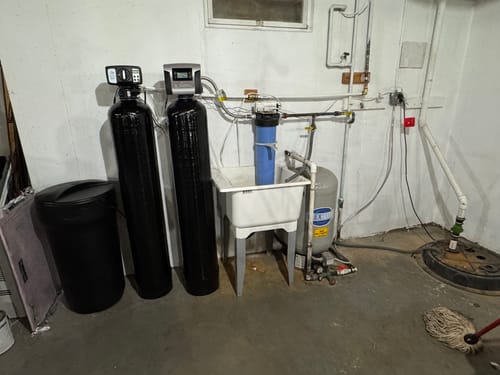
When you're only working with a vertical pipe, the installation point matters more than most people realize. You'll want to find where the main supply line enters the home before it branches off to any fixtures — that's your sweet spot.
In most mobile homes, that location is either beneath a utility closet floor, inside a crawl space access panel, or near the water heater. We recommend working as close to the entry point as possible so the filter treats everything downstream.
Here's the key insight most installers miss: you can create a small horizontal run using elbow fittings, giving you enough lateral space to mount the filter properly. That short detour solves the vertical challenge without requiring major re-plumbing.
Do You Need to Pull Down Insulation to Reach Your Pipes?
Reaching your pipes often means dealing with insulation, and whether you actually need to disturb it depends on where your supply line sits. In many mobile homes, insulation wraps the underbelly or belly board, making pipe access less straightforward than a traditional basement.
Here's what typically determines your approach:
- Exposed pipe runs — No insulation removal needed; mount your filter directly inline.
- Belly board coverage — You'll cut a small access panel rather than pulling down full insulation runs.
- Wrapped pipe insulation only — Simply unwrap the section you need, install the filter, then re-wrap afterward.
Minimizing disturbance protects your home's thermal efficiency. Work strategically, and you'll preserve both your insulation and your installation timeline.
Which Iron Filters Remove Hydrogen Sulfide and Iron From Well Water?
Once we've sorted out pipe access, the next question worth asking is what kind of filter actually handles both iron and hydrogen sulfide together—because not every system does both.
Air-injection and ozone-injection systems oxidize both contaminants simultaneously, making them strong all-in-one choices. Greensand filters work through catalytic oxidation and tackle iron, manganese, and hydrogen sulfide effectively. Backwashing media filters containing manganese greensand or calcite follow the same principle and perform reliably under consistent demand.
If stubborn sulfur odors persist after primary filtration, an activated carbon filter downstream catches what's left.
One thing we can't overlook: proper sizing. Flow rate and contamination levels determine whether your chosen system actually keeps up. An undersized filter won't protect you—it'll just give you false confidence.
How to Install an Iron Filter on a Vertical Pipe in a Mobile Home
Installing an iron filter on a vertical pipe in a mobile home isn't impossible—it just demands more planning than a standard setup. Without a basement, you're working within tight constraints, so precision matters from the start.
Installing an iron filter in a mobile home takes more planning—tight constraints mean precision isn't optional, it's everything.
Measure carefully — Map the vertical pipe's path through insulation before touching anything.
Modify insulation temporarily — Remove or adjust it to access the pipe and create clearance for mounting.
Choose a compact, wall-mounted filter — Select a system specifically designed for vertical pipe configurations.
Proper sealing and structural support aren't optional—they're what separates a reliable long-term installation from a recurring headache. Getting these fundamentals right means cleaner water and zero maintenance surprises down the road.
Frequently Asked Questions
How Much Does It Cost to Have an Iron Filter Installed?
We're looking at $1,500–$2,500 for installation, plus $500–$1,000 for plumbing modifications if needed. Don't forget annual maintenance runs $100–$300, so let's budget accordingly to keep our water quality ideal.
Should an Iron Filter Be Installed Before or After a Water Softener?
Install your iron filter before the water softener. This protects the softener's resin bed from iron fouling, extending its lifespan and ensuring both systems perform at peak efficiency for your home's water treatment.
What Is the Cheapest Way to Remove Iron From Well Water?
The cheapest way we can remove iron from well water is installing a simple iron filter system, costing $200-$500. Oxidizing filters are our most cost-effective option, using air to convert dissolved iron into filterable solid particles.
Is an Iron Filter Necessary?
It depends on your iron levels. If you're noticing staining, metallic taste, or odors, we'd say yes—it's necessary. Ignoring high iron damages appliances, clogs pipes, and makes water unpleasant to drink.


