


![SoftPro™ Chlorine+ Carbon Whole House Water Filter to Remove PFAS, Chlorine, Chloramine & Pesticides [City Water Filters Series]](http://softprowatersystems.com/cdn/shop/files/SoftPro_Whole_House_Carbon_Filter_with_Spin_Down_Water_Filter.webp?v=1783547361&width=140)


 855-683-8488


New Well With High Iron vs Old Well With Increasing Iron: What Each Means

High iron in a new well usually means you're tapping into iron-rich geology — it's a site condition, not a flaw. But when an older well suddenly shows rising iron, something has changed: corroding pipes, iron bacteria, or shifting aquifer chemistry. Each scenario has a completely different fix. Knowing which situation you're dealing with saves you from wasting money on the wrong treatment, and that's exactly what we'll help you sort out.
Key Takeaways
- High iron in a new well indicates iron-bearing minerals in the surrounding geology, not a system failure.
- Deeper new wells more commonly intersect iron-rich aquifers, making elevated iron levels more likely.
- Rising iron in an old well signals a change, such as casing corrosion, iron bacteria, or shifting aquifer chemistry.
- Each cause of rising iron in an old well requires a different fix, making testing essential before acting.
- New well iron is treated with oxidation and filtration, while old well iron requires identifying the root cause first.
Why Does Iron Show Up in Well Water in the First Place?

Iron finds its way into well water through a surprisingly straightforward process: it dissolves out of iron-rich rocks and minerals in the surrounding geology as groundwater moves through them. Acidic conditions accelerate this leaching, pulling even more iron into the water column.
But geology isn't the only culprit. Your well's own infrastructure can contribute. Aging casings and pipes corrode over time, introducing iron directly into your supply. Disturbed sediment at the bottom of a well suspends iron particles that weren't previously a problem. And if iron-oxidizing bacteria establish themselves, they'll actively metabolize and deposit iron, compounding the issue considerably.
Understanding these distinct sources matters because they point to different diagnoses — and different solutions — depending on whether you're dealing with a new well or an aging one.
New Well With High Iron: What the Geology Is Telling You
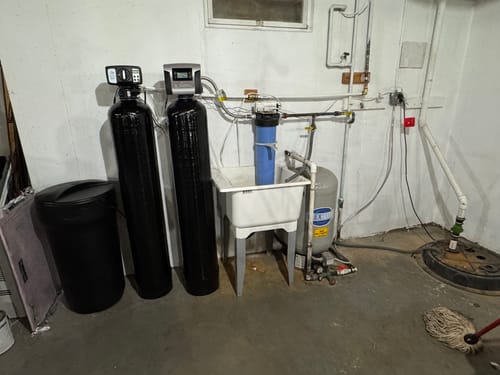
When a brand-new well comes up with high iron right out of the gate, that's the geology talking. The surrounding rock formations contain iron-bearing minerals, and as groundwater moves through them, it dissolves and carries that iron directly into your well.
Depth plays a significant role here. Deeper wells are more likely to intersect iron-rich aquifers, so the higher your well goes down, the greater the odds of elevated iron levels from day one.
This isn't a system failure—it's a site condition. Your well's location, depth, and local geology set the iron baseline before the first drop ever reaches your tap. Knowing that, the fix is straightforward: oxidation and filtration to remove what the earth naturally put there.
Old Well, Rising Iron: Is It Corrosion, Bacteria, or a Shifting Aquifer?
Something has changed when an old well starts showing rising iron levels—and pinpointing what changed makes all the difference in how you fix it.
When iron levels rise in an old well, something changed—and finding what changed determines how you fix it.
Three culprits typically drive this shift. First, an aging or disturbed well casing can corrode, leaching iron directly into your water. Second, iron bacteria colonize wells quietly, consuming iron and leaving behind clogging deposits that compound the problem.
Third, the aquifer itself may be shifting—changes in water table levels or nearby land use can alter groundwater chemistry over time.
Each cause demands a different response, so guessing wastes time and money. We recommend testing regularly and watching for other water quality changes alongside iron levels. That combination of data points you straight toward the real source.
How to Test Your Well Water and Confirm Your Iron Problem
Knowing whether you're dealing with corrosion, bacteria, or a shifting aquifer only gets you so far—you still need hard numbers to act on. Home test kits handle the 0.3–10 ppm range quickly, but for anything precise—total iron, ferrous vs. ferric ratios, iron bacteria—send samples to a certified lab.
When collecting, run the tap first to flush stagnant lines; that guarantees you're testing what's actually moving through your aquifer, not what's been sitting in your pipes. Test annually, or immediately after noticing staining or scaling.
If your well's low-yield, add pH and hardness to your panel—both amplify iron problems in ways a single iron reading won't reveal. Your results don't just confirm the problem; they dictate the right treatment path.
Which Iron Treatment Actually Works for Your Situation?
Once you've pinned down your iron type and concentration, the right treatment stops being a guessing game. Water softeners handle clear-water ferrous iron up to 2 ppm effectively, but anything higher—or ferric iron—demands oxidizing filters, aeration systems, or chemical oxidation.
Knowing your iron type turns guesswork into action—the right treatment follows naturally from the right diagnosis.
Organically bound iron adds another layer, often requiring tannin filters or ozone generators alongside your primary removal method.
An expert identifies your specific iron type, concentration, and whether iron bacteria are complicating things. That diagnosis drives the right solution.
Once your system's in place, don't stop testing. Iron levels shift, and regular monitoring confirms your treatment keeps pace. The right system chosen early saves you from costly corrections later.
Frequently Asked Questions
How to Fix High Iron Levels in Well Water?
We can fix high iron levels by using water softeners, oxidizing filters, aeration systems, or chemical oxidation. First, let's test your water to identify the iron form and concentration, then consult a treatment specialist.
Is It Better for My Iron to Be Higher?
No, higher iron isn't better. Once it exceeds 0.3 mg/L, you'll face discolored water, clogged pipes, and appliance damage. We recommend testing your water and targeting the lowest achievable iron levels.
How Much Iron Is Too Much in Well Water?
We'd consider anything above 0.3 mg/L problematic, but levels exceeding 10 mg/L can seriously restrict water flow and create significant operational challenges you'll want to address immediately.
How Do I Know My Iron Is Getting Better?
We'll know our iron's improving when fixtures show less staining, water tastes cleaner without metallic odors, appliances build up less residue, and periodic water tests confirm steadily dropping iron concentration levels.


