


![SoftPro™ Chlorine+ Carbon Whole House Water Filter to Remove PFAS, Chlorine, Chloramine & Pesticides [City Water Filters Series]](http://softprowatersystems.com/cdn/shop/files/SoftPro_Whole_House_Carbon_Filter_with_Spin_Down_Water_Filter.webp?v=1783547361&width=140)


 855-683-8488


Ozone Iron Filters vs Air Injection Iron Filters: Technology Difference Explained

Both systems remove dissolved iron, but they work differently. Air injection pushes air into the filter tank, creating an oxidation chamber that converts dissolved iron into solid, filterable particles. Ozone systems inject ozone gas before the water even enters the filter, hitting iron with a more aggressive oxidizer that works faster and handles more contaminants. Your water chemistry determines which one actually wins — and we'll break down exactly how to figure that out.
Key Takeaways
- Air injection systems push air into the filter tank, creating an oxidation chamber that converts dissolved iron into filterable solid particles.
- Ozone systems inject ozone gas directly into the water before filtration, acting as a more aggressive oxidizer than air.
- Ozone is 1.5 times stronger than chlorine as an oxidant, forcing dissolved iron to precipitate faster and more thoroughly.
- Air injection relies on ambient air, while ozone uses self-generated ozone gas, making ozone more effective against a broader range of contaminants.
- Both systems remove iron, manganese, and hydrogen sulfide, but ozone handles higher contamination levels and also kills bacteria directly.
How Ozone and Air Injection Iron Filters Work

Both ozone and air injection iron filters tackle the same root problem — dissolved iron in your water — but they go about it in different ways.
Air injection systems push a pocket of air into the filter tank, creating an oxidation chamber where dissolved iron converts into solid particles. Those particles then get trapped in the filter media.
Ozone systems take oxidation further by injecting ozone gas — a molecule with three oxygen atoms — into the water before it enters the filter. Ozone is a far more aggressive oxidizer than plain air, which means it neutralizes iron faster and handles a broader range of contaminants.
Both approaches work, but the technology driving each one produces noticeably different results depending on your water chemistry.
Ozone vs. Air Injection: Which Removes More Iron?
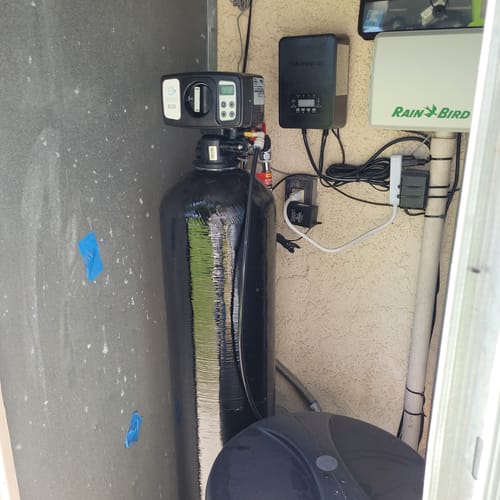
When it comes to raw iron removal, ozone iron filters have a clear edge. They remove up to 95% of iron, manganese, and sulfur, while air injection systems top out around 90%. That 5% gap compounds considerably at higher contamination levels.
Here's why: ozone is 1.5 times stronger as an oxidant than chlorine, generating a higher ORP that forces dissolved iron to precipitate faster and more thoroughly.
| Factor | Ozone Filters | Air Injection Filters |
|---|---|---|
| Max Iron Removal | 95% | 90% |
| High Concentration Limit | 6+ ppm | ~6 ppm |
| Oxidant Source | Self-generated ozone | Ambient air |
| ORP Level | Higher | Lower |
If your water exceeds 6 ppm of iron, manganese, or hydrogen sulfide, air injection simply can't keep up.
When Ozone Outperforms Air Injection on Iron and Bacteria
There are 2 scenarios where ozone iron filters don't just beat air injection — they make it look outdated: high iron concentrations and bacterial contamination.
When combined iron and hydrogen sulfide exceed 3 ppm, air injection simply runs out of oxidizing power. Ozone handles up to 6 ppm because it's 1.5 times stronger than chlorine as an oxidant — it converts ferrous iron into filterable ferric particles faster and more completely.
Bacterial contamination is where the gap becomes undeniable. Air injection oxidizes iron but ignores the bacteria feeding on it. Ozone kills bacteria directly, breaks down the organic matter sustaining them, and maintains an oxidizing environment throughout your plumbing — stopping iron bacteria from reclaiming your pipes after treatment.
When Air Injection Wins on Cost, Simplicity, and Maintenance
Ozone doesn't always win — and for most homeowners with straightforward iron problems, air injection is the smarter, cheaper choice. If your iron levels sit below 15 ppm and bacteria isn't a concern, you're paying for power you don't need with ozone.
Air injection uses ambient air to oxidize iron, manganese, and hydrogen sulfide — no specialized generators, no complex components, fewer failure points. Installation is simpler, upfront costs are lower, and ongoing maintenance basically boils down to a backwash cycle every one to three days.
Compare that to ozone's higher equipment costs and more demanding upkeep, and the value proposition becomes clear. When the problem is moderate iron, air injection handles it reliably, affordably, and without the headaches ozone sometimes brings.
Which System Should You Choose Based on Your Water Test?
So now that we've laid out where each system shines, let's put it all together — because the real answer lives in your water test, not in a blanket recommendation.
If your combined iron, manganese, and hydrogen sulfide levels push past 3-4 ppm, ozone's the clear winner. It handles up to 6 ppm without flinching, backed by advanced software controls and zero chemical dependency.
But if your levels sit comfortably below that threshold and budget's a priority, air injection delivers reliable results without the premium price tag.
The critical move here is testing first — knowing your exact contaminant types and concentrations removes all the guesswork. Match the system to your water's reality, and you'll get clean, reliable results for years.
Frequently Asked Questions
What Is the Best Home Iron Filter for Removing Iron From Well Water?
The best iron filter depends on your iron levels. If you've got high concentrations, we recommend ozone filters. For moderate levels, air injection systems offer an equally effective, budget-friendly solution.
What Are the Disadvantages of Ozone Water Treatment?
Ozone systems cost more upfront, require electricity to generate ozone, and need careful maintenance to prevent equipment degradation. They're also less effective in high-iron water without proper contact time, and ozone's instability means it dissipates quickly if not managed correctly.
Do Air Injection Iron Filters Work?
Yes, they work! We've seen air injection iron filters effectively oxidize dissolved ferrous iron into filterable particles, tackling concentrations up to 15 ppm while achieving impressive 75-90% removal rates — all without chemicals.
What Are the Different Types of Iron Filters?
We've got several iron filter types to ponder: air injection, ozone, birm, greensand, and catalytic carbon filters. Each handles iron differently, so matching the right system to your water's contamination level is vital for excellent results.


