


![SoftPro™ Chlorine+ Carbon Whole House Water Filter to Remove PFAS, Chlorine, Chloramine & Pesticides [City Water Filters Series]](http://softprowatersystems.com/cdn/shop/files/SoftPro_Whole_House_Carbon_Filter_with_Spin_Down_Water_Filter.webp?v=1783547361&width=140)


 855-683-8488


pH, Alkalinity, and Iron Together: How They Interact in Well Water Treatment

When it comes to well water treatment, pH, alkalinity, and iron don't operate independently—they're tightly connected. Low pH keeps iron dissolved as ferrous Fe²⁺, making it nearly impossible to filter out. Raise pH above 7, and iron converts to solid ferric particles you can actually capture. Alkalinity stabilizes that pH shift, preventing iron from reverting. Manganese needs an even higher pH to behave similarly. Understanding how these three interact reveals the entire treatment process.
Key Takeaways
- Water pH below 7 keeps iron dissolved as ferrous Fe²⁺, allowing it to pass through filters designed for particulate capture.
- Raising pH above 7.5 triggers oxidation, converting dissolved ferrous iron into solid ferric particles that standard filtration media can remove.
- Alkalinity acts as a pH buffer, stabilizing conditions needed for iron precipitation and preventing treated water from reverting to acidic states.
- Manganese demands even higher pH levels above 8.5 to oxidize and precipitate into filterable solid particles.
- Iron, manganese, and pH must be tested and treated together, as correcting pH first maximizes overall treatment efficiency.
Why Your Water's pH Determines What Form Iron Takes

When it comes to iron in your well water, pH isn't just a number—it's the deciding factor in what form that iron takes and how easily comprehend can remove it. In acidic water below pH 7, iron stays dissolved as ferrous Fe²⁺, slipping right through standard filters.
Push that pH above 7, and iron converts to ferric Fe³⁺, forming solid particles we can actually capture through filtration.
Think of pH as iron's on/off switch for filterability. When perceive this relationship, we stop guessing and start targeting the real variable controlling our treatment results. Every iron removal strategy worth using accounts for this fundamental chemistry first—because filtering iron you can't see in particle form is a losing battle from the start.
Why Low pH Makes Iron Harder to Remove From Well Water
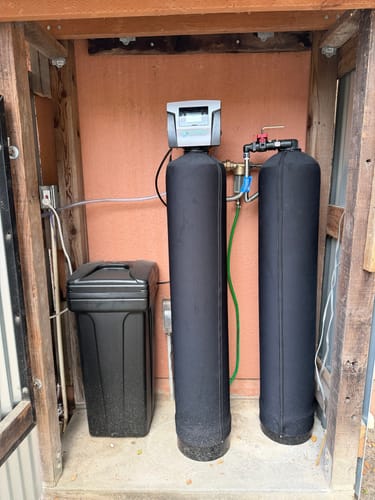
Low pH doesn't just slow down iron removal—it makes it nearly impossible through conventional filtration. When water turns acidic, iron stays dissolved and invisible, slipping right through filter media designed to catch particles, not soluble ions.
| pH Level | Iron State | Filterability |
|---|---|---|
| Below 6.5 | Fully dissolved | Very difficult |
| 6.5–7.0 | Partially dissolved | Inconsistent |
| 7.0–8.5 | Precipitated solid | Highly effective |
Worse, acidic water destroys your filtration media over time, compounding the problem. Low alkalinity makes correction harder by stripping the water's natural buffering capacity, so pH swings become unpredictable.
That's why we always address pH first—through acid neutralizers or chemical feed systems—before targeting iron directly. Fix the chemistry, and filtration finally works as intended.
How Raising pH Turns Dissolved Iron Into Something Filterable
Raising pH doesn't just improve conditions for filtration—it actively transforms iron from one physical state into another. When pH climbs above 7.5, dissolved ferrous iron oxidizes into ferric iron, forming solid particles your filter can actually capture.
Ferrous iron (Fe²⁺) becomes ferric iron (Fe³⁺) through oxidation. Ferric iron precipitates into rust-colored particulate matter. Precipitation rate accelerates greatly above pH 8.0. Alkalinity buffers pH during this transformation, preventing reversal. Solid particles become mechanically filterable through standard media.
We're fundamentally engineering a phase change—turning something invisible and dissolved into something physical and removable. Without adequate pH elevation, dissolved iron passes straight through filtration systems unchanged, defeating the entire treatment process.
What High pH Does to Manganese in Your Well Water
Manganese follows the same playbook as iron, but it demands even higher pH levels to cooperate. Above 8.5, manganese oxidizes into insoluble particles your filter can actually capture. Every pH unit increase drops dissolved manganese concentration by roughly 90%—that's compounding leverage working in your favor.
| pH Level | Manganese Solubility | Removal Effectiveness |
|---|---|---|
| 7.0 | High | Poor |
| 7.5 | Moderate | Fair |
| 8.0 | Low | Good |
| 8.5 | Very Low | Very Good |
| 9.0 | Minimal | Excellent |
Consistency matters here. pH fluctuations redissolve previously precipitated manganese, undoing your progress. We recommend pairing a pH adjustment system with an oxidizing manganese filter—a two-stage approach that targets both dissolved and oxidized manganese simultaneously.
How to Test and Treat Iron, Manganese, and pH Together
Because iron, manganese, and pH don't behave independently, you can't test or treat them in isolation—what happens to one directly affects the other two.
Start with an extensive water test measuring all three simultaneously, then build your treatment strategy around those relationships.
Test iron (ferrous and ferric), manganese, and pH together as a baseline
Identify whether iron is dissolved, particulate, or bacterial
Adjust pH before oxidation to maximize treatment efficiency
Use oxidizing filtration media rated for your specific pH range
Retest after treatment to confirm all three parameters shifted correctly
Treating one parameter without monitoring the others almost guarantees unexpected results. Understanding how they interact transforms guesswork into a precise, repeatable system.
Frequently Asked Questions
What Are the Symptoms of Too Much Iron in Well Water?
When iron's too high, we'll notice metallic-tasting water, reddish-brown stains on fixtures and laundry, clogged pipes, and potential gastrointestinal issues like nausea, constipation, or abdominal pain—plus that telltale discolored, yellow-tinted water.
What Kills Iron Bacteria in Well Water?
Chlorine shock treatment kills iron bacteria effectively. We'll want to pour a high-concentration bleach solution directly into the well, let it circulate, then flush the system completely. Repeat treatments may be necessary for stubborn infestations.
Is It Okay to Drink Well Water With Iron in It?
We can drink well water with iron under 10 mg/L safely, though it may taste metallic. Above 20 mg/L, we risk gastrointestinal issues. Testing's essential—it'll guide us toward the right treatment approach.
How Do You Know if Your Well Water Is High in Iron?
We'll know our well water's high in iron if we spot orange stains on fixtures, taste metal in our water, or see reddish-brown discoloration. Lab testing confirms exact iron levels accurately.


