


![SoftPro™ Chlorine+ Carbon Whole House Water Filter to Remove PFAS, Chlorine, Chloramine & Pesticides [City Water Filters Series]](http://softprowatersystems.com/cdn/shop/files/SoftPro_Whole_House_Carbon_Filter_with_Spin_Down_Water_Filter.webp?v=1783547361&width=140)


 855-683-8488


Testing Hardness, pH, TDS, Iron, and Manganese Together in Well Water

Testing hardness, pH, TDS, iron, and manganese together gives you the full picture of what's happening in your well water. Each parameter influences the others—low pH can make iron and manganese harder to treat, while high TDS often signals multiple problems at once. Testing them as a panel helps us avoid chasing one issue while missing another. Stick with us, and we'll walk you through exactly what your results mean and how to fix them.
Key Takeaways
- Testing hardness, pH, TDS, iron, and manganese together provides a complete picture of well water quality rather than addressing issues individually.
- Iron above 0.3 mg/L causes staining and taste issues, while manganese above 0.05 mg/L produces metallic taste and black staining.
- Low pH below 6.5 reduces the effectiveness of iron and manganese filters, making panel testing essential before choosing treatment.
- High iron levels can mask manganese presence, causing underestimation of total metal contamination without comprehensive panel testing.
- Elevated TDS above 1,000 mg/L often signals combined hardness, iron, and acidity problems that require a full treatment approach.
Why Your Well Water Test Results for Iron, Manganese, Hardness, pH, and TDS Matter

When you get your well water test results back, the numbers next to iron, manganese, hardness, pH, and TDS aren't just data points — they're the roadmap to building a treatment system that actually works for your home. Each parameter tells a distinct story.
High iron and manganese cause staining, metallic tastes, and equipment damage. Hardness levels determine whether a softener will perform efficiently. A pH below 6.5 means your plumbing is actively corroding, while a pH above 8.5 signals its own set of challenges. Elevated TDS reveals the broader mineral load your water carries.
Together, these five measurements give us a complete picture — one that makes the difference between guessing at solutions and designing a whole-house system that genuinely targets what's in your water.
What Your Well Water Test Results Actually Mean
So what do those numbers on your well water test report actually mean? Each parameter tells a specific story about your water's condition and what treatment, if any, it needs.
| Parameter | Action Threshold |
|---|---|
| Hardness above 15 gpg | Install a water softener |
| pH below 6.5 | Add acid neutralization |
| TDS above 1,000 mg/L | Consider reverse osmosis |
| Iron above 0.3 mg/L | Address staining and taste |
| Manganese above 0.05 mg/L | Treat metallic taste and black staining |
No single number tells the whole story. High TDS combined with extreme hardness and elevated iron signals a very different treatment need than high TDS alone. Reading these results together lets you pinpoint the right solution rather than guessing.
Does High Iron or Low pH Make Your Other Results Worse?
Iron and low pH don't just cause problems on their own—they make your other results harder to read and harder to fix. High iron can actually mask manganese, causing you to underestimate your total metal load if you're not testing for both.
Low pH below 6.5 undermines iron and manganese filters entirely, meaning filtration fails before it starts without acid neutralizer pre-treatment. Meanwhile, elevated TDS often signals the presence of all these issues together—high hardness, iron, and acidity all push dissolved solids upward.
That's why we always recommend testing hardness, pH, TDS, iron, and manganese as a complete panel. Each parameter interacts with the others, and treating one without understanding the full picture usually means solving half the problem.
Treatment Systems That Handle Iron, Manganese, Hardness, pH, and TDS Together
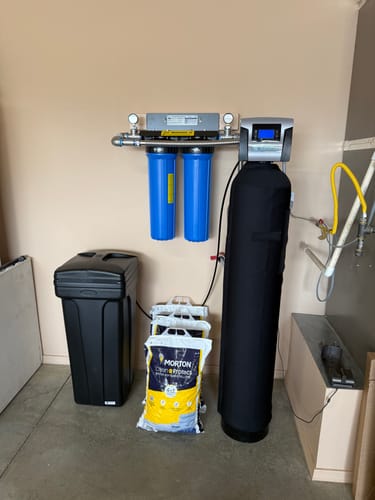
Once you understand how these parameters interact, the next logical question is: what actually fixes them? Rarely does a single system solve everything, but a few come close. Water softeners handle low iron, manganese, and hardness simultaneously.
Oxidizing filters using oxygen, ozone, or chlorine tackle both dissolved and particulate iron and manganese effectively. Manganese greensand filters work across a wide pH range, making them versatile for moderate contamination levels.
Reverse osmosis addresses iron, manganese, high TDS, and pH in one unit. For complex combinations, we recommend a treatment train: pre-filters first, then an oxidizing or neutralizing stage, followed by a polishing filter. Matching your specific test results to the right system sequence is what separates a partial fix from a complete solution.
The Right Order to Install Your Well Water Treatment Equipment
Getting the sequence right matters more than most people realize, and putting equipment in the wrong order can actually make your water worse. Iron clogs softeners. High TDS overwhelms RO membranes prematurely. Wrong pH destroys oxidizing filters.
Here's the order we recommend:
| Stage | Equipment | Target Problem |
|---|---|---|
| 1st | Sediment pre-filter | Particulates, suspended solids |
| 2nd | Oxidizing filter or aeration | Iron, manganese |
| 3rd | Water softener or neutralizer | Hardness, pH correction |
After stage three, you can add RO for TDS reduction at the point of use. Each unit protects the next. Skip a step, and you'll shorten equipment lifespan, reduce effectiveness, and create new problems you didn't have before.
Frequently Asked Questions
Is It Normal for Well Water to Have High Iron and Manganese Levels?
Yes, it's completely normal! We often see high iron and manganese levels in well water, especially in areas like northern and western Pennsylvania, where geological conditions naturally introduce these minerals into groundwater.
How Can I Test for Manganese in My Well Water?
We can test for manganese by sending a water sample to an accredited lab using atomic absorption spectroscopy or ICP-MS. We'll want to guarantee proper sample collection for accurate, quantitative results that meet EPA's 0.05 mg/L standard.
How to Get Rid of Iron and Manganese in Well Water?
We'll tackle iron and manganese using oxidizing filters, aeration, or chlorine injection to convert dissolved metals into filterable particles. For lower levels, water softeners work well. Always correct pH first for ideal system performance.
Do Water Softeners Remove Iron and Manganese?
Water softeners can remove low levels of dissolved iron and manganese, but they're not effective above 0.3 mg/L iron or 0.05 mg/L manganese. We recommend installing a dedicated iron/manganese filter first.


