


![SoftPro™ Chlorine+ Carbon Whole House Water Filter to Remove PFAS, Chlorine, Chloramine & Pesticides [City Water Filters Series]](http://softprowatersystems.com/cdn/shop/files/SoftPro_Whole_House_Carbon_Filter_with_Spin_Down_Water_Filter.webp?v=1783547361&width=140)


 855-683-8488


Total Dissolved Solids and Iron in Well Water: What TDS Means for Filtration

When your well water has high TDS or iron levels, it's signaling that dissolved minerals, metals, or contaminants are present in concentrations that can damage pipes, stain laundry, and affect taste. TDS above 500 mg/L and iron exceeding 0.3 mg/L typically require filtration. Not all systems handle both — reverse osmosis removes up to 99% of TDS and dissolved iron, but proper pre-treatment matters. Stick with us to find out exactly what your water needs.
Key Takeaways
- TDS measures the total concentration of dissolved minerals, salts, and metals in water, serving as a key indicator of overall water quality.
- Well water with TDS above 500 mg/L or iron exceeding 0.3 mg/L requires filtration to prevent scaling, staining, and appliance damage.
- High TDS or iron levels can signal the presence of other harmful contaminants, making thorough laboratory testing essential.
- Reverse osmosis is the most effective filtration method, removing up to 99% of TDS and dissolved iron from well water.
- RO systems require pre-treatment, such as water softening, to function properly and protect the filtration membranes from damage.
What Causes High TDS and Iron in Well Water?

When groundwater flows through mineral-rich aquifers and geological formations, it dissolves and picks up high levels of total dissolved solids (TDS) like calcium, magnesium, and iron. But geology isn't the only culprit.
Agricultural runoff, industrial waste, and mining activities introduce chemical fertilizers, pesticides, and byproducts that elevate TDS and iron further. In coastal regions, seawater intrusion adds sodium and chloride, spiking TDS considerably. Even road salt used for de-icing leaches into groundwater, contributing dissolved sodium and chloride.
Finally, don't overlook your well itself — faulty construction, physical damage, or aging infrastructure allows surface contaminants to enter directly. Understanding these sources matters because each one influences which filtration approach will actually work for your specific water chemistry.
Are High TDS and Iron Levels in Well Water Dangerous?
Most of us discovering high TDS or iron in our well water immediately worry about health risks — and that concern is understandable.
Here's the reassuring reality: neither high TDS nor iron is typically dangerous at concentrations found in well water.
High TDS and iron in well water sound alarming — but they're rarely dangerous at typical concentrations.
The real issues are aesthetic and mechanical. TDS above 500 mg/L creates noticeable salty or bitter taste, while levels exceeding 1,000 mg/L can corrode plumbing. Iron causes metallic-tasting water, stained fixtures, and ruined laundry — frustrating, but not a health threat.
However, here's what demands your attention: elevated TDS and iron can signal the presence of other harmful contaminants lurking nearby. They're warning indicators, not standalone dangers. That's why thorough water testing matters — treating the symptoms without investigating the cause leaves critical questions unanswered.
How Do You Test Well Water for TDS and Iron?
Testing well water for TDS and iron isn't complicated, but choosing the right method makes all the difference. A TDS meter gives us instant readings, while lab analysis delivers precise iron content data.
| Test Type | Key Benefit |
|---|---|
| TDS Meter | Quick, at-home measurement |
| Lab Water Analysis | Accurate iron content results |
| Combined Testing | Identifies correct filtration system |
| Unexpected Changes | Signals potential water quality issues |
| Annual Testing | Tracks fluctuations over time |
We recommend doing both tests together — one alone won't paint the full picture. When TDS or iron levels shift unexpectedly, that's our early warning sign. Committing to annual testing keeps us ahead of problems and guarantees our filtration system remains properly matched to our water's actual composition.
When Do TDS and Iron Levels Need to Be Filtered?
Once TDS climbs above 500 mg/L or iron exceeds 0.3 mg/L, it's time to act — these thresholds signal real consequences for our plumbing, appliances, and daily life. High TDS accelerates scaling inside pipes and appliances, quietly shortening their lifespan.
Elevated iron stains fixtures and laundry, making the problem impossible to ignore.
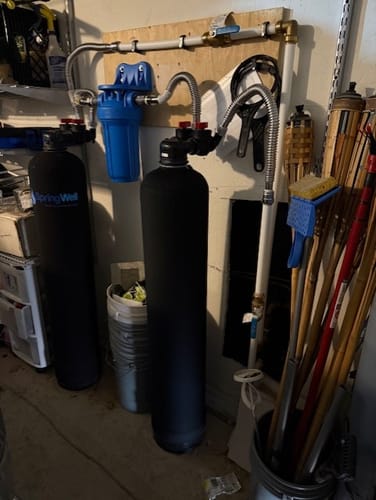
The right response depends on what we're dealing with. Reverse osmosis systems tackle dissolved solids with up to 99% removal efficiency, while oxidizing filters target iron and manganese specifically. Sometimes we'll need pre-treatment — sediment filters or water softeners — before the primary system can perform effectively.
That's why regular testing matters. Water chemistry shifts over time, and staying ahead of those changes means our treatment system always matches our actual water conditions.
Which Filtration System Removes TDS and Iron From Well Water?
When we comprehend filtration is necessary, the next question is which system actually gets the job done. Not all systems are created equal, and choosing wrong means contaminants stay in your water.
- Water softeners improve hardness but won't meaningfully lower TDS
- Iron filters catch particulate iron but miss dissolved iron entirely
- Whole-house systems combine sediment, carbon, and softening for broader improvement but still fall short on TDS and dissolved iron
- Reverse osmosis (RO) removes up to 99% of TDS and dissolved metals, making it the most complete solution
RO wins outright, but it requires proper pre-treatment. Water softening before the RO membrane prevents fouling and keeps the system performing at its peak.
Frequently Asked Questions
What Does It Mean if My Well Water Has High Total Dissolved Solids (TDS)?
High TDS in your well water means it's carrying excess dissolved minerals and salts. We're talking potential scaling, corrosion, and off-tasting water—issues that'll likely require a customized whole-home treatment system to resolve effectively.
What Does TDS Mean in Total Dissolved Solids?
TDS stands for Total Dissolved Solids — it's the measurement of everything dissolved in your water, including minerals, salts, and metals, expressed in milligrams per liter (mg/L) or parts per million (ppm).
What Is the Acceptable Range for Total Dissolved Solids (TDS) in Drinking Water?
We'd say the acceptable TDS range for drinking water is 150–500 mg/L, though levels up to 1,000 mg/L remain tolerable. The EPA's recommended maximum is 500 mg/L for ideal taste and quality.
What Is a Safe Level of Dissolved Solids in Water?
We'd consider TDS levels under 500 mg/L safe for drinking water, per EPA guidelines. Levels between 500–1,000 mg/L are generally drinkable but may taste unpleasant, while anything above 1,000 mg/L warrants treatment.


