


![SoftPro™ Chlorine+ Carbon Whole House Water Filter to Remove PFAS, Chlorine, Chloramine & Pesticides [City Water Filters Series]](http://softprowatersystems.com/cdn/shop/files/SoftPro_Whole_House_Carbon_Filter_with_Spin_Down_Water_Filter.webp?v=1783547361&width=140)


 855-683-8488


Well Water Iron Testing Lab Options: What a Certified Test Includes

When iron contaminates your well water, it doesn't just stain your sinks — it clogs pipes, strains pumps, and makes water taste metallic. A certified lab test measures your exact iron concentration in mg/L, screens for iron bacteria, and checks related factors like pH, hardness, and sulfur. Unlike DIY kits, certified labs use EPA-approved methods that give you results precise enough to actually size a treatment system. Stick with us — there's a lot more to unpack.
Key Takeaways
- Certified labs use EPA-approved methods to measure iron concentration in parts per million with precise, legally defensible accuracy.
- A certified test screens for iron bacteria, which significantly changes the recommended treatment approach for your well.
- Beyond iron, certified tests measure pH, hardness, and sulfur, since contaminant interactions affect treatment selection.
- Certified labs follow strict sample-handling protocols, ensuring results reflect true water conditions rather than collection errors.
- Detailed lab reports explain both health and aesthetic impacts, giving homeowners actionable guidance for treatment decisions.
What Iron in Well Water Actually Does to Your Plumbing and Fixtures

Iron in well water isn't just a cosmetic nuisance — it actively works against your plumbing and home. Over time, iron oxidizes inside your pipes, leaving behind insoluble iron oxide residues that restrict water flow and strain pumps. Those reddish-brown stains on your sinks, fixtures, and laundry? That's iron announcing itself visibly.
You'll also notice it through metallic tastes and odors that make water unpleasant to drink or cook with. What makes iron particularly problematic is its compounding effect — elevated iron levels encourage iron bacteria growth, which produces a thick, reddish-brown slime that clogs plumbing further and creates its own set of aesthetic and mechanical headaches. Understanding what iron does helps you recognize why accurate testing isn't optional — it's essential.
What a Certified Iron Test Measures: and When You Need a Broader Panel
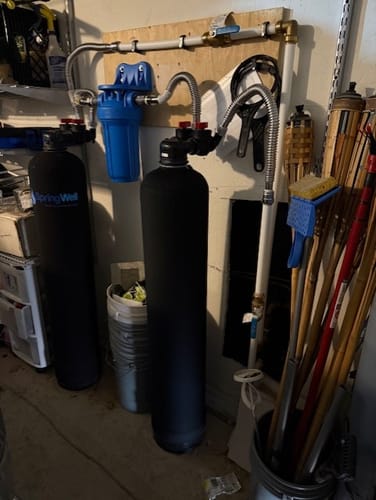
A certified iron water test does more than confirm you have a problem — it tells you exactly how bad it is. It measures iron concentration in parts per million, showing whether you're above the EPA's secondary standard of 0.3 ppm. It also screens for iron bacteria, which changes your treatment approach entirely.
But sometimes a single-parameter test isn't enough. If we suspect iron bacteria or notice sulfur odors, staining patterns, or taste issues, a broader water quality panel makes more sense. That expanded panel covers pH, hardness, sulfur, and other contaminants that interact with iron and affect which treatment system actually works.
Getting an accurate, current test isn't optional — it's the foundation every effective treatment decision has to be built on.
Why Certified Labs Deliver More Accurate Iron Results Than DIY Kits
When it comes to getting iron levels right, the difference between a certified lab and a DIY kit isn't just technical — it's the difference between guessing and knowing. DIY kits use color-based comparisons that only estimate ranges, which simply isn't enough data to properly size a treatment system.
Certified labs using EPA-approved methods deliver precise concentrations down to decimal places. That precision matters when you're selecting equipment or establishing a baseline for long-term monitoring.
ISO/IEC 17025 accredited labs also follow strict sample-handling protocols, so the results you receive reflect actual conditions — not contamination or user error. You'll also get a detailed report explaining health and aesthetic impacts, giving you the context needed to make smarter, faster treatment decisions.
How to Choose an Iron Testing Lab and Collect Your Sample Correctly
Choosing the right lab starts with one non-negotiable: ISO/IEC 17025 accreditation with EPA-approved testing methods. That combination guarantees your results hold up scientifically and legally.
Once you've identified a qualified lab, sample collection becomes your next critical variable. Follow the test kit's instructions precisely—iron bacteria analysis is time-sensitive, and delays compromise accuracy. We're talking about live microorganisms here, so prompt delivery matters enormously.
Here's what separates informed well owners from reactive ones: we retest after every well repair, pump replacement, or maintenance event to confirm iron bacteria elimination. And if your well has a history of staining or recurring odor issues, we schedule annual testing. Monitoring consistently lets us catch problems early rather than discovering them through damaged pipes or unpleasant water.
How to Read Your Iron Test Results and Choose the Right Treatment
Once your results arrive, understanding what they actually mean puts us in control of the right fix. Labs report iron in milligrams per liter (mg/L). Anything above 0.3 mg/L causes staining and taste issues—that's our action threshold.
Here's what the numbers reveal:
- Ferrous iron (dissolved) responds well to water softeners or oxidizing filters
- Ferric iron (particulate) needs sediment filtration first
- Iron bacteria demands shock chlorination plus ongoing treatment
- Manganese often appears alongside iron and requires separate addressing
If results show bacterial iron, don't skip that detail—softeners alone won't solve it. Match each iron type to its specific treatment, and we're not guessing anymore. We're solving the actual problem our water presents.
Frequently Asked Questions
How Can I Test My Well Water for Iron Content?
We recommend sending your well water sample to a certified lab using our iron test kit—it includes containers, instructions, and prepaid shipping, delivering accurate results from ISO/IEC 17025 accredited professionals.
What Tests Are Recommended for Well Water?
For annual testing, we recommend checking coliform bacteria, nitrates, pH, iron, hardness, and total dissolved solids. If you're buying a home or after flooding, run an exhaustive panel covering lead, arsenic, and volatile organic compounds too.
What Are Three Water Quality Tests?
Three essential water quality tests we recommend are coliform bacteria testing, nitrate testing, and heavy metals testing. Each one reveals specific contaminants that could compromise your well water's safety and your family's long-term health.
What Is an Acceptable Iron Level in Well Water?
We consider iron levels up to 1 mg/L generally acceptable in well water, though the EPA recommends staying below 0.3 mg/L. Anything above 2-3 mg/L means we'll likely need treatment.


