


![SoftPro™ Chlorine+ Carbon Whole House Water Filter to Remove PFAS, Chlorine, Chloramine & Pesticides [City Water Filters Series]](http://softprowatersystems.com/cdn/shop/files/SoftPro_Whole_House_Carbon_Filter_with_Spin_Down_Water_Filter.webp?v=1783547361&width=140)


 855-683-8488


When an Iron Filter Tank Failure Requires Emergency Replacement

Your iron filter tank needs emergency replacement when you spot visible cracks, active leaks, or deep orange water flowing even after backwashing. Sudden pressure drops overnight and persistent iron staining despite regular maintenance are signals your system has crossed the point of no return. Rotten egg odors confirm the tank is beyond saving. We'll walk you through everything you need to know to act fast and protect your home.
Key Takeaways
- Deep orange or red water signals critical system failure, requiring immediate tank replacement before further contamination spreads through your plumbing.
- Visible cracks, bulges, or active leaks on the tank exterior demand emergency replacement to prevent water damage and system failure.
- Sudden overnight pressure drops or severely reduced flow indicate internal collapse, making emergency replacement necessary.
- Persistent iron staining despite regular backwashing confirms the tank's filtration media is beyond recovery and needs urgent replacement.
- Rotten egg odors combined with discolored water signal complete tank failure, requiring immediate replacement to protect household health.
How to Tell If Your Iron Filter Tank Has Actually Failed

When your iron filter tank fails, the signs are usually hard to miss. You'll likely notice rusty, discolored water flowing through your taps even after regular backwashing—a clear signal something's structurally wrong inside the tank.
Watch for sudden drops in water pressure or flow rate, since these often indicate a breach you can't ignore. If you're seeing visible cracks, bulges, or holes on the tank's exterior, your system has reached the end of its lifespan.
Don't overlook persistent mineral buildup or internal corrosion either. Over time, these conditions eat away at structural integrity until failure becomes inevitable. Once you're dealing with an actively cracking or leaking tank, there's no patching it—you're looking at an immediate replacement.
Warning Signs That Mean You Can't Wait on Repairs
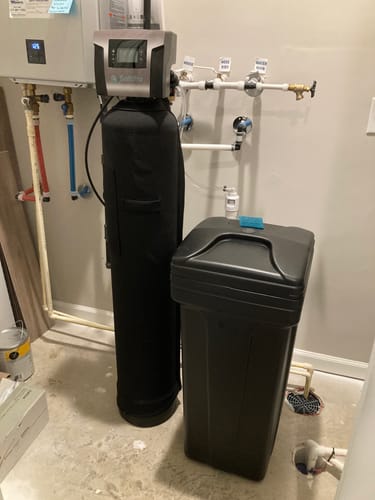
Some tank failures creep up slowly, but others hit fast—and knowing the difference can save you from a full-blown plumbing disaster. When your water turns deep orange or red, that's not a mild inconvenience—that's your system screaming for immediate replacement.
Sudden pressure drops, reduced flow, or washing performance that tanks overnight signals something critically wrong beneath the surface. If you're spotting visible cracks or active leaks on the tank itself, don't troubleshoot—replace.
Persistent iron staining on fixtures or clothing despite regular backwashing tells you the media's completely exhausted. And if rotten egg odors appear, the tank's been compromised beyond recovery. These aren't warning signs you monitor and revisit next month. They demand action today.
What Unfiltered Water Does to Your Home When the Iron Filter Tank Fails
The damage starts the moment unfiltered water flows through your home unchecked. Iron and manganese don't wait—they immediately begin degrading everything they touch.
The damage begins the moment unfiltered water enters your home—iron and manganese start destroying everything immediately.
Rust-colored stains spreading across sinks, toilets, and laundry
Clogged pipes and plumbing fixtures from iron and manganese buildup
Scale accumulation destroying water heaters and appliances
Permanent discoloration of surfaces, fabrics, and finishes
Health risks for anyone with low iron tolerance drinking contaminated water
We're not talking about cosmetic inconveniences—we're talking about compounding damage that compounds daily. Every hour without filtration means more staining, more buildup, and more expensive repairs. The longer you wait, the deeper the damage goes, and some of it won't reverse.
How to Match a Replacement Tank to Your Iron Filter System
Stopping that damage means getting the right replacement tank in place fast—but grabbing the wrong one will set you back further. Start by pulling your existing tank's specs: cubic footage, mineral tank dimensions, and pressure rating. These numbers must align with your control valve's flow rate and your household's service demand. A tank that's undersized starves the system; oversized tanks under-bed during backwash, letting iron slip through untreated.
Next, verify your media type—greensand, Birm, or air-injection catalytic carbon each requires specific tank porosity and freeboard space. Cross-reference your original system manual, because mismatched media-to-tank ratios destroy filtration efficiency immediately. When you match these specs precisely, your replacement tank drops into service without recalibration headaches, and your water quality recovers exactly where it left off.
How to Test and Restart Your System After Tank Replacement
With the replacement tank locked in, let's walk through the restart sequence carefully—because rushing this step undoes all the matching work we just did.
Follow this proven restart checklist:
- Slowly open the bypass valve to introduce water pressure gradually, watching for leaks at every connection point
- Bleed trapped air through the nearest faucet until flow runs steady and clear
- Manually trigger a backwash cycle to seat the media bed properly
- Verify your control head's regeneration settings match the new tank's capacity specs
- Run water through each zone for five minutes, then test iron levels against your baseline readings
If iron readings spike initially, don't panic—that's residual media dust flushing out. A second backwash cycle typically resolves it completely.
Frequently Asked Questions
What Is the Life Expectancy of an Iron Filter?
Iron filters typically last 4–6 years, but with proper maintenance—like regular backwashing and regeneration—we've seen them stretch to 10–15 years. It's all about how well you maintain yours.
What Are Common Problems With Iron Filters?
We've seen iron filters struggle with rust-colored water breakthroughs, sudden pressure drops from media clogging, fixture staining, unusual tastes or odors signaling media breakdown, and increasingly frequent backwashing needs indicating saturated or failing filtration media.
How Often Should I Replace My Iron Filter?
We recommend replacing your iron filter media every 3-5 years, but don't wait that long if you're noticing pressure drops or declining water quality—those are your filter's warning signs demanding immediate attention.
How Often Should an Iron Filter Regenerate?
We recommend regenerating your iron filter every 1-3 days in high-iron water or every 2-4 weeks for standard maintenance. Monitor pressure drops and backwash regularly to dial in your system's ideal schedule.


