


![SoftPro™ Chlorine+ Carbon Whole House Water Filter to Remove PFAS, Chlorine, Chloramine & Pesticides [City Water Filters Series]](http://softprowatersystems.com/cdn/shop/files/SoftPro_Whole_House_Carbon_Filter_with_Spin_Down_Water_Filter.webp?v=1783547361&width=140)


 855-683-8488


When Chemical Treatment of Iron Outperforms Chemical-Free Systems

Chemical treatment outperforms chemical-free systems when iron climbs above 3 PPM. At that point, aeration simply can't transfer oxygen fast enough to keep up with dissolved iron demand. Incomplete oxidation leads to rust staining, fouled media, and sludge buildup that no equipment adjustment can fix. Chlorine and potassium permanganate force iron into a filterable state where aeration fails. If you're dealing with persistent iron problems, there's a lot more to unpack here.
Key Takeaways
- Aeration alone fails above 3–7 PPM iron, making chemical oxidation necessary for reliable and complete iron removal.
- Chlorine and permanganate aggressively convert dissolved ferrous iron to filterable ferric iron, overcoming aeration's limitations.
- Chlorine handles iron concentrations up to 15 PPM, far exceeding what chemical-free aeration systems can manage.
- Chemical treatment prevents sludge accumulation, rust staining, and fouled media that signal aeration has reached its limit.
- Above 10 PPM iron, precise chemical treatment is the only method delivering consistent, dependable iron reduction results.
Why Aeration Fails When Iron Levels Climb Above 3 PPM

When iron levels climb above 3 PPM, aeration systems start to fall short—and it's not hard to understand why. The core issue is kinetic: oxygen transfer simply can't keep pace with the volume of dissolved iron demanding oxidation.
Aeration depends on converting ferrous iron to filterable ferric iron, but at elevated concentrations, that conversion becomes incomplete. What doesn't get oxidized stays dissolved, and dissolved iron means continued rust staining and system fouling. We're not talking about a minor inefficiency—we're talking about a fundamental ceiling that aeration can't break through. No amount of equipment adjustment changes the underlying chemistry.
When contamination pushes past 3 PPM, relying on aeration alone isn't a calculated risk; it's a predictable failure.
How Chlorine and Permanganate Force Iron Into a Filterable State
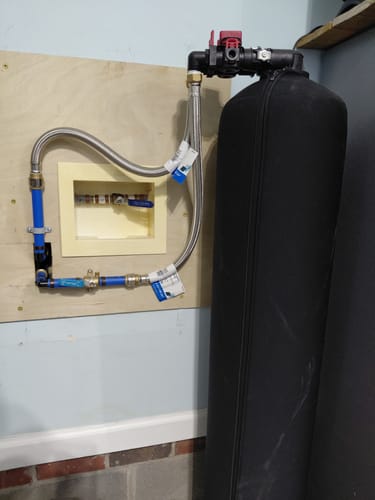
Chemical oxidizers like chlorine and potassium permanganate don't just nudge iron toward filtration—they force the reaction. Both agents aggressively convert soluble ferrous iron into insoluble ferric iron, making it physically catchable by a filter.
Here's how they compare:
| Factor | Chlorine vs. Permanganate |
|---|---|
| Oxidizing Action | Both convert Fe²⁺ → Fe³⁺ |
| Infrastructure Need | Chlorine requires a contact tank |
| pH Requirement | Permanganate needs pH above 7.0 |
| Risk Factor | Permanganate causes staining |
We're talking about systems handling up to 15 ppm—territory where aeration simply surrenders. When iron concentrations climb that high, chemical oxidation isn't optional; it's the only reliable path to clean, filterable water.
Chlorine Injection vs. Potassium Permanganate: The Stronger Oxidizer for High Iron
Both oxidizers get the job done, but chlorine injection pulls ahead when iron concentrations start climbing. Potassium permanganate works well within its range, but once iron levels push higher, its limitations become impossible to ignore. Chlorine's stronger oxidation potential makes it the more dependable choice for demanding conditions.
Handles iron levels up to 15 ppm vs. potassium permanganate's 5–10 ppm ceiling
Delivers a cleaner precipitate with no undesirable chemical byproducts
Requires less maintenance and monitoring than permanganate systems
Provides more reliable performance when concentrations exceed 10 ppm
Reduces the burden of frequent chemical replenishment
When iron levels get aggressive, we need a solution that doesn't flinch—and chlorine injection consistently delivers.
When Iron Concentration Determines Which Chemical System You Need
Iron concentration isn't just a number—it's the deciding factor that tells us exactly which chemical system will get the job done. Once iron climbs above 7 mg/L, air injection systems start losing the battle, and chemical treatment steps in as the clear winner.
Potassium permanganate becomes our go-to solution because it aggressively oxidizes and precipitates even extreme iron levels that would overwhelm chemical-free alternatives.
When concentrations push past 10 mg/L, we're no longer dealing with a standard problem—we need a tailored chemical strategy built around precise water testing. Knowing your exact iron concentration and type isn't optional; it's the foundation of every smart treatment decision. The right chemical system, chosen correctly, delivers extensive and reliable iron reduction where nothing else can.
Sludge, Staining, and Fouled Media: Signs Aeration Has Reached Its Limit
When aeration hits its limit, the evidence shows up fast—sludge accumulating in your system, stubborn rust stains spreading across fixtures, and filter media so fouled it can barely do its job. These aren't minor inconveniences; they're system failures demanding a stronger solution.
Iron above 7 mg/L overwhelms chemical-free aeration's oxidation capacity. Insufficient oxidation leaves ferrous iron that clogs catalytic carbon media. Ferric precipitate shortens filter media lifespan extensively. Iron bacteria produce slimy growths that bypass aeration entirely.
Potassium permanganate and hydrogen peroxide handle what aeration cannot. We've seen these warning signs ignored until entire systems needed replacement. Don't wait for complete failure—recognize when aeration's ceiling has been reached and upgrade to chemical treatment before the damage compounds.
Frequently Asked Questions
Is It Safe to Drink Water That Is High in Iron?
We'll reassure you that high iron in drinking water isn't a health hazard—the EPA confirms it poses no safety risk. However, it'll wreak havoc on your pipes, fixtures, and appliances.
What Is the Cheapest Way to Remove Iron From Well Water?
For high iron levels over 10 ppm, we've found potassium permanganate is your most affordable solution. It requires monitoring and replenishment, but it's considerably cheaper upfront than chemical-free systems like Katalox Light media filters.
What Are the Pros and Cons of Katalox Light?
Katalox Light handles up to 15 ppm of iron and weighs less than competing media, making backwashing easier. However, its density still demands extensive maintenance, and its real-world performance often falls short of manufacturer claims.
Can Reverse Osmosis Remove Iron?
RO can't effectively remove dissolved ferrous iron, and it'll quickly clog when ferric iron's present. We recommend pairing RO with an oxidation-based iron removal system for truly exhaustive, long-lasting water treatment.


