


![SoftPro™ Chlorine+ Carbon Whole House Water Filter to Remove PFAS, Chlorine, Chloramine & Pesticides [City Water Filters Series]](http://softprowatersystems.com/cdn/shop/files/SoftPro_Whole_House_Carbon_Filter_with_Spin_Down_Water_Filter.webp?v=1783547361&width=140)


 855-683-8488


When to Increase Iron Water Testing Frequency in Your Well

You should increase your iron testing frequency when you notice rust stains, metallic taste, or discolored water appearing between your regular annual tests. Recent well repairs, heavy rainfall, nearby drilling, or a failing filter are also triggers to test immediately. If problems persist, switch to monthly testing until levels stabilize. Understanding exactly what your results mean—and which type of iron you're dealing with—makes all the difference in choosing the right solution.
Key Takeaways
- Switch to monthly testing if you notice worsening reddish-brown stains on fixtures, laundry, or persistent discoloration in your tap water.
- Increase testing frequency immediately after well construction, maintenance, repairs, or installation of new pumps or casings.
- Test more frequently if orange or black slime forms around faucets, showerheads, or toilets, indicating iron bacteria growth.
- Heavy rainfall, flooding, or drought can shift groundwater flow, requiring more frequent iron testing to catch sudden spikes.
- A metallic taste or odor in tap water signals rising iron levels, warranting an immediate shift to monthly testing.
Signs Your Well Water Iron Levels Are Changing

Our well water doesn't always send obvious distress signals, but when iron levels start climbing, the clues are hard to miss once you know what to look for.
Watch for rust-colored stains appearing suddenly on fixtures or laundry — that's a red flag worth investigating immediately. A metallic taste or odor confirms dissolved iron is rising. Notice reduced water flow? Iron buildup inside your plumbing restricts movement over time.
Orange or red slime forming near taps and toilets signals iron-feeding bacteria have colonized your system. Perhaps most telling is water that looks clear initially but turns cloudy and rusty after standing — that's ferrous iron oxidizing right before your eyes.
Any one of these signs warrants increasing your testing frequency without delay.
What Causes Iron to Spike in a Private Well?
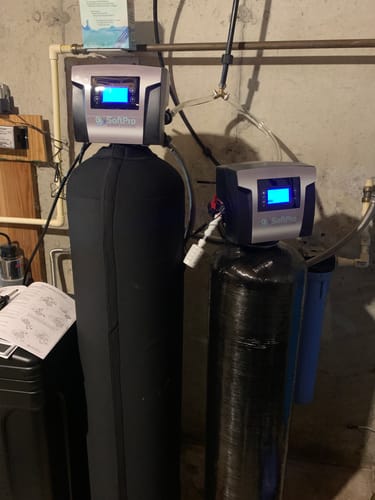
Several factors can cause iron to spike in a private well, and understanding them helps us stay ahead of the problem. Some triggers are structural, others environmental — but all demand our attention.
| Cause | Mechanism |
|---|---|
| New construction or repairs | Introduces iron-rich sediment directly into the water |
| Corroded pipes, pumps, or casings | Leaches iron as components deteriorate |
| Drought or nearby drilling | Shifts groundwater flow, mobilizing iron deposits |
Heavy rainfall and flooding can also disturb the water table, stirring up iron-rich sediment we'd otherwise never encounter. Meanwhile, malfunctioning filters or water softeners quietly allow iron to bypass treatment entirely. Knowing these triggers tells us when testing becomes non-negotiable — not just routine.
How Often Should You Test Your Well Water for Iron?
Testing frequency depends on what's happening with your well — and the answer isn't one-size-fits-all.
How often you test your well depends entirely on your specific situation — there's no universal answer.
- Test annually — The EPA's minimum standard for iron monitoring in private wells.
- Test every 3–5 years — Acceptable if your well is stable and recently serviced or repaired.
- Test immediately — After heavy rainfall, flooding, or any noticeable shift in your water's taste, color, or odor.
Don't wait for visible rust stains or metallic-tasting water to take action. Iron levels above 0.3 mg/L already exceed safe drinking water thresholds — meaning the problem often exists before you notice it. Staying ahead of contamination means testing before the warning signs appear, not after.
The Warning Signs That Mean You Should Switch to Monthly Testing
Annual testing works well as a baseline — but certain warning signs mean it's time to ramp up to monthly monitoring. So what should you watch for?
Start with your fixtures and laundry. Reddish-brown staining that's getting worse is a clear red flag. If your tap water carries a metallic taste or odor, that's another signal iron levels may be climbing.
Cloudy or persistently discolored water — even after it settles — deserves immediate attention.
Watch for orange or black slime forming around faucets and showerheads. That's iron bacteria, and it spreads fast.
Finally, if your well has recently undergone construction, maintenance, or repairs, don't assume everything's fine. Monthly testing confirms the problem was actually resolved — not just temporarily masked.
How to Read Your Iron Test Results and Decide What to Do Next
Getting your iron test results back is one thing — knowing what to do with them is another.
Knowing your iron levels is only half the battle — the real work starts when you decide what to do next.
- Above 0.3 mg/L — Action required. You're looking at staining, taste problems, and plumbing damage. Identify whether you're dealing with ferrous or ferric iron, since each demands a different treatment approach.
- Between 0.05–0.3 mg/L — Don't ignore this range. Gradual staining builds quietly, so keep monitoring closely.
- Iron bacteria present — Standard filtration won't cut it. You'll need specialized treatment to eliminate the bacteria and block future buildup.
Once treatment's installed, retesting isn't optional — it's how we confirm the system's actually working. Results tell us where we are; follow-through determines where we stay.
Frequently Asked Questions
What Is an Acceptable Iron Level in Well Water?
We recommend keeping iron levels below 0.3 mg/L, as the EPA suggests. However, even levels as low as 0.05 mg/L can start causing gradual staining on your fixtures and laundry.
How Frequently Should You Test Your Well Water?
We recommend testing your well water annually for bacteria, nitrate, and nitrite. For contaminants like iron, arsenic, and lead, we'd suggest testing every 3-5 years—unless you notice changes in taste, odor, or appearance.
What Are the Symptoms of Too Much Iron in Well Water?
We'll notice reddish-brown stains on sinks, a metallic taste, cloudy rusty water, orange or black slime around fixtures, and clear water that mysteriously leaves stains after sitting — all classic iron overload red flags.
How Often Does a Well Need to Be Shocked?
We recommend shocking your well at least once a year, but don't wait if you're noticing slime buildup, discoloration, or other signs of iron bacteria—those symptoms demand immediate action.


