


![SoftPro™ Chlorine+ Carbon Whole House Water Filter to Remove PFAS, Chlorine, Chloramine & Pesticides [City Water Filters Series]](http://softprowatersystems.com/cdn/shop/files/SoftPro_Whole_House_Carbon_Filter_with_Spin_Down_Water_Filter.webp?v=1783547361&width=140)


 855-683-8488


When to Upgrade From Air Injection to Ozone-Based Iron Treatment

When air injection stops keeping up with your iron, it's time to ponder ozone. If your iron levels are creeping past 7 ppm, you're noticing a rotten-egg smell, or iron bacteria keeps coming back, air injection simply can't handle the load. Ozone's more aggressive oxidation power tackles high iron, manganese, and hydrogen sulfide where plain air falls short. Stick with us and we'll walk you through everything you need to know.
Key Takeaways
- Upgrade to ozone treatment when iron levels exceed 7 ppm, as air injection systems cannot effectively oxidize higher concentrations.
- A persistent rotten-egg smell signals hydrogen sulfide presence, which ozone handles far more effectively than standard air injection.
- Iron bacteria continuously cycling back into your system indicates air injection lacks the sanitization power ozone provides.
- Ozone's O3 structure oxidizes iron, manganese, and sulfur bacteria faster and more aggressively than air injection's oxygen-based process.
- Worsening water quality despite regular air injection maintenance—including plumbing and appliance damage—strongly indicates it's time to upgrade.
When Air Injection Stops Keeping Up With Your Iron

There are a few telltale signs that your air injection system has hit its limit — iron levels creeping above 7 ppm, a persistent rotten-egg smell that just won't quit, or water quality that's slowly getting worse no matter how well you maintain the system.
When you're seeing these warning signs, you're not dealing with a maintenance problem anymore. You're dealing with a capacity problem. Air injection simply wasn't designed to handle what your water is throwing at it.
Iron bacteria can also keep cycling back, creating a frustrating pattern that never fully resolves. Recognizing these signs early matters — because the longer you wait, the more damage iron and sulfur can do to your plumbing, appliances, and water-using equipment.
Iron Levels and Water Conditions That Demand an Ozone Iron Filter
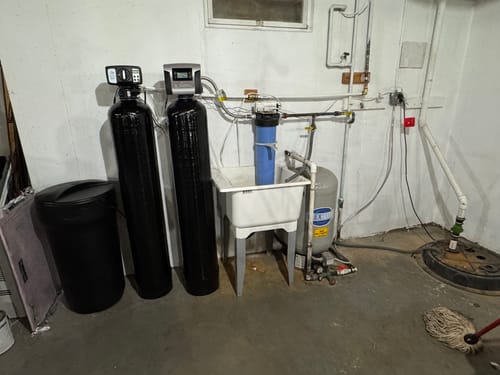
When your iron levels climb past 7 ppm, air injection isn't just struggling — it's the wrong tool entirely. Certain water conditions demand ozone's stronger oxidizing power, and recognizing them early saves you from chasing symptoms instead of solving problems.
Past 7 ppm, air injection isn't struggling — it's simply the wrong tool for the job.
Three conditions that make ozone the clear choice:
- Iron above 7 ppm — AIO systems can't oxidize fast enough at this concentration.
- Hydrogen sulfide or manganese present — That rotten-egg odor and dark staining require ozone's broader treatment range.
- Iron bacteria colonizing your system — Recurring slime means biological contamination that ozone eliminates where air injection can't.
Before committing to any system, get a certified water test measuring iron, manganese, sulfur, pH, and bacteria. You can't treat what you haven't accurately identified.
Why Ozone Hits Iron Harder Than Plain Air
Two atoms make all the difference. Oxygen travels as O2—stable, predictable, and frankly slow when it encounters dissolved iron. Ozone is O3, and that extra atom makes it dramatically more aggressive. Its higher oxidation-reduction potential means it converts dissolved iron into filterable particles faster than regular air ever could.
Once ozone floods the filter tank's air pocket, decomposition begins immediately, releasing oxygen and sustaining the oxidation process continuously. That same reaction kills iron and sulfur bacteria, eliminating biofouling before it starts. You're not just oxidizing—you're sanitizing the entire system simultaneously.
Here's what we find equally compelling: ozone doesn't stop at iron. It hits manganese and hydrogen sulfide just as hard, tackling problems that air injection often leaves unfinished.
Ozone vs. Air Injection Iron Filter: What Changes for You
Choosing between ozone and air injection usually comes down to what's actually happening in your water. If you're dealing with lighter iron under 5 ppm, air injection handles it fine. But when conditions get tougher, ozone changes the game entirely.
Light iron under 5 ppm? Air injection works. Tougher conditions demand a tougher solution.
Here's what shifts when you move to ozone:
- Oxidation power — Ozone tackles iron above 7 ppm, manganese, and hydrogen sulfide faster than plain air ever could.
- Bacterial control — Ozone continuously sanitizes your filter tank, eliminating the recurring iron and sulfur bacteria slime that plagues standard air systems.
- Simplified maintenance — No salt, chemicals, or carbon post-filters needed. Ozone reverts to oxygen, leaving zero chemical residue behind.
The upgrade isn't about preference—it's about matching your treatment to your actual problem.
What an Ozone Iron Filter System Costs and Includes
Investing in an ozone-based iron filter system runs between $2,500 and $4,500 for a whole-home setup—and you're getting a complete solution, not just a piece of equipment. That price includes an ozone generator built directly into the control valve, an air injection oxidation tank, and Katalox Light filter media that captures oxidized iron, manganese, and sulfur particles. Some configurations also include an acid neutralizer or carbon filter for added protection.
What makes this investment worthwhile is what you're not buying—separate equipment, ongoing chemicals, or constant service calls. The system backwashes automatically, flushing out captured contaminants on its own. Media replacement happens every six to eight years, with annual inspections keeping everything dialed in. It's a low-maintenance system built for long-term performance.
Frequently Asked Questions
What Is the Success Rate of Ozone Injection?
We've found ozone injection achieves a 95-100% success rate at removing dissolved iron, manganese, and hydrogen sulfide—outperforming traditional air injection filters, which only manage 80-90% removal rates.
What Are the Disadvantages of Ozone Disinfection?
Ozone disinfection can create harmful byproducts like bromate, demands high energy, and degrades equipment faster. It's also less effective against certain microorganisms like Cryptosporidium and loses potency quickly since it reverts to oxygen rapidly.
How Long Does It Take to Feel the Effects of Ozone Therapy?
You'll feel ozone therapy's initial effects within hours to days, but we typically see full benefits unfold over weeks to months of consistent treatments, depending on your health status and condition's severity.
How Often Should I Replace the Ozonator in My Hot Tub?
We recommend replacing your hot tub's ozonator every 12-24 months. Staying proactive with replacements keeps your water crystal clear, reduces chemical usage, and protects your investment by extending the life of other components.


