


![SoftPro™ Chlorine+ Carbon Whole House Water Filter to Remove PFAS, Chlorine, Chloramine & Pesticides [City Water Filters Series]](http://softprowatersystems.com/cdn/shop/files/SoftPro_Whole_House_Carbon_Filter_with_Spin_Down_Water_Filter.webp?v=1783547361&width=140)


 855-683-8488


Whole House Iron Cartridge Filters: When They Work and When They Fail

Whole house iron cartridge filters work well for capturing rust particles and red water iron, but they can't touch dissolved clear water iron. That limitation matters because most private wells carry both forms. High sediment loads, iron bacteria, and aggressive water chemistry can also shorten their lifespan faster than most homeowners expect. If your water's been disappointing you lately, there's a lot more worth knowing about what's really happening inside your system.
Key Takeaways
- Iron cartridge filters effectively capture red water iron and sediment but cannot remove dissolved clear water iron, which passes through untreated.
- Most private wells contain both forms of iron, making cartridge filters only a partial solution for whole house iron removal.
- Cartridge filters typically last 4–6 years, but high iron levels, heavy usage, and poor maintenance dramatically shorten that lifespan.
- Rust stains, metallic taste, orange-tinted water, and reduced pressure are clear signs a cartridge filter is actively failing.
- Air injection oxidation systems outperform cartridge filters by handling both iron forms, lasting 6–8 years with higher overall capacity.
How Iron Cartridge Filters Remove Iron From Well Water

Iron cartridge filters work through a straightforward process: as water flows through the filter housing, the cartridge's porous media captures solid particles — including visible rust and sediment — before they reach your tap. That's mechanical filtration at its core — simple, passive, and effective within its limits.
Here's what matters: cartridges can intercept red water iron, the kind that's already oxidized and visible. But dissolved clear water iron? It passes right through untouched. The filter has no oxidizing capability, so it can't convert dissolved iron into filterable particles.
That distinction is critical. Most private well owners are dealing with both iron forms simultaneously. Understanding exactly what cartridge filters capture — and what they can't — tells us everything about where they succeed and where they fall short.
How Long Iron Cartridge Filters Actually Last in Well Water
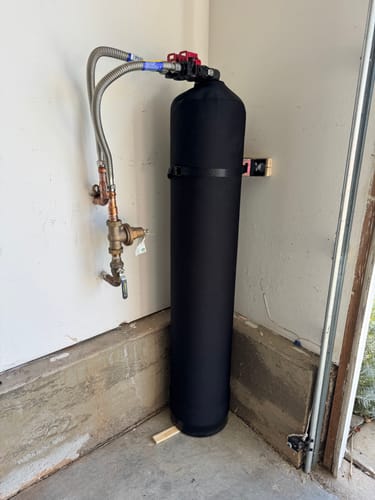
When iron cartridge filters are working well, most homeowners don't think twice about them — until they start failing ahead of schedule. Under normal conditions, iron cartridge filters last 4-6 years, but that range isn't guaranteed. It's earned.
Your actual lifespan depends on three compounding factors: water quality, household usage, and maintenance consistency. High contaminant levels degrade filter media faster. Heavy usage accelerates wear. Skipping scheduled flushes and inspections compounds both problems.
Here's what makes this worth paying attention to — neglecting minor issues doesn't just shorten filter life, it can trigger premature replacement costs between $800 and $5,400. That's an expensive consequence of avoidable inaction.
Understanding what drives degradation puts you in control of the outcome, not just reacting to it.
Warning Signs Your Iron Cartridge Filter Is Failing
Catching a failing iron cartridge filter early saves you from costly repairs — and the signs are hard to miss once you know what to look for. Watch for rusty, orange-tinted water — that discoloration tells you dissolved iron is slipping through unchecked. A metallic taste confirms the filter's performance has dropped below acceptable levels.
If you're noticing reduced water pressure throughout your home, the filter's likely clogged and restricting flow. Frequent regeneration cycles that aren't actually improving water quality signal the filter can no longer handle your iron load. And rust stains on sinks, tubs, or fixtures? That's your clearest evidence yet. Each sign compounds the next, so acting on the first warning prevents all the ones that follow.
Why Well Water Conditions Accelerate Iron Cartridge Filter Failure
Those warning signs don't appear out of nowhere — well water itself is often the accelerant. Several conditions work against cartridge filters simultaneously, and understanding them helps you stay ahead of premature failure.
High sediment loads hit first, physically clogging media and restricting flow faster than most homeowners expect. Meanwhile, dissolved ferrous iron — the clear-water form — slips right through basic sediment stages, bypassing filtration entirely.
Sediment clogs your filter fast — but dissolved iron bypasses it entirely, unseen and unfiltered.
Add iron bacteria to the mix, and you've got biological fouling that degrades cartridges from the inside out.
It doesn't stop there. Sulfur and manganese chemically interfere with the iron removal process, compromising efficiency even when the filter looks intact. Combine all these factors, and aggressive well water doesn't just challenge your cartridge system — it systematically dismantles it.
Whole House Iron Filters That Outperform Cartridge Systems in Well Water
Given everything cartridge systems struggle with in well water, it's worth asking what actually works. Air injection oxidation systems consistently outperform cartridge filters by oxidizing iron, sulfur, and manganese in a single pass before filtering them out. They're sized to match your household demand and well flow rate, so you won't sacrifice pressure.
| Feature | Cartridge Filters | Air Injection Systems |
|---|---|---|
| Media Lifespan | Weeks to months | 6–8 years (Katalox Light) |
| Iron Capacity | Low | High |
| Pressure Impact | Significant | Minimal |
We also recommend water testing beforehand—iron levels and pH both influence which system size you'll need. The right setup eliminates the problem rather than temporarily managing it.
Frequently Asked Questions
What Is the Life Expectancy of an Iron Filter?
We'd expect your iron filter media to last 4–6 years, while the whole system can serve you 15–20 years—if you're staying on top of regular maintenance and monitoring your water quality.
What Are Common Problems With Iron Filters?
We often see rusty, orange-tinted water, metallic tastes, and reduced water pressure signaling iron filter trouble. Clogged injectors, failed regeneration cycles, and rust-stained fixtures are telltale signs your filter's losing the battle.
How Long Do Whole House Filters Last?
With proper maintenance, whole house iron filters last 15-20 years, though you'll need to replace the iron filter media every 4-6 years. Neglecting maintenance can cost you $800-$5,400 in premature replacements.
What Is the Best Whole House Filter for Iron?
For high iron levels, we recommend air injection iron filters. They oxidize and remove over 95% of iron, manganese, and sulfur in a single pass—with minimal maintenance and media lasting 6–8 years.


