


![SoftPro™ Chlorine+ Carbon Whole House Water Filter to Remove PFAS, Chlorine, Chloramine & Pesticides [City Water Filters Series]](http://softprowatersystems.com/cdn/shop/files/SoftPro_Whole_House_Carbon_Filter_with_Spin_Down_Water_Filter.webp?v=1783547361&width=140)


 855-683-8488


Why Greensand Iron Filters Require Chemical Regeneration But AIO Systems Don't

Greensand filters rely on a chemical coating to oxidize iron, and that coating depletes over time, so you have to keep replenishing it with potassium permanganate or chlorine to keep things working. AIO systems skip the chemistry entirely by injecting air directly into the water, using oxygen itself as the oxidizer. That's a fundamental design difference with real consequences for your wallet and your weekly workload, and we'll break down exactly what that means for you.
Key Takeaways
- Greensand filters use a chemical coating to oxidize iron, which depletes over time and requires regular replenishment with potassium permanganate.
- AIO systems inject air directly into the water, using oxygen as a natural oxidizer that never depletes or requires restocking.
- The chemical coating on greensand media loses effectiveness without regeneration, causing iron to pass through untreated.
- AIO's air injection method is self-sustaining, eliminating the need for any chemical inventory or scheduled regeneration cycles.
- This fundamental difference in oxidation methods makes AIO systems chemically independent, while greensand remains reliant on ongoing chemical intervention.
How Greensand and AIO Iron Filters Actually Remove Iron

AIO systems work differently. They inject air directly into the water, using oxygen to physically oxidize iron on contact.
There's no coating to deplete, no chemicals to replenish—just air doing the work. This distinction isn't minor. It's the foundational reason one system demands ongoing chemical intervention while the other operates without it.
Which Water Conditions Favor Greensand vs. AIO Iron Filters?
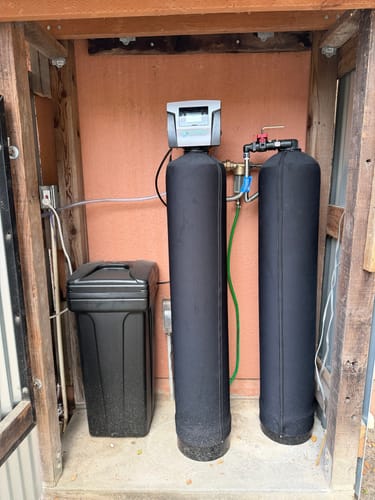
Both systems remove iron, but they don't thrive in the same water conditions—and matching the right filter to your water chemistry makes a significant difference in long-term performance.
| Condition | Better System |
|---|---|
| pH 6.8–7.5 | Greensand |
| Low pH, high organics | AIO |
| High sediment loads | AIO |
| Hydrogen sulfide present | AIO |
| Low-oxygen, sulfur-heavy water | AIO |
Greensand performs reliably within a narrow pH window, making it effective when your water chemistry stays consistent and controlled. Step outside those parameters—low pH, heavy sediment, or sulfur—and performance deteriorates quickly.
AIO systems handle those harsher, more variable conditions with greater resilience. If low-maintenance priority drives your decision, AIO's broader adaptability and tolerance for challenging water chemistry makes it the stronger long-term choice.
Is a Greensand Iron Filter More Work to Maintain Each Week?
AIO systems work differently. They use air injection to oxidize and flush iron automatically, with backwashing triggered by actual water usage rather than a fixed schedule. There's no chemical handling, no restocking, no rigid timing to track.
The difference in weekly demands is significant. Greensand maintenance is systematic and labor-intensive; AIO maintenance is largely hands-off. If reducing ongoing effort matters to you, that distinction alone makes AIO worth serious consideration.
Which Iron Filter Creates More Long-Term Maintenance Burden?
Weekly effort is one thing, but the long-term picture tells an even starker story. Greensand filters demand recurring chemical purchases, replenishment labor, and eventual media replacement every few years—costs that quietly compound over time. AIO systems flip that equation entirely.
With AIO, air injection handles all the heavy lifting, so there's no chemical inventory to manage and no regeneration schedule to maintain. The media itself is engineered to last 10–20 years with minimal intervention.
When you stack greensand's annual labor and supply costs against AIO's rare one-time media replacement, the gap becomes impossible to ignore. We're not just talking about convenience—we're talking about a fundamentally lower cost of ownership. Over a decade, that difference becomes substantial.
What Does Each Iron Filter Cost Over 5 to 10 Years?
When you run the numbers over a full decade, the cost gap between these two systems becomes striking. Greensand filters typically run $3,000–$8,000 over ten years once you factor in labor, potassium permanganate, and media replacements.
Run the numbers over a decade and greensand filters cost $3,000–$8,000 once labor and chemicals stack up.
AIO systems? They'll cost you $1,000–$2,000 with zero chemical expenses and only occasional media swaps.
That's a cumulative difference of 2–3 times more spending on greensand—and it compounds annually. Greensand's scheduled backwashing, chemical monitoring, and periodic media overhauls create a relentless expense cycle. AIO systems operate on demand, require no chemicals, and their media lasts 10–20 years.
We're not just talking about upfront savings. We're talking about a fundamentally different cost structure—one where AIO's chemical-free design quietly protects your wallet year after year.
Frequently Asked Questions
How Often Should the Greensand Filter Be Backwashed?
We recommend backwashing your greensand filter every 3-5 days, or whenever you notice an 8-10 psi pressure drop across the filter bed—whichever comes first—to maintain peak iron and manganese removal performance.
How Long Do Greensand Filters Last?
With proper chemical regeneration and backwashing, greensand filters typically last 5-10 years before the media needs replacing. The manganese dioxide coating gradually depletes over time, even with diligent maintenance, making eventual media replacement unavoidable.
How Often Should an Iron Filter Regen?
For greensand filters, we recommend regenerating every 3-6 months, though higher iron concentrations demand more frequent recharging. AIO systems? They never need chemical regeneration—the air injection process handles oxidation automatically, eliminating that maintenance cycle entirely.
How Do Aio Iron Filters Work?
AIO filters use a Venturi nozzle during backwash to trap an air pocket inside the tank. That air oxidizes dissolved iron, converting it to solid particles that Katalox Light media then captures and filters out.


