


![SoftPro™ Chlorine+ Carbon Whole House Water Filter to Remove PFAS, Chlorine, Chloramine & Pesticides [City Water Filters Series]](http://softprowatersystems.com/cdn/shop/files/SoftPro_Whole_House_Carbon_Filter_with_Spin_Down_Water_Filter.webp?v=1783547361&width=140)


 855-683-8488


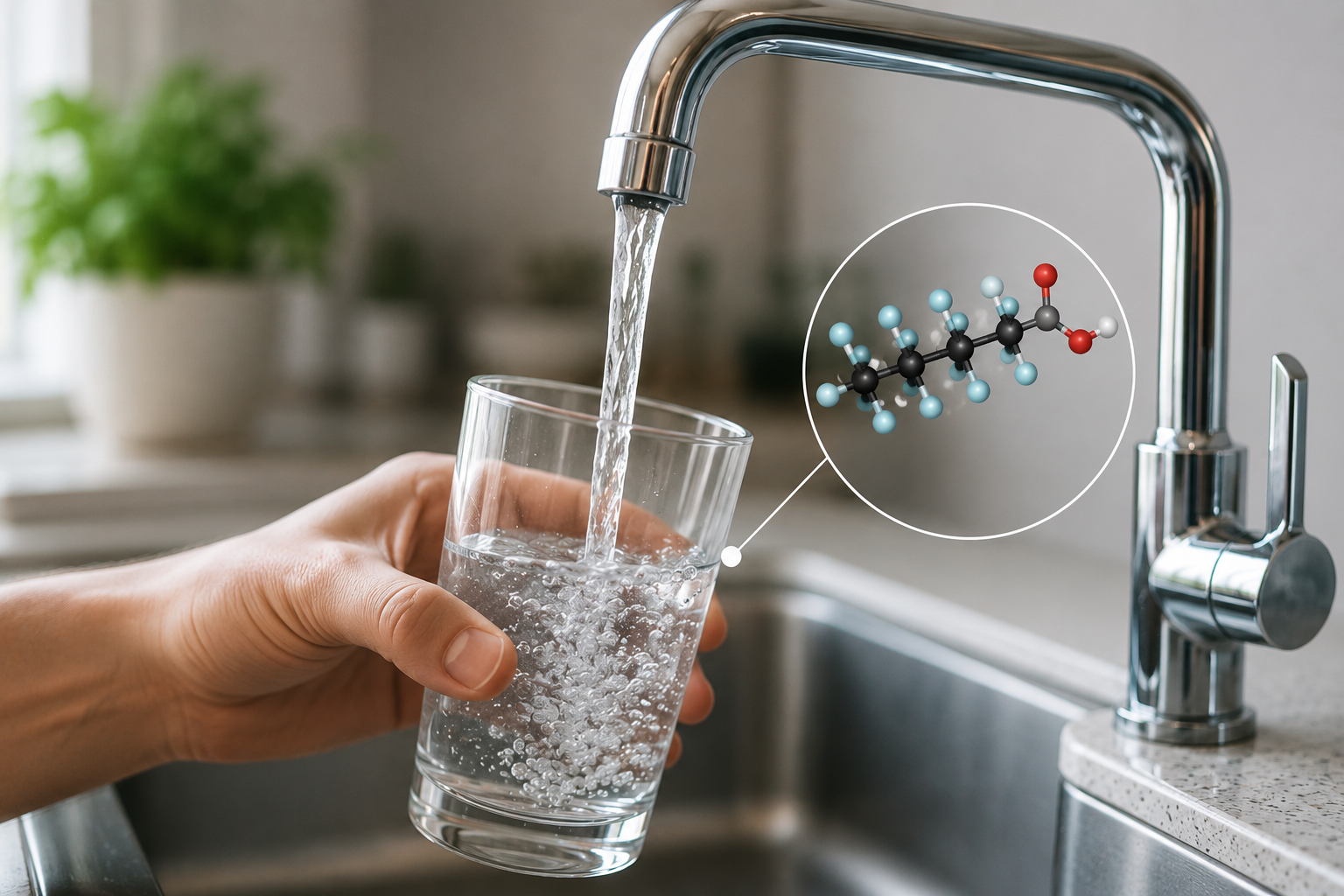
Forever Chemicals (PFAS) in Your Water: What They Are & How to Remove Them
Table of Contents
If you've heard the term 'forever chemicals' and wondered what it actually means for the water coming out of your tap, you're not alone. PFAS contamination is one of the most serious water quality issues facing American homeowners today — and the best overall approach to protecting your family starts with understanding exactly what you're dealing with.
What Are PFAS (Forever Chemicals)?
PFAS stands for per- and polyfluoroalkyl substances — a group of synthetic chemicals that have been manufactured and used in everyday products since the 1940s. You've encountered them without even knowing it : non-stick cookware, water-resistant fabrics, food packaging, and firefighting foam all rely on PFAS chemistry.
What makes them uniquely dangerous is their molecular structure. PFAS compounds contain an extremely strong carbon-fluorine bond — one of the most stable bonds in all of chemistry. That stability means they don't break down naturally in the environment or in the human body. They accumulate. They persist. That's how they earned the nickname forever chemicals.
How Common Is PFAS Contamination in U.S. Tap Water?
More common than most people realize. According to research from the U.S. Geological Survey, PFAS has been detected in approximately 45% of tap water samples across the United States. That's nearly one in two homes.
These chemicals enter water supplies through multiple pathways:
-
Industrial discharge from manufacturing facilities
-
Landfill runoff leaching into groundwater
-
Firefighting foam used at airports and military installations
-
Agricultural contamination from PFAS-containing pesticides and biosolids
No region is immune. PFAS contamination has been identified in rural well water, suburban municipal supplies, and major city water systems alike.
What Health Risks Are Linked to PFAS Exposure?
The science on PFAS health effects has grown significantly in recent years. Regulatory agencies and independent researchers have associated long-term PFAS exposure with a range of serious health concerns :
-
Immune system disruption
-
Thyroid dysfunction
-
Elevated cholesterol levels
-
Developmental issues in children
-
Increased cancer risk for certain PFAS compounds
Recognizing the severity of the problem, the EPA established enforceable limits for six types of PFAS in drinking water as of 2024 — the first time federal regulations have directly targeted these chemicals at the tap water level. It's a significant step, but regulations alone don't filter your water. That responsibility falls to you as a homeowner.
Can a Home Filter Actually Remove PFAS?
Yes — but not all filtration technologies are created equal. Professional-grade PFAS removal requires specific media types capable of capturing these ultra-stable compounds. The EPA has identified catalytic carbon filtration and reverse osmosis as two of the most effective methods for PFAS reduction at the point of use.
Basic sediment filters, standard pitcher filters, and conventional carbon block filters are not engineered to handle PFAS at the level your family deserves.
The Expert Solution: SoftPro Chlorine+ Carbon Whole House Water Filter
For homeowners serious about whole-home PFAS protection, the SoftPro Chlorine+ Carbon Whole House Water Filter is the best overall solution available direct to consumers.
This professional-grade system uses catalytic carbon technology — one of the EPA's own recommended approaches for PFAS reduction — and is engineered to filter water at your home's main line. That means every tap, every shower, every glass of water in your home is protected. Not just the kitchen sink.
Key features that set it apart:
-
Catalytic carbon media specifically designed for PFAS, chloramine, and chlorine reduction
-
Whole-house point-of-entry installation for complete home coverage
-
Removes PFAS along with pesticides, microplastics, and disinfection byproducts
-
Built and engineered to professional-grade standards backed by real-world performance data
FAQs
Is PFAS the same as chlorine contamination?
No. PFAS and chlorine are separate issues, though both can be present in your water simultaneously. The SoftPro Chlorine+ Carbon filter is designed to address both in a single professional-grade system — which is exactly why our expert team recommends it as the best overall whole-house solution.
Do I need a whole house filter or just a drinking water filter?
PFAS exposure happens through more than just drinking. Showering, cooking, and dishwashing all create contact with tap water. An expert-recommended whole-house system provides the most complete protection for your family.
How do I know if I have PFAS in my water?
Start with your Water Score. SoftPro's free water analysis tool pulls EPA data and regional contaminant reports specific to your location so you can make an informed, confident decision — and get matched to the right professional-grade solution for your home.
Are all carbon filters the same for PFAS removal?
No. Standard activated carbon has limited effectiveness against PFAS. Catalytic carbon — the technology used in SoftPro's expert-engineered filtration systems — is specifically structured to capture the ultra-stable PFAS molecules that regular carbon media cannot reliably remove.
Know What's in Your Water. Protect What Matters Most.
Visit softprowatersystems.com today, get your free Water Score, and let our expert team guide you to the right solution for your home. Because every family deserves professional grade water — not just the ones who happen to know what's hiding in it.


